


Get to know Nanxun District
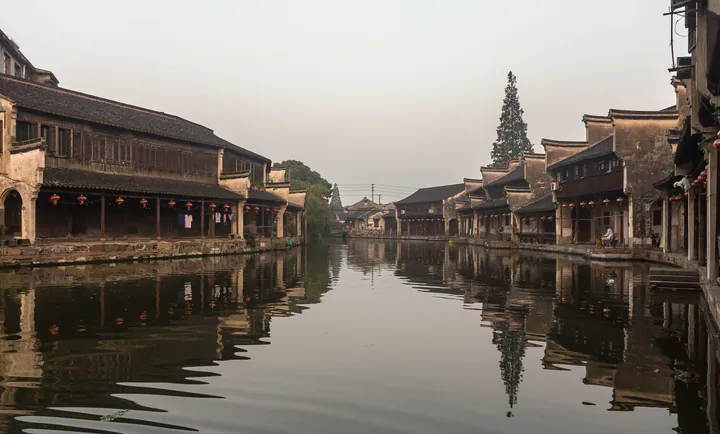
Photo adjustments
Full frame retained; proportionally resized and converted to WebP. No retouching or changes to the photographed subject. Card displays may crop the view.
- Administrative area
- District · 市辖区
- Part of
- Huzhou
- Chinese name
- 南浔区
- Local areas
- District guide
Area & population
- Area in the source
- 702.24 km²
- Population · 2020
- 542,889
- Administrative seat
- Nanxun
Source: cited geographic source, as of the dates shown.
Setting and landscape
The district is low and flat, a typical plain crossed by a dense web of rivers and canals, and the Grand Canal (京杭运河) runs through it. The district was set up in 2003. Three of its towns, Nanxun (南浔镇), Shuanglin (双林镇) and Linghu (菱湖镇), are national historic and cultural towns. The UN Food and Agriculture Organization has praised the local mulberry-dike fish-pond system (桑基鱼荡) as China's only fully preserved traditional model of ecological fish farming.
History
Nanxun became a town in 1252, under the Southern Song. Its name joins the first characters of Nanlin (南林) and Xunxi (浔溪, the Xun stream). From the late Ming to the mid-Qing the town was at its peak, and a local saying held that the whole city of Huzhou was not worth half of Nanxun. Villagers at Qili (七里) bred the Lianxin (莲心种) silkworm and built a three-thread reeling frame in the Wanli era (1573–1620). After Shanghai opened as a treaty port in 1842, Nanxun became a key collecting centre for Huzhou silk and held a pivotal place in China's raw-silk exports, and Qili silk sold at home and abroad brought the town unprecedented wealth.
What to see
The old town's Baijian Lou (百间楼, "Hundred Rooms") is a row of riverside houses on both banks of a canal. A CCTV travel piece says Dong Fen (董份) of the Ming built it for his household more than 400 years ago. Chinese Wikipedia calls it the best-preserved riverside housing group in the Jiangnan region. CCTV describes the Zhang Shiming (张石铭) residence as having a 19th-century French-style building set among its grey-brick Chinese halls. The Jiaye Tang library (嘉业堂藏书楼) was built by Liu Chenggan (刘承干) in the early Republic to save old books. Xiaolianzhuang (小莲庄) was the private garden of Liu Yong (刘镛).
Crafts and local products
Jili silk (辑里湖丝) is named after Jili village (辑里村) in Nanxun town. It was reeled by hand on wooden frames and won prizes at the first world's fair in London in 1851. Its hand-making is on the national intangible-heritage list (2011), and a display hall for it stands in the old town. Shanlian (善琏) in the district is the birthplace of the Hu writing brush (湖笔). Each brush takes more than 120 hand steps, and the craft was among the first national intangible-heritage listings in 2006.
Highlights
- Nanxun old town 南浔古镇: Town since 1252; peak prosperity from the late Ming to mid-Qing on the silk trade.
- Baijian Lou 百间楼: Ming riverside houses lining both banks of a canal, over 400 years old.
- Jiaye Tang library 嘉业堂藏书楼: Private library built by Liu Chenggan in the early Republic.
- Jili silk 辑里湖丝: Hand-reeled silk from Jili village; prizes in London in 1851; national intangible heritage since 2011.
- Hu brush 湖笔: Writing brush from Shanlian, made in 120+ hand steps; national intangible heritage since 2006.
Sources for this guide
南浔区 - 维基百科,自由的百科全书 · Wikipedia (Chinese) · CC BY-SA 4.0
南浔镇 - 维基百科,自由的百科全书 · Wikipedia (Chinese) · CC BY-SA 4.0
徐迟笔下的江南小镇:怀秀的新年游 - 央视国际 · CCTV
蚕丝织造技艺(辑里湖丝手工制作技艺) - 中国非物质文化遗产网 · China Intangible Cultural Heritage Network (ihchina.cn)
湖笔制作技艺 - 中国非物质文化遗产网 · China Intangible Cultural Heritage Network (ihchina.cn)
Original English written from the listed sources and checked sentence by sentence against quoted extracts by a separate reviewer. Updated 2026-09-25.
Explore Nanxun District
Core places to explore, with English and Chinese names.
Places to explore around Nanxun District
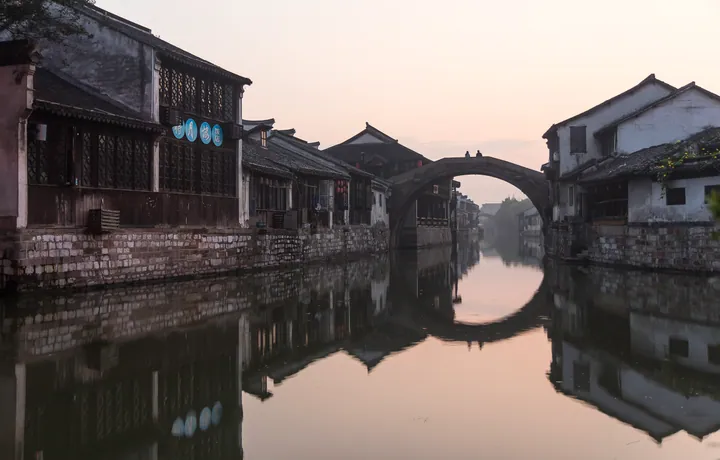 Sunrise over Tongjin Bridge and the canal in Nanxun ancient water town, Huzhou ·
 Local life & food
Nanxun District local specialties
南浔区特色美食 · 2 specialties to discover
 Nanxun braised pork hock 南浔浔蹄AI dish illustration / AI 菜品示意图
The dish is rich and gelatinous, with a savoury-sweet sauce. The lean meat and soft skin give different textures in the same portion.
Source ↗Read the dish guide → Shanlian chilli-oil wontons 善琏辣油小馄饨AI dish illustration / AI 菜品示意图
Slippery wrappers and a little meat filling make a lighter bite than a large dumpling. The chilli oil adds aroma and heat to the bowl.
Source ↗Read the dish guide →All dish names · 全部菜名 (2)
More dishes from across Zhejiang are in the Zhejiang food guide.
Plan your visit
Getting there
Nanxun District is about 30 km in a straight line from central Huzhou. Search for 南浔区 in a map app to find stations and your accommodation.
Where to stay →Build your route
Start with Nanxun Ancient Town. The linked place guides have entrance and visit details.
Continue with Huzhou →More in Huzhou
Sources & geographic information
Administrative names and parent areas: Official geographic directory · Reference date 2026-09-06.
Some facts checked against 南浔区 — Wikipedia contributors, CC BY-SA 4.0.
Some facts checked against 南浔镇 — Wikipedia contributors, CC BY-SA 4.0.
Photo: Nanxun Ancient Town · Stefan Fussan · CC BY-SA 3.0. Full frame retained; proportionally resized and converted to WebP. No retouching or changes to the photographed subject. Card displays may crop the view.

Map data © OpenStreetMap contributors. Pins mark approximate centres, not entrances or boundaries.