


Get to know Deqing County
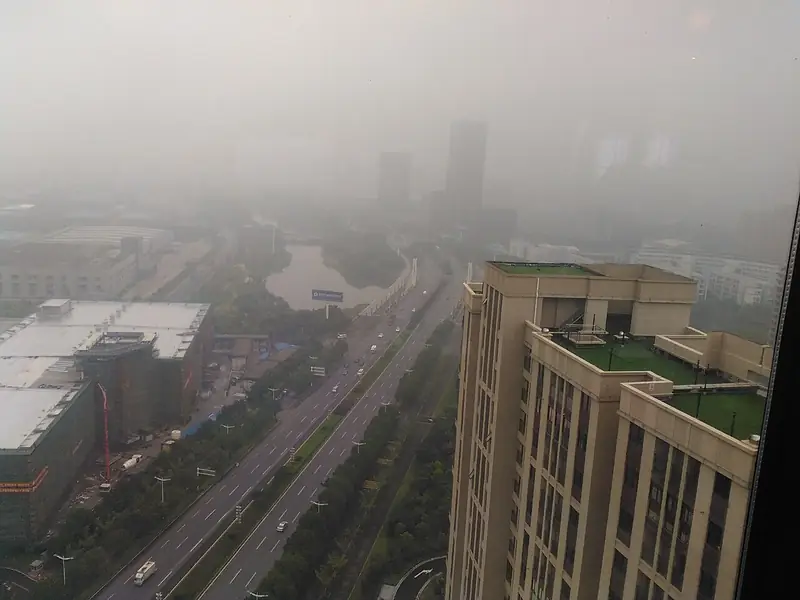
Photo adjustments
EXIF orientation normalized; resized without changing aspect ratio; converted to WebP. No subject edits.
- Administrative area
- County · 县
- Part of
- Huzhou
- Chinese name
- 德清县
- Local areas
- County guide
Area & population
- Area in the source
- 937.70 km²
- Population · 2020 census
- 548,568
Source: cited geographic source, as of the dates shown.
Setting and landscape
Deqing is high in the west and low in the east. The west is hill country formed by outliers of the Tianmu Mountains (天目山), with the Mount Mogan (莫干山) scenic area. The county also has the Xiazhu Lake (下渚湖) national wetland park, where the rare crested ibis has been released. The centre is hilly and the east is a plain of waterways. The East Tiaoxi River (东苕溪) is the county's main waterway, and the Grand Canal (京杭大运河) passes its eastern outskirts.
History
Deqing is described as one of the places where the Liangzhu culture (良渚文化) arose, and as the homeland of the ancient Fangfeng (防风) state. Yong'an County (永安县) was founded here in 222 under Wu of the Three Kingdoms and renamed Wukang (武康) in 280. In 691 the Tang split off the eastern part as Wuyuan County (武源县), which was later renamed Deqing. The two counties existed side by side until they merged as Deqing in 1958, and the county seat moved to Wukang in 1994.
What to see
Mount Mogan lies more than 40 kilometres northwest of Hangzhou. It is a 20-square-kilometre bamboo-covered mountain whose main peak, Tashan (塔山), reaches 720 metres. It is traditionally grouped with Lushan (庐山), Beidaihe (北戴河) and Jigongshan (鸡公山) as one of China's four great summer retreats. American missionaries came upon it as a summer retreat in the 1890s, and the first European-style villa went up in 1898. By the 1920s the mountain had 154 Western villas. Chiang Kai-shek and Soong Mei-ling spent their honeymoon there in December 1927. The name is linked to the legend of the swordsmiths Ganjiang (干将) and Moye (莫邪). The Sword Pool (剑池) on the mountain is presented as the place where Ganjiang ground his swords.
Xinshi (新市), in the east of the county, is an old water town with more than 400 old houses from the Ming, Qing and Republican periods, 14 old bridges and about a hundred Ming and Qing landing steps. Its Xihekou Old Street (西河口老街) was used as a location for the film The Lin Family Shop (林家铺子).
Food and local products
Local products include early bamboo shoots, Hu sheep (湖羊), silk, freshwater pearls and soft-shelled turtles. Xinshi is known for braised mutton (酱羊肉) and tea cakes (茶糕). The silkworm-blessing ritual "sweeping the silkworm-flower floor" (扫蚕花地) began in Deqing. A costumed woman sings and dances the steps of silkworm rearing to a small gong, and it entered the national intangible-heritage list in 2008.
Highlights
- Mount Mogan 莫干山: 720 m bamboo-covered summer retreat with 154 Western villas by the 1920s.
- Xinshi old town 新市古镇: Water town with 400+ Ming, Qing and Republican houses and 14 old bridges.
- Xiazhu Lake 下渚湖: National wetland park where the rare crested ibis has been released.
- Sweeping the silkworm-flower floor 扫蚕花地: Silkworm-blessing song and dance that began in Deqing; national intangible heritage since 2008.
Sources for this guide
德清县 - 维基百科,自由的百科全书 · Wikipedia (Chinese) · CC BY-SA 4.0
莫干山 - 维基百科,自由的百科全书 · Wikipedia (Chinese) · CC BY-SA 4.0
新市镇 (德清县) - 维基百科,自由的百科全书 · Wikipedia (Chinese) · CC BY-SA 4.0
蚕桑习俗(扫蚕花地) - 中国非物质文化遗产网 · China Intangible Cultural Heritage Network (ihchina.cn)
Original English written from the listed sources and checked sentence by sentence against quoted extracts by a separate reviewer. Updated 2026-09-25.
Explore Deqing County
Core places to explore, with English and Chinese names.
Places to explore around Deqing County
 Tea plantation and hillside villas on Mount Mogan, Deqing County, Huzhou · 德清县莫干山茶园与山间别墅,湖州市 Source-recorded photograph date: 2009-09-12.
Mount Mogan莫干山
Moganshan combines bamboo-covered slopes with villas developed as a summer retreat. The surviving European-style houses reveal the mountain’s early twentieth-century resort history, while Sword Pond connects its landscape with…
Read the place guide →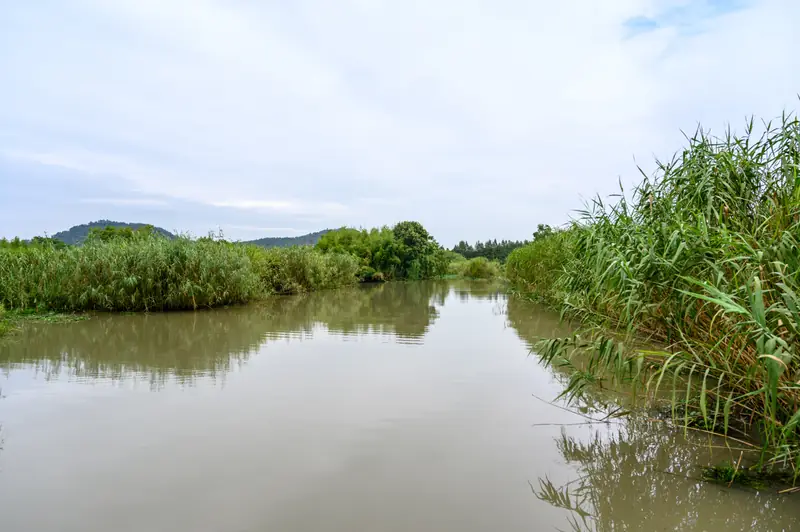 Xiazhu Lake · 下渚湖
Xiazhu Lake下渚湖
Xiazhuhu is a reed-rich wetland in Deqing whose landscape restoration is closely connected with the recovery of the crested ibis in southern China.
Read the place guide →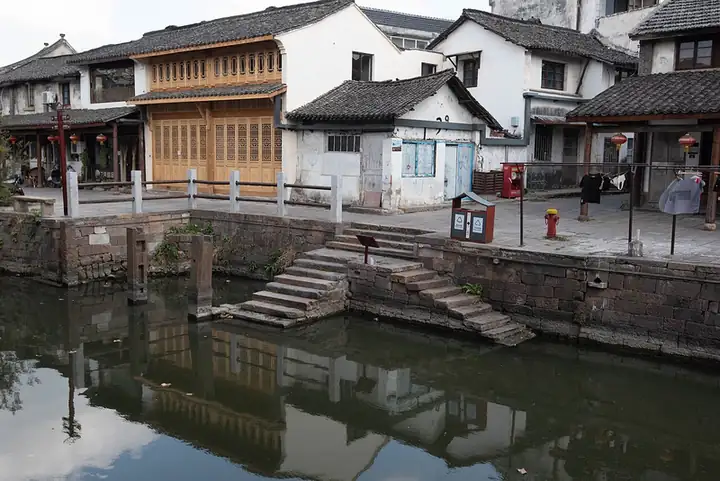 Xinshi Ancient Town · 新市古镇
Xinshi Ancient Town新市古镇
Xinshi, also known as Xiantan, is a canal town in Deqing whose old waterfront streets preserve the close relationship between trade, domestic life and silkworm culture.
Read the place guide →Plan your visit
Getting there
Deqing County is about 40 km in a straight line from central Huzhou. Search for 德清县 in a map app to find stations and your accommodation.
Where to stay →Build your route
Mount Mogan and Xiazhu Lake are both listed here. The linked place guides have entrance and visit details.
Continue with Huzhou →More in Huzhou
Sources & geographic information
Administrative names and parent areas: Official geographic directory · Reference date 2026-09-06.
Some facts checked against 德清县 — Wikipedia contributors, CC BY-SA 4.0.
Some facts checked against 莫干山 — Wikipedia contributors, CC BY-SA 4.0.
Some facts checked against 新市镇 (德清县) — Wikipedia contributors, CC BY-SA 4.0.
Photo: Mount Mogan · Jakub Hałun · CC BY-SA 4.0. Full frame retained; proportionally resized and converted to WebP. No retouching or changes to the photographed subject. Card displays may crop the view.

Photo: Xiazhu Lake · Source photographer · License not provided. EXIF orientation normalized; resized without changing aspect ratio; converted to WebP. No subject edits.
Photo: Xinshi Ancient Town · Siyuwj · CC BY-SA 4.0. EXIF orientation normalized; resized without changing aspect ratio; converted to WebP. No subject edits.

Map data © OpenStreetMap contributors. Pins mark approximate centres, not entrances or boundaries.