

Jishou Sour-Cured Pork 吉首酸肉
Jishou Sour-Cured Pork is a Xiangxi dish of salted pork coated with cornmeal, cured in a sealed jar until sour, and commonly stir-fried. Its name points to the Jishou version of a wider Xiangxi sour-meat tradition, so the recipe is regional rather than a single fixed formula.
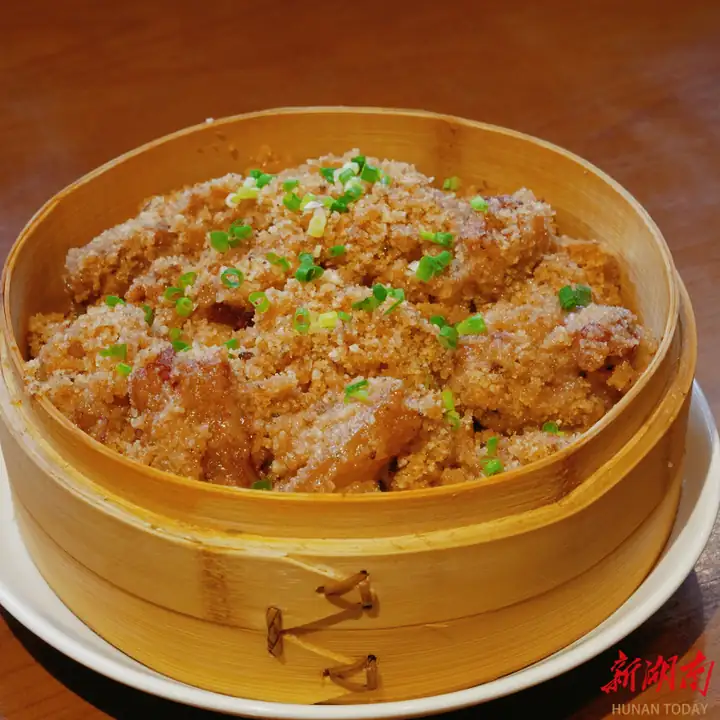
Image notes
Resized for the web; the photo itself has not been edited.
Tap any red Chinese text to hear it in Mandarin.
What it is
This is a pork dish associated with Jishou and the wider Xiangxi Tujia and Miao food culture. Xiangxi sources describe meat-based sour foods as one part of a broader sour-food tradition, alongside vegetable and grain preparations; Hunan’s official culinary overview places Jishou within the Xiangxi mountain-school of Hunan cooking, known for salted, sour meat and savoury, sour-spicy flavours.
How the sourness is made
A common regional method starts with fatty pork, salt and pepper, then coats the meat with cornmeal before packing it into a sealed earthenware jar. A Yongshun county media account describes roughly five hours of salting, about half a month sealed in the jar, and wok-frying the cured pieces; a separate recipe published by Lee Kum Kee gives a 15-day version with dried red chilli and green garlic. These are useful examples, not a universal specification: household and restaurant versions can change the grain coating, seasoning and curing time.
The cornmeal is part of the cure. When the pieces are fried, the coating browns and becomes fragrant while the pork releases fat. Expect a savoury, salty, gently sour taste with chilli heat in some versions, rather than a vinegar-based sourness. The regional descriptions emphasize yellow-golden colour and the contrast between a browned coating and rich pork.
How to order and eat it
Keep 吉首酸肉 Jíshǒu Suānròu on your phone or show it to the server. Ask 咸不咸? Xián bu xián? (“Is it salty?”) and 辣不辣? Là bu là? (“Is it spicy?”), then ask how that kitchen cooks its version. Because the cure itself supplies a strong taste, order a small portion to share with plain rice and a mild vegetable dish rather than treating it as a snack.
The dish contains pork and cornmeal, and the seasoning is not standardized. It is not a vegetarian option. If you avoid pork, have a grain allergy, or need low salt, ask about the exact ingredients before ordering; do not rely on the English translation alone. No single restaurant or current menu is endorsed here.
Practical tips
Jishou is the prefecture’s capital and a practical place to look for Xiangxi food, but the dish is not confined to one city kitchen. A Hunan culture-and-tourism itinerary lists 苗家酸肉 Miáojiā Suānròu among the foods of a Xiangxi route, while a 2025 Jishou food feature places the city’s eating culture alongside Qianzhou Ancient Town, Aizhai Bridge and Dehang Miao Village. Read the Chinese name on menus in Jishou or elsewhere in Xiangxi, and expect local wording such as 酸肉 Suānròu, 苗家酸肉 Miáojiā Suānròu or 土家酸肉 Tǔjiā Suānròu rather than assuming each label is identical.
Where to eat it
You can find Jishou Sour-Cured Pork all over Hunan, so there is no need to seek out one particular restaurant. To find one near you, search for “吉首酸肉” in Meituan (美团) or Amap (高德地图) and check recent reviews, distance and opening hours.
More dishes to compare
Explore related local specialties and compare their names, preparation notes and ordering guidance.
Pork with fresh peppers 辣椒炒肉 →
Pork with fresh peppers (辣椒炒肉) is the everyday Hunan pork dish and the opposite approach: fresh meat stir-fried quickly with chilli instead of cured pork cooked from a jar. Putting the two together shows the range of Hunan pork cooking, from a quick stir-fry to a fermented store-cupboard dish.