

Shaanxi Hot-Oil Noodles 油泼面
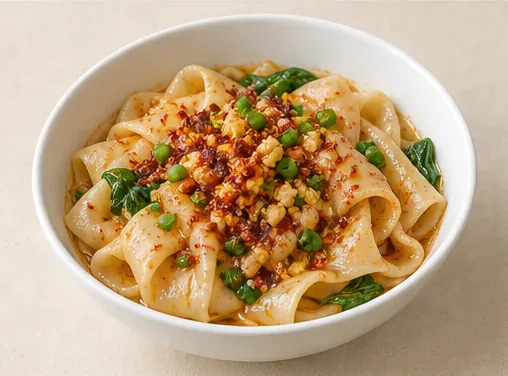
A bowl of cooked wheat noodles finished with sizzling hot oil over chilli and aromatics: a familiar Xi’an expression of the wider Shaanxi and Guanzhong noodle tradition, not a dish exclusive to one city.
Tap any red Chinese text to hear it in Mandarin.
Youpo mian is named for its finishing move. Cooked noodles are drained into a bowl, then topped with seasonings—commonly chilli flakes or powder, salt, minced garlic and scallion—before very hot oil is poured over them. The oil hisses against the chilli and aromatics, releasing a toasted, fragrant smell. A recent account of Xi’an food describes broad noodles dressed with salt, vinegar, soy sauce and a generous layer of ground red chilli, then finished with hot rapeseed oil; this is a documented local style, not a formula every kitchen follows.
Expect chewy wheat noodles under a glossy, aromatic coating rather than a deep bowl of broth. Chilli brings warmth, while garlic and scallion add a sharp, fresh edge; vinegar, when used, cuts through the oil with tang. Some versions include leafy greens, cilantro or other toppings. The oil, chilli level, noodle width and additions vary by cook, so the colour of the chilli is not a dependable measure of heat.
Wide, hand-pulled “belt” noodles are common in Shaanxi noodle culture, and an account of a Xi’an noodle shop describes them in a biangbiang preparation finished with hot oil. But biangbiang names a broad noodle style, while youpo describes the hot-oil finish: the terms overlap in some bowls but are not interchangeable names for one fixed dish. Youpo mian belongs to the wider Shaanxi and Guanzhong food tradition. Xi’an is one of its important places to encounter it, not its exclusive point of origin.
To eat it, let the first sizzle subside, then lift and turn the noodles from the bottom so the chilli, aromatics and oil coat them evenly. Taste before adding more chilli or vinegar. When ordering, 油泼面 (yóu pō miàn) means hot-oil-splashed noodles; ask 辣不辣? Là bu là? (“Is it spicy?”) or 少辣 / 不要辣 (“less chilli / no chilli”) and check whether greens, egg or meat are included if that matters to you. Recipes and toppings differ; a vegetarian request should confirm the cooking oil, seasonings and any stock or meat additions with the individual kitchen rather than assume a standard bowl.
Where to eat it
You can find Shaanxi Hot-Oil Noodles all over Xi’an, so there is no need to seek out one particular restaurant. To find one near you, search for “油泼面” in Meituan (美团) or Amap (高德地图) and check recent reviews, distance and opening hours.
More dishes to compare
Explore related local specialties and compare their names, preparation notes and ordering guidance.
Biangbiang Belt Noodles biangbiang面 →
Biangbiang mian (biangbiang面) are broad, hand-pulled wheat noodles associated with Shaanxi. Their belt-like width and chewy bite define the noodle, while the toppings depend on the particular bowl ordered.
Huyi Noodles for Dipping in Broth 摆汤面 →
Baitang mian (摆汤面) is a noodle preparation associated with Huxian, now Huyi in the Xi’an area. Its distinguishing service keeps noodles and a seasoned soup separate so that small portions of noodle can be dipped before eating.
Sources & reading
Recipes and servings vary between kitchens.