

Tibetan Steamed Buns 藏包
Gannan’s 藏包 (zang bao) are steamed, unleavened buns whose minced beef or mutton filling is mixed with scallion, salt, pepper, oil and meat broth. Their thin wrappers are steamed into vase- or lotus-like shapes. They are a regional Gannan snack rather than a single shop’s signature dish.
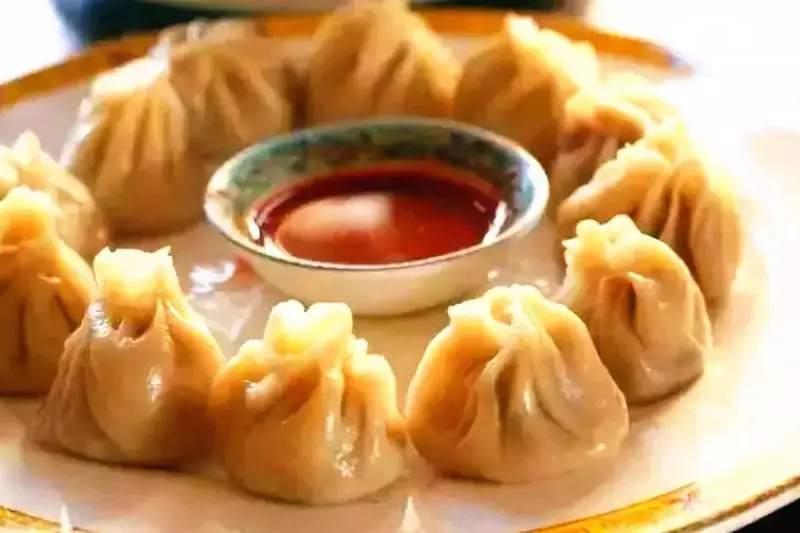
Image notes
Resized for the web; the photo itself has not been edited.
Tap any red Chinese text to hear it in Mandarin.
What you are eating
In Gannan, 藏包 means a meat-filled steamed bun made with an unleavened wrapper. A government description says the usual filling combines minced beef and mutton with a little scallion, salt, pepper, cooking oil and meat broth; the assembled buns are then steamed. The same account compares their shapes to small vases or opening lotus flowers. A Xiahe County government entry gives the same basic method and records the local nickname “crystal buns,” referring to their pale, carefully shaped appearance.
The broth is mixed into the filling, so the bun can release hot liquid when opened. A provincial food feature describes the wrapper as thin and pale and records a practical way to eat it: first draw out some of the liquid from the top, then take a bite, rather than biting straight into a piping-hot bun and spilling the juices. That is a useful precaution, not a claim that every vendor follows one serving ritual.
Do not treat the recipe as fixed across the prefecture. The same food feature preserves a local account of earlier buns made with highland-barley flour, while the version it describes uses wheat flour, lamb as the main filling, some lamb fat and seasonings. The government wording “usually” is the safer guide: the meat may be beef, mutton or a local combination, and the seasoning can vary. Because the standard filling is meat-based, do not assume that a bun is vegetarian or free of meat, dairy, gluten or other allergens without asking the vendor.
How to look for it
藏包 is a regional food, not a venue with one visitor entrance, ticket or reservation system. Search for 藏包 Zàngbāo in Meituan (美团) or Amap / Gaode Maps (高德地图). If the results are unclear, add 甘南 Gānnán, 合作 Hézuò or 夏河 Xiàhé. Open the current menu and recent reviews, check the listed opening information, and ask whether 藏包 is being made and served that day. Map ranking is not evidence of authenticity, and a result that appears today is not a guarantee of supply later in the day.
For an intercity food stop, choose the town that fits your wider Gannan route rather than travelling to an invented “藏包 street.” A Hezuo municipal transport page identifies 合作汽车站(北站) and 合作汽车站(南站) and lists coach links from Hezuo to Lanzhou, Xiahe, Linxia and Xining. That page was published in 2017 and includes old departure times, so use the station names as a starting point only: confirm the current service, the actual arrival station and a return departure on the day you travel. From the selected station, use the live Chinese address shown for the shop you choose; there is no single verified last-mile route for a dish sold across the prefecture. Keep the Chinese name 藏包 ready when asking for it.
More dishes to compare
Explore related local specialties and compare their names, preparation notes and ordering guidance.
Zhuo Ni Cang Bao 卓尼藏包 →
A county-level version of the same Tibetan bun from Zhuoni (卓尼) in Gannan.