

Hot dry noodles 热干面
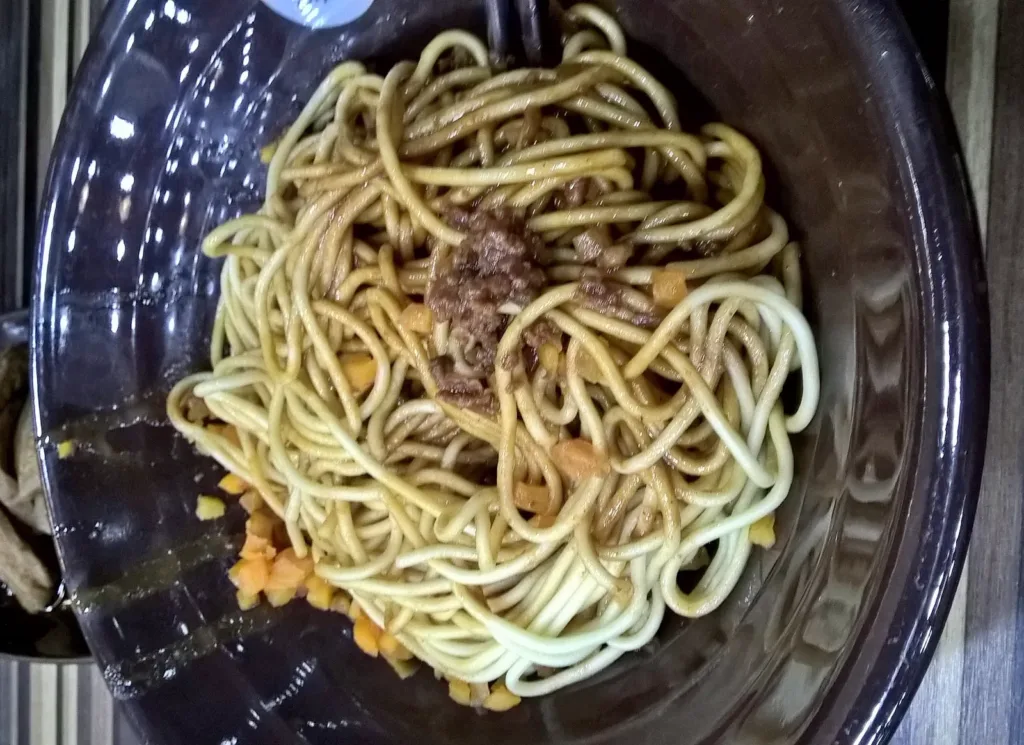
Hot dry noodles (热干面, règānmiàn) are Wuhan’s warm, sesame-coated breakfast noodles: pre-cooked wheat noodles are reheated, tossed with sesame sauce and savoury condiments, then adjusted with pickled vegetables, scallions and chilli. What makes them distinctive is the firm noodle and thick, aromatic coating, not a bowl of broth.
Tap any red Chinese text to hear it in Mandarin.
Why this dish matters in Wuhan
Hot dry noodles belong to Wuhan’s guozao (过早), the local habit of eating breakfast out. A Wuchang District culture-and-tourism guide calls them a first choice for guozao, while Wuhan’s municipal commerce bureau describes the dish as part of a change in the city’s breakfast habits. The best reason to try a bowl is its everyday setting: it is a hot, quickly assembled breakfast built around texture and mixing rather than a special-occasion presentation.
Wuhan’s official English visitor material places Re Gan Mian alongside other local foods such as Sanxian Doupi, pork-rib and lotus-root soup, and Wuchang fish. It is one expression of the city’s food culture, not a claim that every Hubei noodle bowl is the same dish.
Local histories do not give visitors one uncontested invention date. The Wuchang guide carries an early-1930s Hankou street-vendor account, while a Wuhan municipal account published in 2018 describes the noodles as having more than 80 years of history at that time. It is safer to understand hot dry noodles as a dish shaped by Wuhan’s breakfast trade than to repeat a single origin story as settled fact.
How the bowl is made
A common shop process has two stages. Noodles are cooked in advance, drained, tossed with oil and spread out to cool. When ordered, they are dipped briefly into boiling water to warm them, drained again and dressed. The result is neither a cold-noodle salad nor a soup noodle.
The sauce is built around sesame paste. Soy sauce, vinegar, sesame oil, chilli oil and other savoury seasonings vary by shop; pickled vegetables, dried radish, sour cowpea, scallions or coriander may be offered as additions. Local guidance also mentions dried shrimp in some preparations, so do not treat the toppings as a universal fixed list.
Flavour, texture and the first bite
Look for slender strands that are springy rather than soft, with a dense sesame coating that smells roasted and tastes savoury, rich and slightly sharp when vinegar or chilli is present. “Dry” describes the lack of free broth, not a crisp or dehydrated noodle. A small amount of liquid may be used to loosen the paste, but the finished bowl should still cling to the strands.
Mix from the bottom as soon as the bowl arrives. This distributes the paste and pickled seasoning before the warm noodles cool. If the sesame sauce feels concentrated, a local food guide suggests having a drink such as soy milk alongside the bowl; it is an accompaniment, not part of the noodle recipe.
How to order and handle dietary needs
Show the Chinese name 热干面 Règānmiàn when ordering. Ask about chilli before the bowl is mixed, and check which pickles or extra toppings are available. A vendor may offer beef or other additions, but these are shop-specific versions rather than a required ingredient of the classic bowl.
Sesame is mixed into the main sauce, not merely scattered on top. The noodles are wheat-based, and soy-seasoned sauces are common; some local descriptions also include dried shrimp. If you avoid wheat, sesame, soy or seafood, explain the restriction before ordering and ask what is in the sauce. Do not infer vegetarian or allergen-free status from the bowl’s appearance.
Names and variations
The name 热干面 Règānmiàn is useful to remember because “hot dry noodles” is a translation, not a promise of one national recipe. Wuhan and Xinyang versions use broadly similar methods but can taste different, and even Wuhan shops vary in seasoning and toppings. Packaged products add another distinction: a 2025 Hubei Daily report describes six industrial categories, including fresh-dry, fresh-moist, semi-cooked, frozen and instant forms. Those formats should not be used to predict the texture of a freshly served breakfast bowl.
Try it as a small, hot breakfast portion if you are also sampling other Wuhan morning foods. The point of comparison is the contrast between a firm noodle and a thick sesame coating; the bowl is at its clearest when eaten soon after mixing.
More dishes to compare
Explore related local specialties and compare their names, preparation notes and ordering guidance.
Tianmen eel rice noodles 天门鳝鱼米粉 →
Rice noodles are heated and topped with cooked eel in a savory preparation. The eel may be cut into strips and seasoned separately before joining the noodle bowl. Smooth noodles contrast with the eel's tender, slightly springy flesh, while the cooking juices enrich the broth or sauce.
Wuhan sesame-coated rice balls 欢喜坨 →
Sweet rice dough is formed into balls, sometimes around a filling, then coated with sesame and fried. Controlled heat allows the dough to expand and cook through without burning the seeds outside. Expect toasted sesame first, followed by sweet, sticky rice dough. The texture changes as the balls cool: the shell softens and the dough becomes firmer and chewier, which makes a freshly cooked serving distinctive.
Sources & reading
Recipes and servings vary between kitchens.
- Wuhan Municipal Commerce Bureau: A bowl of hot dry noodles changed a city’s breakfast habits
- Wuchang District Culture and Tourism Bureau: Hot dry noodles
- Hubei Provincial Foreign Affairs Office: Wuhan hot dry noodles
- Wuhan Municipal Government: Fun in Wuhan, bites to love
- Hubei Daily: Six kinds of hot dry noodles?
Image credits & notes (1)
- A bowl of Wuhan hot dry noodles (reganmian) served at a snack shop in Wuhan. Photo: Nature42Photo: CC0 1.0