


Get to know Qijiang District
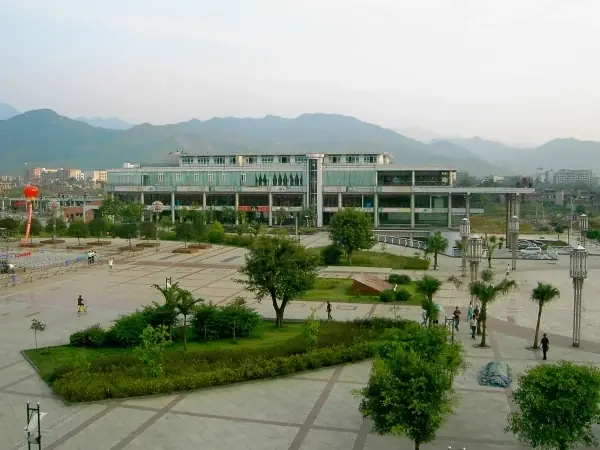
- Administrative area
- District · 市辖区
- Part of
- Chongqing
- Chinese name
- 綦江区
- Local areas
- District guide
Area & population
- Area
- 2,748.00 km²
- Population · 2010
- 1,213,770
- Administrative seat
- Gunan Subdistrict (古南街道)
Source: English Wikipedia, as of the dates shown.
Qijiang is a current district of Chongqing Municipality, but its countryside and towns lie well beyond the municipality’s central urban core. Think in separate clusters: the district seat for museums and printmaking; forested Gujian Mountain to the northwest; the Laoyingshan geological area; and Dongxi’s old river town in the south. The central government’s 2025 administrative adjustment changed the northern city structure, while leaving Qijiang among Chongqing’s districts.
In the district seat, pair the Qijiang Peasant Print Academy (綦江农民版画院) with the Qijiang Museum (綦江博物馆). At the print academy, look for the carved lines and layered colors that turn ordinary rural work, landscapes and local history into folk prints. The technique makes a good visit more than a quick gallery stop: notice how the raised surfaces take ink, and how different color passes build a finished image. The museum’s documented collections and displays cover local geology, dinosaur traces, revolutionary history and other regional cultures; allow time to move between subjects rather than treating it as a single-theme fossil room.
For mountain scenery, Gujian Mountain (古剑山) combines forest, Danxia sandstone formations and the cliffside Jingyin Temple (净音寺). Walk the signed paths at a comfortable pace, pause at overlooks, and visit the temple respectfully; cloud seas and sunrise are weather-dependent, not guaranteed. The district’s current scenic-area register lists Gujian Mountain as a 4A attraction at Qing Shui Village, Gunan Subdistrict, with free admission and a published 09:00–17:00 schedule. Check locally before setting out in case conditions change.
Laoyingshan (老瀛山), in Sanjiao Town, is the district’s more explicitly geological outing. The National Geopark landscape is associated with dinosaur footprints and steep red-rock scenery. Follow current marked access and safety instructions rather than leaving paths to look for fossils. The district register lists the Laoyingshan scenic area as a 4A site at Hongyan Village, Sanjiao Town, and publishes its current ticketing and opening details; confirm them before travel.
In the south, Dongxi Ancient Town (东溪古镇) is a former river-port market on the salt-trading route toward Guizhou. Its stone lanes, old bridges and riverside setting reward a slow walk: begin around the historic town streets, look for the old bridge and surviving traditional buildings, then follow the river edge back through the lived-in lanes. This is an inhabited town, not a museum set; keep voices low, ask before photographing residents, and do not enter private courtyards. The district tourism route pairs Dongxi with the museum and Laoyingshan, but the distances make it a separate outing from the district-seat cluster.
For a red-history route, the official local itinerary links Wang Liang’s former home in Yongcheng with sites in the district seat and the Shihao Red Army Martyrs’ Cemetery (石壕红军烈士墓) in the far south. The cemetery is listed at No. 104 Jiaotong Road, Shihao Town, and is registered as a free 2A scenic site with published daytime hours. Visit memorial grounds quietly and follow posted rules; do not treat the route as one compact walk.
Getting around
There is no confirmed metro connection to these outlying Qijiang sites. Qijiang East Railway Station (綦江东站) is the district’s high-speed rail stop on the Chongqing–Guiyang line; check China Railway 12306 for trains on your actual travel date. The district’s 2021–2025 transport plan also names Qijiang East among its principal passenger hubs, while several other rail links in that plan are future or under-study proposals, not a promise of current visitor service.
For the main town, the museum and print academy are in or near the district-seat area; use their Chinese names in a licensed taxi or ride-hailing app. For Gujian Mountain, the district’s official address is 綦江区古南街道清水村 Qíjiāng Qū Gǔnán Jiēdào Qīngshuǐ Cūn; request the scenic-area entrance and use the signed public visitor drop-off or parking area, not a temple forecourt or private road. For Laoyingshan, use 綦江区三角镇红岩村 Qíjiāng Qū Sānjiǎo Zhèn Hóngyán Cūn and the signed scenic-area visitor access. For Shihao’s memorial cemetery, use 綦江区石壕镇交通路104号. There is no single taxi drop-off for a district this large; confirm that a driver can reach the particular named attraction before starting.
A route guide lists bus 504 for Gujian Mountain, but does not provide a reliably current boarding stop, return stop or timetable. The district reported five direct station-to-attraction shuttles during the summer 2025 travel season; that dated seasonal service is not a year-round timetable. Ask the district transport operator or attraction whether a bus or shuttle is running on your day, and arrange a return before leaving the town center. The routes, stops and schedules of rural buses are not established here, so do not assume a service for Dongxi, Laoyingshan or Shihao.
Guide sources
- Xinhua: Chongqing adjusts part of its administrative divisions
- Qijiang District: Transport development plan 2021–2025
- Qijiang District: Register of A-rated scenic areas
- CQNews: Three recommended Qijiang tourism routes
- Qijiang District Transport Commission: Summer visitor shuttles, 2025
- China Railway 12306: Qijiang East ticket query
- iChongqing: Gujian Mountain in Qijiang District
- China Communist Party News: Qijiang in prints and beyond
Explore Qijiang District
Core places to explore, with English and Chinese names.
Places to explore around Qijiang District
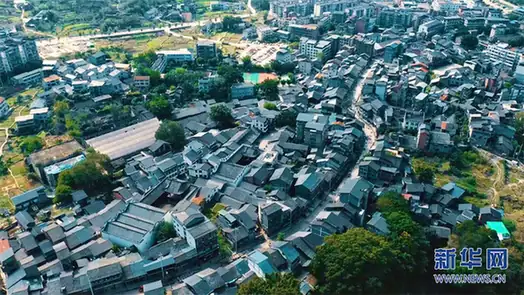 Dongxi Ancient Town · 东溪古镇
Dongxi Ancient Town东溪古镇
In southern Qijiang, Dongxi is a hillside-and-river heritage town whose old lanes, timber guild halls and waterside setting reward a slow walk beyond Chongqing’s central urban area.
Read the place guide → AI illustration · AI 示意图(仅供参考,非该地点实拍)
Heishan Valley黑山谷
A long forested gorge walk in Heishan Town, far south of central Chongqing, where a stream, waterfalls, steep wooded slopes, plank paths and floating bridges shape the experience. It is best approached as a substantial nature outing, not a quick downtown stop.
Read the place guide → Dragon Scale Stone Sea · 龙鳞石海
Dragon Scale Stone Sea龙鳞石海
A walk-through karst stone forest in Shilin Town, where narrow limestone ridges, fossil-bearing rock, a water-cut gorge and cave scenery make a rewarding geology-focused day trip from Wansheng.
Read the place guide →Local life & food
Qijiang District local specialties
綦江区特色美食 · 6 specialties to discover
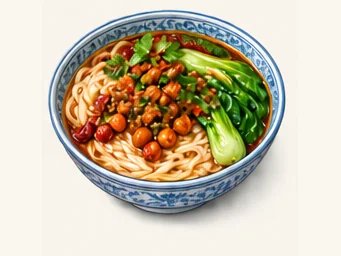 Qijiang rice noodles 綦江米粉AI illustration · AI 示意图
A Qijiang breakfast bowl of tender rice noodles in savory broth, finished with a seasoned topping, greens and optional chili; named local styles vary.
Source ↗Read the dish guide →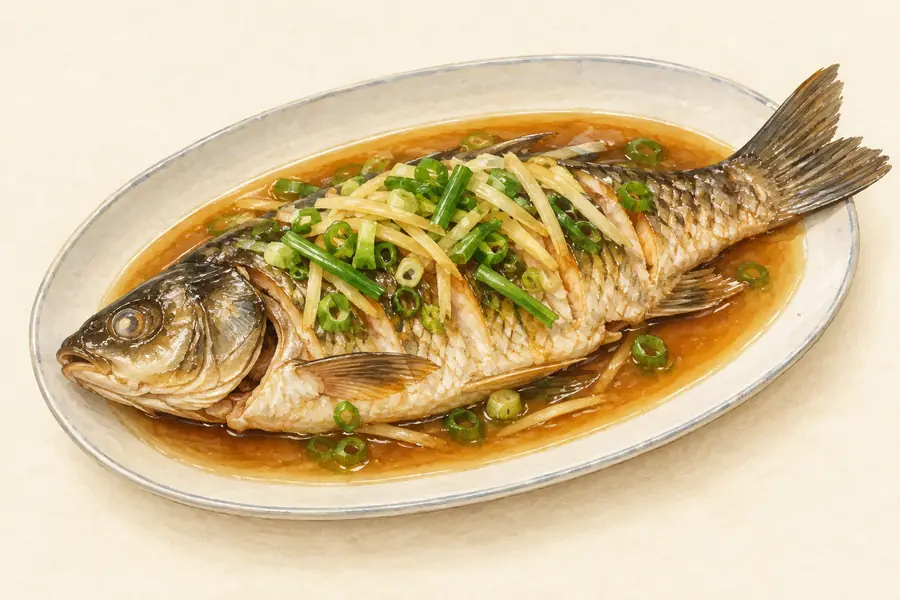 Qijiang Beidu Hot-Oil Fish 綦江北渡鱼AI illustration · AI 示意图(仅供参考,非实拍)
A river-fish dish associated with the Beidu ferry corridor on the Chongqing–Jiangjin border, served in a bold, quickly cooked style with chili, Sichuan pepper and a final pour of hot oil.
Read the dish guide → Ganshui Stir-Fried Cured Pork with Dried Radish 赶水萝卜干炒腊肉AI illustration · AI 示意图(仅供参考,非实拍)
A Qijiang-associated home-style pairing of Ganshui dried radish and cured pork, where the radish’s concentrated, crisp-springy bite meets savory meat and its rendered fat.
Read the dish guide →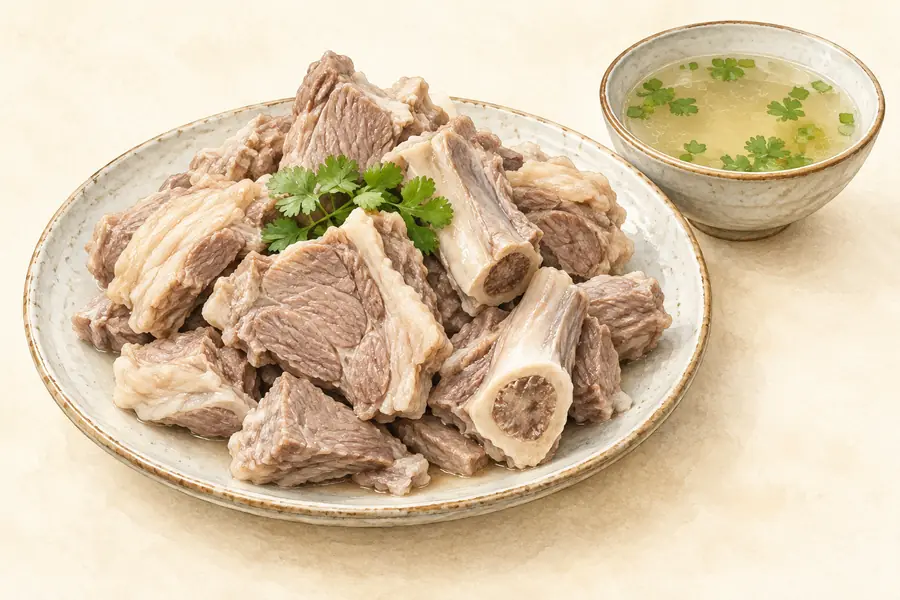 Anwen Goat Dishes 安稳羊肉AI illustration · AI 示意图(仅供参考,非实拍)
A goat-meat tradition associated with Anwen Town in Qijiang District, best known for clear or spicy red soup-pot lamb, steamed goat, and other preparations made with locally raised black goats.
Read the dish guide → Mugua Chilli Peppers 木瓜海椒AI illustration · AI 示意图(仅供参考,非实拍)
A Qijiang-listed Chongqing food name whose recipe is not documented in the sources available here. Use the full Chinese name when asking locally, and confirm what the kitchen means before ordering.
Read the dish guide → Ganshui Caodou Radish Stewed with Meat 赶水草蔸萝卜炖肉AI illustration · AI 示意图(仅供参考,非实拍)
A Qijiang-area winter specialty that pairs Ganshui’s rounded white radish with cured pork, tripe, or lamb in a warming stew.
Read the dish guide →More dishes from across Chongqing are in the Chongqing food guide.
Plan your visit
Getting there
Qijiang District is about 60 km (straight-line distance) from central Chongqing. Search for 綦江区 in a map app to find stations and your accommodation.
Where to stay →Build your route
Dongxi Ancient Town and Heishan Valley are about 35 km apart (straight-line distance). The linked place guides have entrance and visit details.
Continue with Chongqing →More in Chongqing
Sources & geographic information
Administrative names and parent areas: Official geographic directory (dmfw.mca.gov.cn) · Reference date 2026-09-06.
Background text adapted from Qijiang, Chongqing — Wikipedia contributors, under CC BY-SA 4.0. Text has been shortened and reorganized; source revision 1353051233.
Photo: Dongxi Ancient Town · sohu.com. Resized for the web; the photo itself has not been edited.
Photo: Dragon Scale Stone Sea · cq.cqnews.net. Resized for the web; the photo itself has not been edited.
Map data © OpenStreetMap contributors. Pins mark approximate centres, not entrances or boundaries.
