

Zhangye fish-shaped noodles 张掖搓鱼子
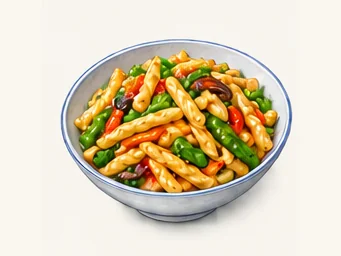
Cuo Yuzi (搓鱼子), also called Cuoyu noodles (搓鱼面), is a Zhangye hand-shaped wheat or mixed-grain noodle: each piece is rubbed into a thick-centred, pointed “fish” shape, then served in broth, with sauce, or stir-fried. Its appeal lies in the palm-made texture and in the way one local noodle has different county and household versions.
Tap any red Chinese text to hear it in Mandarin.
What the name describes
There is no fish in the name’s basic explanation. 搓 refers to rubbing or rolling the dough by hand, while 鱼 describes the finished piece: thicker in the middle and pointed at both ends. Zhangye’s municipal history office lists 搓鱼子 among the city’s traditional snacks and says the hand-shaped pieces are smooth, non-sticky and suitable either for soup or for dry eating.
How it is made and served
A simple dough starts with flour, salt and water. The Gansu provincial government’s food note describes kneading the dough with salt water, rolling it into a sheet about 0.5 centimetres thick and cutting it into four-edged strips. In the finished dish, those strips are divided into small pieces and rubbed into short, spindle-like noodles. A Zhangye municipal food feature describes repeated kneading and resting, followed by rubbing pieces between the palms until the centre swells and the ends taper.
The noodle’s shape is not just decorative. It gives the centre a firm, chewy bite while the narrow ends cook more softly. A local English food guide describes three practical presentations: in soup, mixed with sauce, or stir-fried. The municipal food feature gives a more recognisably Zhangye version of dry mixing, with a tomato-and-green-pepper sauce, garlic, chilli oil and cucumber; its soup version uses broth and greens.
A Zhangye food with local variations
The dish belongs to the everyday flour-food tradition of Zhangye. The city’s history office explains that wheat production helped make noodles central to local snacks, and notes that county and district kitchens do not all make 搓鱼子 in the same way. In parts of Minle and Shandan, the same source records a longer barley-flour version, served with garlic, chilli and vinegar. This is one reason not to expect every bowl to look or taste identical.
The preparation has also gained formal cultural recognition. In the notice published on 26 February 2025, the Gansu provincial government’s fifth list of representative provincial intangible cultural-heritage projects includes 甘州搓鱼子制作技艺 Gānzhōu Cuōyúzi Zhì Zuò Jì Yì under traditional techniques, with Ganzhou District of Zhangye as the applying area. That listing concerns the preparation technique; it does not make every restaurant’s bowl a certified version.
Ordering in Zhangye
Show 张掖搓鱼子 Zhāngyè Cuōyúzi or 搓鱼面 Cuō Yú Miàn when ordering. Ask whether the kitchen serves it in broth, dry-mixed or stir-fried, and ask which flour and toppings are being used. Wheat, barley and buckwheat versions are all documented, while sauces and toppings may include meat or vegetables. Do not assume that a bowl is vegetarian, gluten-free or free of other allergens without checking the kitchen’s ingredients and preparation.
Where to eat it
You can find Zhangye fish-shaped noodles all over Gansu, so there is no need to seek out one particular restaurant. To find one near you, search for “张掖搓鱼子” in Meituan (美团) or Amap (高德地图) and check recent reviews, distance and opening hours.
More dishes to compare
Explore related local specialties and compare their names, preparation notes and ordering guidance.
Dunhuang donkey-meat yellow noodles 敦煌驴肉黄面 →
Yellow wheat noodles are cooked and served with prepared donkey meat and a savory sauce. The meat may arrive separately from the noodle plate, depending on the restaurant. The noodles have a firm, springy bite, while the sliced meat is dense and aromatic. Sauce brings the two components together.
Lanzhou beef noodles 兰州牛肉面 →
Fresh wheat dough is hand-pulled to the chosen width and cooked in a clear beef broth with radish, herbs and optional chili oil. Sliced beef may be included in modest amounts or ordered separately. The noodles are resilient, while the broth balances meaty depth with clean aromatics. Width changes the bite significantly even when the soup is identical.
Sources & reading
Recipes and servings vary between kitchens.