


Get to know Qinzhou District
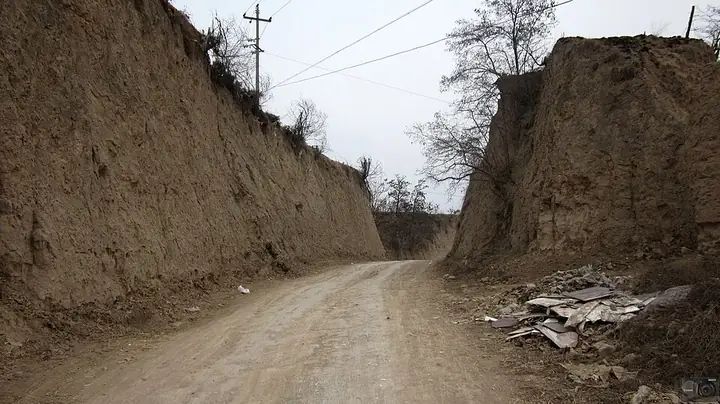
Photo adjustments
Full frame retained; resized proportionally to a maximum dimension of 960 pixels and converted to WebP quality 88. No crop, retouch, generated elements, or subject alteration. Final website rendition: full frame retained, proportionally resized to at most 720 pixels and converted to WebP. No additional retouching or subject alteration. Card displays may crop the view.
- Administrative area
- District · 市辖区
- Part of
- Tianshui
- Chinese name
- 秦州区
- Local areas
- District guide
Area & population
- Area in the source
- 2,442.00 km²
- Population · 2020
- 656,689
- Administrative seat
- Dacheng Subdistrict
Source: cited geographic source, as of the dates shown.
History
The district government counts Qinzhou among the earliest commanderies and counties set up in China and describes it as a gateway to Longyou (陇右), a strategic pass and a trading centre since ancient times, and as a "pearl" of the Silk Road. The present district was called Qincheng District (秦城区) until 1 January 2005.
In the autumn of 759 the poet Du Fu (杜甫) brought his family to Qinzhou after leaving his post during the unrest that followed the An Lushan rebellion. He first lived inside the city, visited Nanguo Temple (南郭寺) and the Maijishan cave temples, and went out to the countryside to see his friend, the exiled monk Zangong (赞公), writing five poems about their meetings.
What to see
The district has five national 4A scenic areas. Its best-known old buildings are the Fuxi Temple (伏羲庙), a Ming-dynasty complex; Yuquan Guan (玉泉观), which the government calls the foremost Taoist temple of south-eastern Gansu; and the thousand-year-old Nanguo Temple. The government groups the district's attractions under five themes: Fuxi culture, early Qin culture, the Three Kingdoms, Ming and Qing architecture, and folk customs.
Setting and landscape
Qinzhou straddles the Yangtze and Yellow River basins. The climate is described as mild, with no severe winter cold or summer heat and 493.6 millimetres of rain in an average year, and it has long been called the "Jiangnan of Gansu" (陇上江南). National Road 310, expressways to Baoji, Dingxi and Shiyan, and the Baoji–Lanzhou high-speed railway pass through the district.
Food and local products
Jiangshui noodles (浆水面) are everyday food in Qinzhou and are also served to guests. The sour jiangshui base is made by boiling shredded lettuce stem, alfalfa, shepherd's purse or the outer leaves of celery or cabbage, thickening boiling water with a little wheat or maize flour, adding a fermentation starter and leaving it in a jar for a day or two. Hand-rolled noodles are cut very fine, dressed with hot oil and topped with the jiangshui fried with spring onion and garlic.
Qinzhou cherries (秦州大樱桃) and Tianshui forsythia (天水连翘) are registered as national geographical-indication farm products.
Highlights
- Fuxi Temple 伏羲庙: A Ming-dynasty temple in the district that calls itself Fuxi's home town.
- Yuquan Guan 玉泉观: Called the foremost Taoist temple of south-eastern Gansu by the district government.
- Nanguo Temple 南郭寺: A temple more than a thousand years old that Du Fu visited in 759.
- Jiangshui noodles 浆水面: Hand-cut noodles in a fermented vegetable broth, eaten daily in Qinzhou.
Sources for this guide
秦州概况-秦州区人民政府 · Qinzhou District People's Government, Tianshui
秦州浆水面制作技艺-秦州区人民政府 · Qinzhou District People's Government, Tianshui
文史钩沉:杜甫与赞公和尚在秦州-秦州区人民政府 · Qinzhou District People's Government, Tianshui
秦州区 - 维基百科,自由的百科全书 · Chinese Wikipedia · CC BY-SA 4.0
Original English written from the listed sources and checked sentence by sentence against quoted extracts by a separate reviewer. Updated 2026-09-25.
Explore Qinzhou District
Core places to explore, with English and Chinese names.
Places to explore around Qinzhou District
 The main gate hall of Fuxi Temple in Tianshui, Gansu · 甘肃天水伏羲庙大门 Source-recorded photograph date: Taken on 29 December 2010.
Fuxi Temple伏羲庙
Tianshui’s Fuxi Temple honours the legendary culture hero through a sequence of courtyards and timber halls. The main Xiantian Hall combines a seated Fuxi image with a ceiling patterned around trigrams and hexagrams, connecting…
Read the place guide → Nanguo Temple · 南郭寺
Nanguo Temple南郭寺
Nanguo Temple occupies a wooded hollow on Huiyin Mountain above Tianshui. Ancient trees spread through its courts, while the Beiliu Spring and poetry inscriptions connect the place with Du Fu’s stay in Qinzhou. The compound is…
Read the place guide →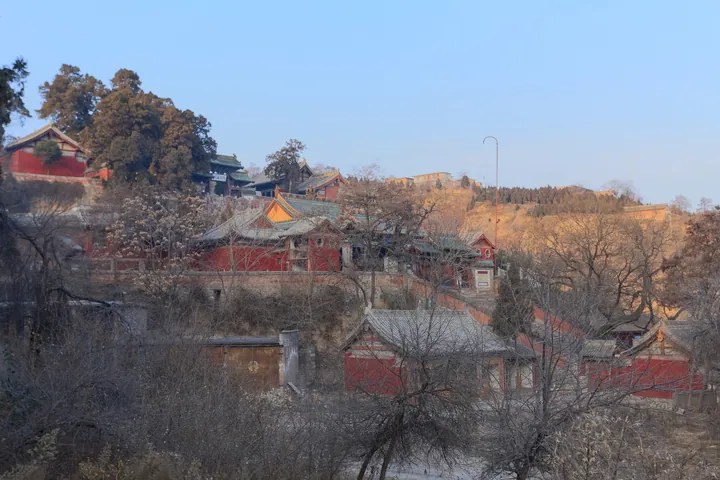 Yuquan Guan temple complex on the hillside at golden hour, Tianshui · 天水玉泉观建筑群,秦州区 Source-recorded photograph date: 2014-01-03 17:19:43.
Yuquan Taoist Temple玉泉观
Tang-founded Taoist temple in Tianshui with over 90 Ming and Qing buildings, Yuan Quanzhen steles and a cypress with braided roots.
Read the place guide → Tianshui Ancient City · 天水古城
Tianshui Ancient City天水古城
Tianshui Old City (天水古城) is the historic core of Qinzhou District, Tianshui, Gansu, whose Xiguan quarter is the only area in the city where a long-standing historic residential building cluster survives.
Read the place guide →Plan your visit
Getting there
Qinzhou District covers the centre of Tianshui. Search for 秦州区 in a map app to find stations and your accommodation.
Where to stay →Build your route
Fuxi Temple and Nanguo Temple are about 4 km apart in a straight line. The linked place guides have entrance and visit details.
Continue with Tianshui →More in Tianshui
Sources & geographic information
Administrative names and parent areas: Official geographic directory · Reference date 2026-09-06.
Some facts checked against 秦州区 — Wikipedia contributors, CC BY-SA 4.0.
Photo: Fuxi Temple · ❤的方向 · CC BY-SA 3.0. Full frame retained; proportionally resized and converted to WebP. No retouching or changes to the photographed subject. Card displays may crop the view.

Photo: Nanguo Temple · Zicheng zic · CC BY 4.0. EXIF orientation normalized; resized without changing aspect ratio; converted to WebP. No subject edits.

Photo: Yuquan Taoist Temple · Zhangzhugang · CC BY-SA 3.0. Full frame retained; proportionally resized and converted to WebP. No retouching or changes to the photographed subject. Card displays may crop the view.

Photo: Tianshui Ancient City · Source photographer · License not provided. EXIF orientation normalized; resized without changing aspect ratio; converted to WebP. No subject edits.
Map data © OpenStreetMap contributors. Pins mark approximate centres, not entrances or boundaries.