


Get to know Jiedong District
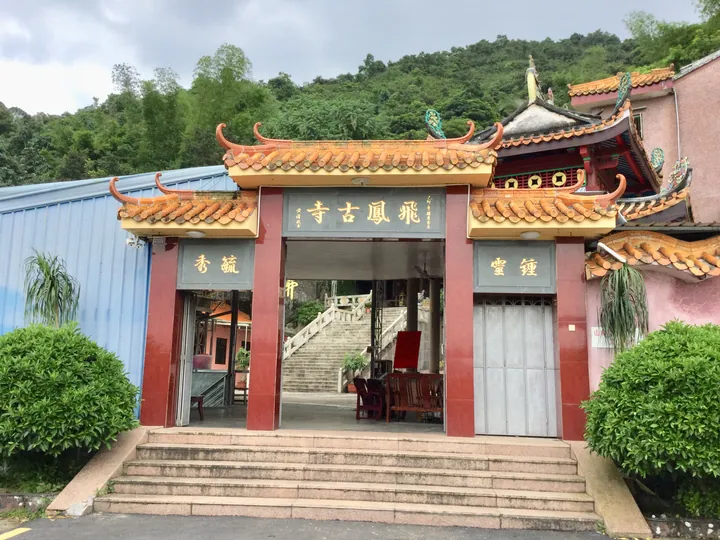
Photo adjustments
Full frame retained; proportionally resized and converted to WebP. No retouching or changes to the photographed subject. Card displays may crop the view.
- Administrative area
- District · 市辖区
- Part of
- Jieyang
- Chinese name
- 揭东区
- Local areas
- District guide
Area & population
- Area in the source
- 850.00 km²
- Population · 2020
- 931,719
Source: cited geographic source, as of the dates shown.
Setting and landscape
The district's rivers belong to the Rong River (榕江) system: the district government lists the South River (南河), the main stream, together with the North River (北河), the Feng River (枫江), the Xinxi River (新西河) and the Chetian River (车田河). Most people speak Teochew (潮州话), with a small Hakka-speaking area in the north. The seat is Quxi Subdistrict (曲溪街道), and Chinese Wikipedia lists Huangqi Mountain Forest Park (黄岐山森林公园) among the district's scenic spots.
History
Jiedong County was split off from Jieyang County in 1991 and named for lying east of Jieyang. In December 2012 the State Council turned it into a district of Jieyang: Pandong Subdistrict (磐东街道) came over from Rongcheng, while the towns of Didu (地都), Paotai (炮台) and Denggang (登岗) went the other way. The new district was formally inaugurated on 2 March 2013. The district government presents Jiedong as the home town of Huang Xuhua (黄旭华), known as the father of China's nuclear submarine.
Customs and crafts
Three traditions from Jiedong are on the national intangible-heritage list: the Longsha lantern-pole colour-phoenix custom (灯杆彩凤) of Quxi, Yangmei jadeite carving (阳美翡翠玉雕) and the Qiaolin firework fire dragon (乔林烟花火龙). The phoenix custom, listed in 2011, is kept by the Jiang (江) clan of Gangpan village (港畔村) in memory of Jiang Wanli (江万里), a Southern Song chief minister who drowned himself rather than surrender. Families raise bamboo poles over ten metres tall, leafy tips left on, hung with a lantern, a five-coloured phoenix and wind bells, and light them at night.
Yangmei jadeite carving, listed in 2008, grew up in the early 20th century around Yangmei village (阳美村) in Pandong. Its carvers work stone from the Hpakant (帕敢) mines of northern Myanmar as well as Chinese jade, in the southern style, using relief, openwork and carving in the round.
Food and local products
Jiedong calls itself China's home of bamboo shoots (中国竹笋之乡). Putian bamboo shoots (埔田竹笋) and Wucuo Chinese yam (吴厝淮山) carry national geographical-indication trademarks and, with Yuhu stir-fried tea (玉湖炒茶), are on the national list of notable farm products. Two bamboo-shoot dishes, Putian shredded shoots poached in stock (埔田上汤浸笋丝) and Putian bamboo-shoot rolls (埔田竹笋肠), are on Jieyang's list of ten famous prepared dishes.
Getting oriented
National highways G206 and G539, the Shantou–Kunming and Chaozhou–Jieyang expressways, the Guangzhou–Meizhou–Shantou railway and the Meizhou–Shantou high-speed railway all cross the district. Jieyang Station on the high-speed line is inside Jiedong.
Highlights
- Longsha lantern-pole colour-phoenix custom 灯杆彩凤: National intangible heritage (2011): bamboo poles with lanterns and phoenixes raised by the Jiang clan to honour Jiang Wanli.
- Yangmei jadeite carving 阳美翡翠玉雕: National intangible heritage (2008) from Yangmei village in Pandong, carving Myanmar and Chinese jade in the southern style.
- Putian bamboo shoots 埔田竹笋: Geographical-indication trademark; also made into two of Jieyang's ten famous prepared dishes.
- Wucuo Chinese yam 吴厝淮山: Geographical-indication trademark and regional brand of the district.
- Yuhu stir-fried tea 玉湖炒茶: On the national list of notable farm products; the district government also counts it as a traditional craft.
Sources for this guide
揭东区概况 · Jiedong District People's Government, Jieyang
历史沿革 · Jiedong District People's Government, Jieyang
揭东区 - 维基百科,自由的百科全书 · Wikipedia (Chinese) · CC BY-SA 4.0
祭祖习俗(灯杆彩凤习俗) · China Intangible Cultural Heritage Network (ihchina.cn)
玉雕(阳美翡翠玉雕) · China Intangible Cultural Heritage Network (ihchina.cn)
Original English written from the listed sources and checked sentence by sentence against quoted extracts by a separate reviewer. Updated 2026-09-23.
Explore Jiedong District
Core places to explore, with English and Chinese names.
Jiedong District 揭东区
Plan your visit
Getting there
Jiedong District is about 5 km in a straight line from central Jieyang. Search for 揭东区 in a map app to find stations and your accommodation.
Where to stay →More in Jieyang
Sources & geographic information
Administrative names and parent areas: Official geographic directory · Reference date 2026-09-06.
Some facts checked against 揭东区 — Wikipedia contributors, CC BY-SA 4.0.
Map data © OpenStreetMap contributors. Pins mark approximate centres, not entrances or boundaries.