


Get to know Rongcheng District
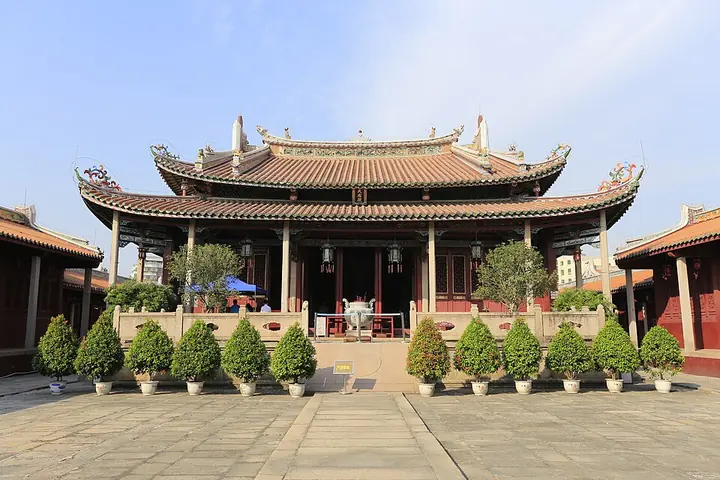
Photo adjustments
Full frame retained; proportionally resized and converted to WebP. No retouching or changes to the photographed subject. Card displays may crop the view.
- Administrative area
- District · 市辖区
- Part of
- Jieyang
- Chinese name
- 榕城区
- Local areas
- District guide
Area & population
- Area in the source
- 91.26 km²
- Population · 2020
- 931,868
Source: cited geographic source, as of the dates shown.
History
Jieyang County was established here in 1140, under the Southern Song, and the town has long been the political and cultural centre of Jieyang. Rongcheng District was created in December 1991. It is one of Guangdong's first provincial historic and cultural cities, and in March 2021 four areas, West Road (西马路), Zhongshan Road (中山路), Shiguli (石鼓里) and the eastern part of Dongmen Zhijie (东门直街), became provincial historic blocks.
What to see
The Jieyang Confucian Temple (揭阳学宫), founded in 1140, was the county's official school and its temple to Confucius. Its 21 buildings, laid out on an axis facing southwest, include the Lingxing Gate (棂星门), the Pan pool (泮池) and its bridge, Dacheng Hall (大成殿) and the Chongsheng Shrine (崇圣祠), where Zhou Enlai stayed and worked three times during the Great Revolution (大革命). It became a national protected site in May 2013.
Jinxian Gate (进贤门), added in 1621 between the old north and east gates, was the only gate kept when the city walls came down in the 1940s. A stone gateway carries a three-storey pavilion tower, and families still bring students about to sit the university entrance exam to walk through it. The Gurong Martial Temple (古榕武庙), a Guandi temple of 1558 outside the old north gate, is known for its carved wood, including an octagonal coffered ceiling in the entrance hall, and a plaque granted by Empress Dowager Cixi and the Guangxu Emperor. The Ding family Guanglu ancestral hall (丁氏光禄公祠) and the Jieyang City God Temple (揭阳城隍庙) are also national protected sites.
Food
Pingpong kueh (乒乓粿) is a Jieyang snack developed from cudweed kueh (鼠曲粿). Its filling is based on unhusked glutinous rice roasted in a sealed iron can until the grains pop, then husked and ground; the popping noise and the local word for the filling both sound like "pingpong". The powder is mixed with sugar, sesame, peanuts and candied orange, wrapped in a glutinous-rice skin and steamed on bean-curd skin. It is eaten hot or cold, or dipped in egg and fried.
Getting oriented
Jieyang Chaoshan International Airport and the airport station of the Meizhou–Shantou high-speed railway are in the district, which borders Shantou and Chaozhou directly. The Guangzhou–Meizhou–Shantou railway and national highway G206 cross it, and Jieyang Bridge (揭阳大桥) opened on 9 February 2021.
Highlights
- Jieyang Confucian Temple 揭阳学宫: Founded 1140; 21 buildings; national protected site since 2013; Zhou Enlai stayed in its Chongsheng Shrine.
- Jinxian Gate 进贤门: 1621 gate tower, the only city gate kept after the walls were pulled down in the 1940s; Guangdong protected site since 2015.
- Gurong Martial Temple 古榕武庙: Guandi temple of 1558 known for its woodcarving and octagonal coffered ceiling; national protected site.
- Pingpong kueh 乒乓粿: Glutinous-rice dumpling filled with popped-rice powder, sesame and peanuts, steamed or fried in egg.
Sources for this guide
揭阳市榕城区概貌简介 - 揭阳市榕城区人民政府网 · Rongcheng District People's Government, Jieyang
兴 · 揭阳 | 揭阳学宫 - 揭阳市榕城区人民政府网 · Rongcheng District Bureau of Culture, Tourism and Sports, Jieyang
兴 · 揭阳 | 进贤门 - 揭阳市榕城区人民政府网 · Rongcheng District Bureau of Culture, Tourism and Sports, Jieyang
兴 · 揭阳 | 古榕武庙(关帝庙) - 揭阳市榕城区人民政府网 · Rongcheng District Bureau of Culture, Tourism and Sports, Jieyang
兴 · 揭阳 |乒乓粿 - 揭阳市榕城区人民政府网 · Rongcheng District Bureau of Culture, Tourism and Sports, Jieyang
Original English written from the listed sources and checked sentence by sentence against quoted extracts by a separate reviewer. Updated 2026-09-23.
Explore Rongcheng District
Core places to explore, with English and Chinese names.
Places to explore around Rongcheng District
Dacheng Hall at Jieyang Confucian Temple · 揭阳学宫大成殿 Photograph date recorded by the source: 27 October 2013, 15:12:27.Jieyang Confucian Temple揭阳学宫
Jieyang Confucian Temple is also known locally as the Xuegong, or academy. Its layout joins the religious functions of a Confucius temple with the educational spaces of the former county school. The main temple occupies the…
Read the place guide →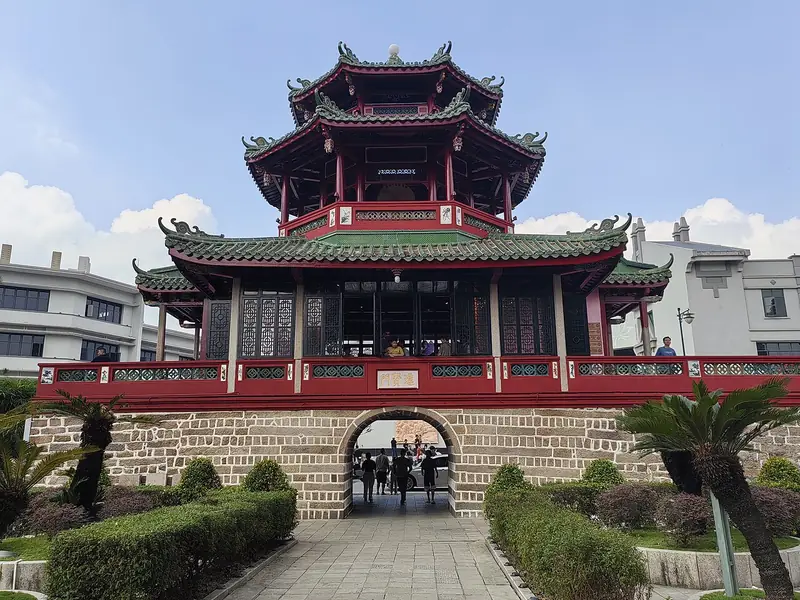 Jieyang Ancient City Quarter (揭阳古城街区), Rongcheng District. Photograph: "20251001 Jinxian Men".
Jieyang Ancient City Quarter揭阳古城街区
Jieyang Ancient City Quarter is the historic core of the old city of Jieyang, in Rongcheng District. Its landmark is Jinxianmen, a gate tower built in 1621 between the old city's north and east gates; the municipal portal records that Jieyang's old city had five gates rather than the four usual in such cities, and Jinxianmen is the one still standing, the wall and the other four having been demolished in the 1940s.
Read the place guide →Plan your visit
Getting there
Rongcheng District is about 3 km in a straight line from central Jieyang. Search for 榕城区 in a map app to find stations and your accommodation.
Where to stay →Build your route
Jieyang Confucian Temple and Jieyang Ancient City Quarter are both listed here. The linked place guides have entrance and visit details.
Continue with Jieyang →More in Jieyang
Sources & geographic information
Administrative names and parent areas: Official geographic directory · Reference date 2026-09-06.
Photo: Jieyang Confucian Temple · Zhangzhugang · Zhangzhugang — Jieyang_Xuegong_2013.10.27_15-12-27.jpg — CC BY-SA 3.0 · CC BY-SA 3.0. Full frame retained; proportionally resized and converted to WebP. No retouching or changes to the photographed subject. Card displays may crop the view.

Photo: Jieyang Ancient City Quarter · Yumeto · CC BY-SA 4.0. Full frame retained; EXIF orientation normalized, proportionally resized to at most 800 pixels and converted to WebP. No generated pixels or subject changes. Cards may crop the display.

Map data © OpenStreetMap contributors. Pins mark approximate centres, not entrances or boundaries.