


Get to know Bama Yao Autonomous County
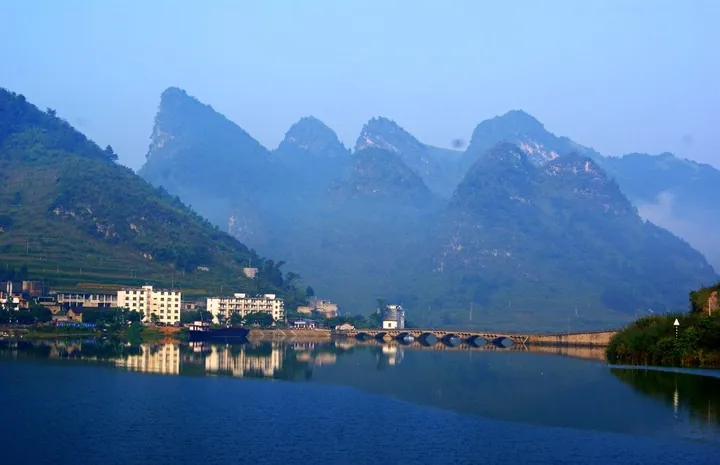
Photo adjustments
Full frame retained; proportionally resized and converted to WebP. No retouching or changes to the photographed subject. Card displays may crop the view.
- Administrative area
- Autonomous county · 自治县
- Part of
- Hechi
- Chinese name
- 巴马瑶族自治县
- Local areas
- Autonomous county guide
Area & population
- Area in the source
- 1,966.00 km²
- Population · 2020
- 236,152
- Administrative seat
- Bama Town
Source: cited geographic source, as of the dates shown.
Setting and landscape
The Panyang River rises in Fengshan County (凤山县) and runs through Bama, disappearing into karst caves and re-emerging five times before it flows into Cifu Lake (赐福湖). Most of the county's centenarians, the county says, live along its banks. The Yao, Zhuang and Han are among twelve ethnic groups living here, and Yao festivals such as the Panwang Festival (盘王节) of the Landian Yao (蓝靛瑶) are marked with five-colour glutinous rice and bronze-drum dances.
History
Wan'gang County (万冈县) was set up here in the winter of 1934 and abolished in 1953; on 6 February 1956 Bama Yao Autonomous County was founded, reviving the old place name Bama (岜马). The county was part of the Right River (右江) revolutionary base, where Deng Xiaoping, Zhang Yunyi and Wei Baqun (韦拔群) lived and fought. Xishan (西山), which the county calls "the Jinggangshan of Guangxi", was the command centre of the Right River revolution in the 1920s and 1930s. The former sites of the Red Army's Independent Third Division, the Right River Special Committee and the Right River Revolutionary Committee are protected at autonomous-region level.
What to see
Baimo Cave (百魔洞), a national AAAA scenic area in Poyue village (坡月村) 25 kilometres north-west of the county town, averages about 70 metres high and 50 metres wide, with a main route of over 4,000 metres; a Sino-British karst expedition explored it for nine days in 1987. Between its southern and northern sections a cylindrical sinkhole about 100 metres deep holds a herb garden, and Tu Yao (土瑶) families live at its rim. At Shuibo Tianchuang and Bainiao Yan (水波天窗•百鸟岩), below Mozhai Hill (漠斋山) in Jiazhuan town (甲篆镇), the Panyang River emerges from its last underground stretch before joining the Hongshui River (红水河); boats travel inside the cave to a round skylight about 300 metres in, which throws a shaft of daylight onto the water.
Food and local products
Bama is the original home of the Bama fragrant pig (巴马香猪), a small, round, lean breed said to have been sent as tribute to the Song court; in March 1995 the county was named China's Home of Fragrant Pigs. Hemp-seed soup (火麻汤) is served in restaurants across the county and is listed in the Guangxi Traditional Famous Foods records: shelled hemp seed, grown in the county's northern stone hills, is crushed and stir-fried until the oil runs, then boiled with fresh vegetables into a milky-white soup. Oil fish (油鱼) from Pokai village (坡开村) is another local catch.
Highlights
- Baimo Cave 百魔洞: National AAAA karst cave 25 km north-west of the county town, with a sinkhole herb garden between its two sections.
- Shuibo Tianchuang and Bainiao Yan 水波天窗•百鸟岩: Boat cave where the Panyang River leaves its last underground stretch; a skylight lights the water about 300 m in.
- Bama fragrant pig 巴马香猪: Small lean pig breed native to Bama; county named China's Home of Fragrant Pigs in 1995.
- Hemp-seed soup 火麻汤: Crushed, stir-fried hemp seed boiled with fresh vegetables into a milky soup.
Sources for this guide
巴马概况 · Bama Yao Autonomous County People's Government
百魔洞(国家AAAA级景区) · Bama Yao Autonomous County Bureau of Culture, Radio, Sports and Tourism
水波天窗.百鸟岩(国家4A级景区) · Bama Yao Autonomous County Bureau of Culture, Radio, Sports and Tourism
盘阳河(巴马自然景观) · Bama Yao Autonomous County Bureau of Culture, Radio, Sports and Tourism
火麻汤 · Bama Yao Autonomous County People's Government (republishing the county culture-and-tourism account)
Original English written from the listed sources and checked sentence by sentence against quoted extracts by a separate reviewer. Updated 2026-09-24.
Explore Bama Yao Autonomous County
Core places to explore, with English and Chinese names.
Places to explore around Bama Yao Autonomous County
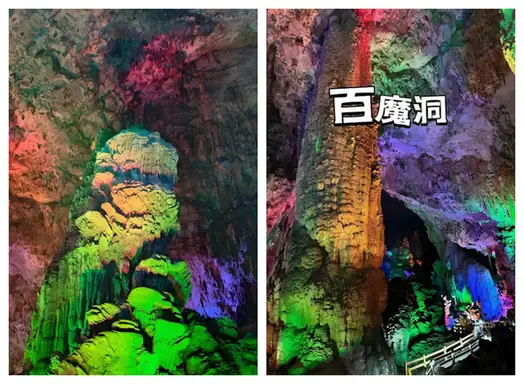 Baimo Cave · 百魔洞
Baimo Cave百魔洞
Baimo Cave contains large limestone columns and stalagmite formations, with names drawn from figures and scenes visitors are invited to recognise in the rock. The formation called Peacock Welcoming Guests is one such landmark. A…
Read the place guide →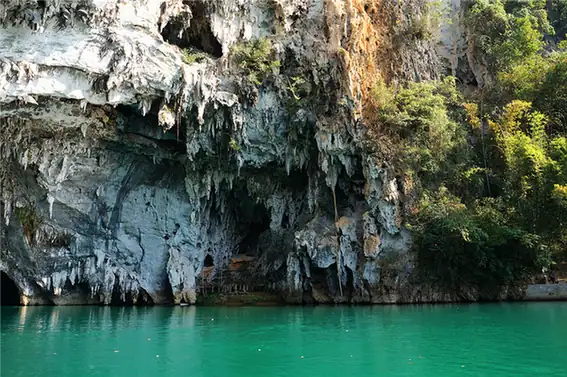 Bainiaoyan Cave · 百鸟岩
Bainiaoyan Cave百鸟岩
Bainiaoyan, also known as Shuibo Tianchuang, is a water-filled cave below Mozhai Mountain at Lie hamlet in Jiazhuan town, Bama Yao Autonomous County, Hechi, Guangxi, where the Panyang River returns to the surface; it is a national AAAA-grade scenic area.
Read the place guide →Plan your visit
Getting there
Bama Yao Autonomous County is about 105 km in a straight line from central Hechi. Search for 巴马瑶族自治县 in a map app to find stations and your accommodation.
Where to stay →Build your route
Baimo Cave and Bainiaoyan Cave are both listed here. The linked place guides have entrance and visit details.
Continue with Hechi →More in Hechi
Sources & geographic information
Administrative names and parent areas: Official geographic directory · Reference date 2026-09-06.
Photo: Baimo Cave · Source photographer · License not provided. EXIF orientation normalized; resized without changing aspect ratio; converted to WebP. No subject edits.
Photo: Bainiaoyan Cave · Source photographer · License not provided. EXIF orientation normalized; resized without changing aspect ratio; converted to WebP. No subject edits.
Map data © OpenStreetMap contributors. Pins mark approximate centres, not entrances or boundaries.