

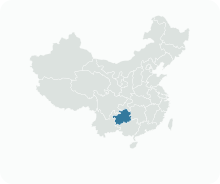
Get to know Bijiang District
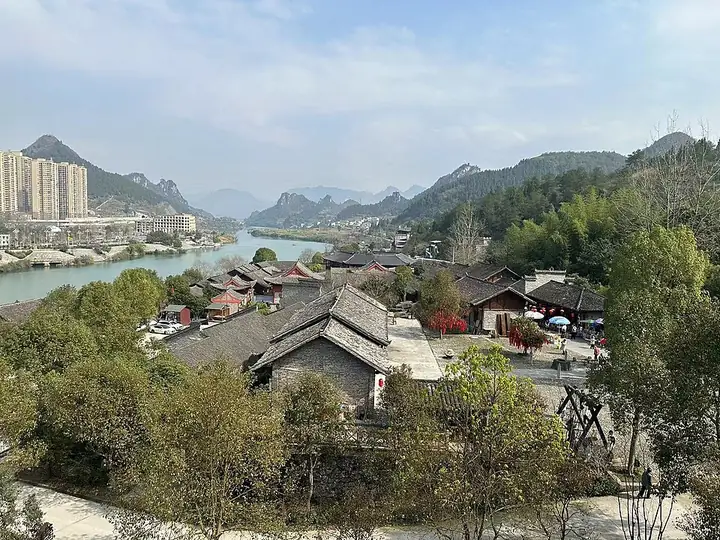
Photo adjustments
Full-frame source proportionally resized and converted to WebP for display. No subject alteration. Source-supplied marks and edits remain; cards may crop the view.
- Administrative area
- District · 市辖区
- Part of
- Tongren City
- Chinese name
- 碧江区
- Local areas
- District guide
Area & population
- Area in the source
- 1,514.00 km²
- Population · 2020 census
- 442,076
- Administrative seat
- Shizhong Subdistrict
Source: cited geographic source, as of the dates shown.
History
Two Neolithic sites at Dujiayuan (杜家园) and Yandong (岩董) in Yangtou town (漾头镇) have yielded stone tool fragments and sherds of sand-tempered red and grey pottery. A Wan'an County (万安县) was set up here in 686 under Empress Wu Zetian and renamed Changfeng (常丰县) in 742.
The Tongren name has been used since 1372, when the Ming turned the local chieftaincy into the Tongren Office (铜仁长官司). Tongren Prefecture (铜仁府) followed in 1413 and Tongren County in 1598. The county became a county-level city in 1987, and in 2011 that city was abolished and replaced by Bijiang District. Zhou Yiqun (周逸群), a founder of the Communist base area in western Hunan and Hubei, was born here; his former residence and a memorial hall can be seen.
What to see
The Zhongnanmen Historic and Cultural Tourist Area (中南门历史文化旅游区) keeps 103 Ming and Qing buildings and is listed as a national-level night-time culture and tourism consumption cluster. The district also has a Nuo culture museum (傩文化博物馆), which the district government describes as the only one in the country; it calls Nuo a living fossil of Chinese drama.
Dragon boat racing here is on the third national intangible cultural heritage list, and Bijiang holds the title of a Chinese hometown of traditional dragon boats. Jiulong Cave (九龙洞) is one of the district's four scenic areas rated AAA or higher, and the Guizhou Bijiang National Wetland Park (贵州碧江国家湿地公园) lies within the district. Chayuanshan (茶园山) is known for its traditions of farming and study, reclusion and the Xu family.
Food and local products
Tongren mung bean noodles (铜仁绿豆粉) are made by grinding mung beans and rice with water in a stone mill and heating the batter over a wood fire into sheets, then cut into strips. They are eaten in soup with a minced-meat topping, stir-fried with pork or vegetables, or added to hotpot.
She fan (社饭) comes from sacrifices on the She day (社日) and is recorded in the Guangxu-era Tongren Prefecture gazetteer. It is glutinous and ordinary rice steamed in a wooden steamer with tender artemisia (青蒿) leaves, wild onion and cured pork. Traditionally it is eaten after the graves of elders who died within the past three years are visited before Qingming.
Getting oriented
Tongren Fenghuang Airport (铜仁凤凰机场) is 20 kilometres from the city centre. The Shanghai–Kunming high-speed railway, the Hunan–Guizhou and Chongqing–Huaihua railways and the Tongren–Yuping intercity line cross the district, and the Hangzhou–Ruili Expressway passes through it.
Highlights
- Zhongnanmen Historic and Cultural Tourist Area 中南门历史文化旅游区: Old quarter with 103 Ming and Qing buildings, listed as a national night-time culture and tourism cluster.
- Nuo Culture Museum 傩文化博物馆: Described by the district government as the only Nuo culture museum in China.
- Jiulong Cave 九龙洞: One of the district's four scenic areas rated AAA or higher.
- Tongren mung bean noodles 铜仁绿豆粉: Stone-ground mung bean and rice noodles, served in soup, stir-fried or in hotpot.
Sources for this guide
碧江概况-碧江区人民政府门户网 · Bijiang District People's Government, Tongren
历史沿革-碧江区人民政府门户网 · Bijiang District People's Government, Tongren
铜仁绿豆粉——地道的家乡味道 · Bijiang District People's Government, Tongren (Bijiang District Media Centre)
铜仁社饭 · Bijiang District People's Government, Tongren
Original English written from the listed sources and checked sentence by sentence against quoted extracts by a separate reviewer. Updated 2026-09-24.
Explore Bijiang District
Core places to explore, with English and Chinese names.
Places to explore around Bijiang District
 AI illustration · AI
 Plan your visit
Getting there
Search for 碧江区 in a map app to find stations and your accommodation.
Where to stay →Build your route
Start with Zhongnanmen Historic and Cultural Scenic Area. The linked place guides have entrance and visit details.
Continue with Tongren City →More in Tongren City
Sources & geographic information
Administrative names and parent areas: Official geographic directory · Reference date 2026-09-06.
Map data © OpenStreetMap contributors. Pins mark approximate centres, not entrances or boundaries.