


Get to know Anguo
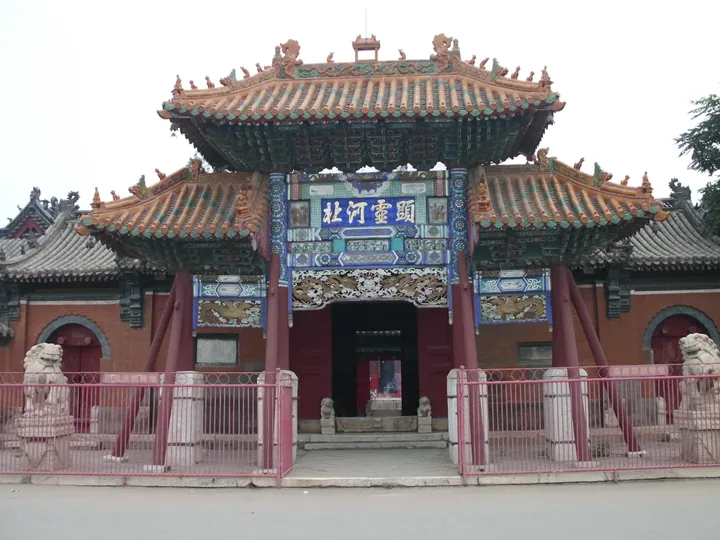
Photo adjustments
Full frame retained; proportionally resized and converted to WebP. No retouching or changes to the photographed subject. Card displays may crop the view.
- Administrative area
- County-level city · 县级市
- Part of
- Baoding
- Chinese name
- 安国市
- Local areas
- County-level city guide
Area & population
- Area in the source
- 485.10 km²
- Population · 2017
- 415,000
Source: cited geographic source, as of the dates shown.
History
Anguo county was first set up in 117 BC under Emperor Wu of the Han. The Northern Song renamed it Puyin (蒲阴县), and in 1004 the seat of Qizhou (祁州) moved here; under the Ming, Puyin was folded into Qizhou, and in everyday use "Anguo" today mostly means Qizhou town (祁州镇). The county became Qi County in 1913, took back the Anguo name in 1914, and was made a city in 1991.
The national intangible-heritage register dates the herb market to the Xianchun reign of the Southern Song, giving it more than 700 years of history. By the mid-Qing, dealers from across China had organised into the "Thirteen Guilds" (“十三帮”) and "Five Associations" (“五大会”), and, in the register's words, Anguo became the largest herb-trading centre in northern China.
What to see
The Temple of the King of Medicine (安国药王庙) in the city honours Pi Tong (邳彤), one of the 28 generals of the Eastern Han founder Liu Xiu. The heritage list traces its origin to the Eastern Han, while the present temple was built around Pi Tong's tomb in the Yongle reign of the Ming and enlarged under the Qing. It faces west and covers 3,200 square metres, with a memorial archway, a horse hall, a festooned gate, a tomb pavilion, main and rear halls on its axis, and bell and drum towers and a hall of famous physicians on either side. It was rebuilt in 1985 with donations, and it has been a national key protected site since 2001.
Herb market and local culture
The Anguo herb market (安国药市) has been a national intangible-heritage item since 2006. Its temple fair is said to run "five months in spring, seven in autumn", peaking on the 28th day of the fourth lunar month, held to be the Medicine King's birthday, and again on the 15th day of the tenth month. Worship at the fair includes staged plays, carrying large offerings and presenting robes and plaques. Anguo laodiao (安国老调), a western branch of the laodiao opera of the Baiyangdian lakes (白洋淀), was added to the national list in 2011; the county set up a laodiao and sixian opera troupe in 1953.
Getting oriented
The Shuozhou–Huanghua railway (朔黄铁路) has a station at Anguo, and National Roads 230 and 337 cross the city.
Highlights
- Temple of the King of Medicine 安国药王庙: Temple around the tomb of Pi Tong; national key protected site since 2001.
- Anguo herb market 安国药市: Herb market and temple fair on the national intangible-heritage list since 2006.
- Anguo laodiao opera 安国老调: Western-branch laodiao opera, national intangible heritage since 2011.
Sources for this guide
安国市 - 维基百科,自由的百科全书 · Wikipedia (Chinese) · CC BY-SA 4.0
安国药市 - 中国非物质文化遗产网·中国非物质文化遗产数字博物馆 · China Intangible Cultural Heritage Network (Ministry of Culture and Tourism)
老调(安国老调) - 中国非物质文化遗产网·中国非物质文化遗产数字博物馆 · China Intangible Cultural Heritage Network (Ministry of Culture and Tourism)
安国药王庙 - 维基百科,自由的百科全书 · Wikipedia (Chinese) · CC BY-SA 4.0
Original English written from the listed sources and checked sentence by sentence against quoted extracts by a separate reviewer. Updated 2026-09-24.
Explore Anguo
Core places to explore, with English and Chinese names.
Plan your visit
Getting there
Anguo is about 50 km in a straight line from central Baoding. Search for 安国市 in a map app to find stations and your accommodation.
Where to stay →More in Baoding
Sources & geographic information
Administrative names and parent areas: Official geographic directory · Reference date 2026-09-06.
Some facts checked against 安国市 — Wikipedia contributors, CC BY-SA 4.0.
Some facts checked against 安国药王庙 — Wikipedia contributors, CC BY-SA 4.0.
Map data © OpenStreetMap contributors. Pins mark approximate centres, not entrances or boundaries.