


Get to know Baoding

Photo adjustments
Full frame retained; proportionally resized and converted to WebP. No retouching or changes to the photographed subject. Card displays may crop the view.
- Administrative area
- Prefecture-level city · 地级市
- Part of
- Hebei
- Chinese name
- 保定市
- Local areas
- 24 local areas
Area & population
- Area in the source
- 22,185.00 km²
- Population · 2020 census
- 11,544,036
- Administrative seat
- Jingxiu District
Source: cited geographic source, as of the dates shown.
Setting and landscape
Mountains make up 57 percent of the prefecture and plains 43 percent. Most of its rivers belong to the Daqing River (大清河) system of the Hai River (海河) basin, and to the east lies Baiyangdian, which the city calls the 'pearl of North China'.
History
Known in the past as Shanggu (上谷) and Baozhou (保州), Baoding is named by the Hebei government as the legendary home of Emperor Yao (尧) and a capital of the Yan (燕), Zhongshan (中山) and Later Yan (后燕) states. In the Qing it was the capital of Zhili Province (直隶) and seat of its governor-general, and from 1669 to 1968 it was for long the political and cultural centre of the province. The city describes the Baoding Military Academy (保定陆军军官学校) as China's first regular modern army academy, and itself as the birthplace of the work-study movement in France that trained early revolutionaries such as Zhou Enlai and Deng Xiaoping. In April 2017 the Xiong'an New Area (雄安新区) was set up on its Xiong (雄县), Rongcheng (容城) and Anxin (安新) counties and nearby areas.
What to see
The Western Qing Tombs (清西陵) in Yi County (易县) hold four Qing emperors, from Yongzheng, whose Tailing tomb was finished in 1737, to Guangxu, entombed in 1913; they were inscribed on the UNESCO World Heritage List in 2000 as part of the Imperial Tombs of the Ming and Qing Dynasties. The city's monuments include the Ancient Lotus Pond (古莲花池), the Daci Pavilion (大慈阁) and the Zhili Governor's Office (直隶总督署). National 5A scenic areas listed under Baoding are Baiyangdian (2007), Yesanpo (野三坡, 2011), Baishishan (白石山, 2017) and the Western Qing Tombs (2019).
Food and local products
Zhili official cuisine (直隶官府菜) grew up around the governor-general's seat: 74 men served 99 terms in the post from 1724 to the end of the Qing, bringing cooking styles from across the country to dishes built on local Baoding ingredients with a mainly salty-savoury flavour. It joined the national intangible-heritage list in 2011. Quyang County (曲阳), whose carvers worked on the Monument to the People's Heroes and the Great Hall of the People in Beijing, is listed for its stone carving (2006). So are the medicine market of Anguo (安国), traced to the Southern Song and known as the 'medicine capital' (2006), and Yi County's Yishui inkstones (易水砚), cut from Taihang stone (2008).
Getting oriented
The city centre lies 140 kilometres from Beijing, 145 from Tianjin and 125 from Shijiazhuang.
Highlights
- Western Qing tombs 清西陵: Tombs of four Qing emperors in Yi County; UNESCO World Heritage since 2000 and a national 5A scenic area since 2019.
- Yesanpo 野三坡: National 5A scenic area since 2011.
- Baishishan 白石山: National 5A scenic area since 2017.
- Zhili Governor's Office 直隶总督署: Seat of the Qing governors-general of Zhili, listed by the Hebei government among Baoding's monuments.
- Zhili banquet cooking 直隶官府菜: Official cuisine that grew up around the Zhili governor-general's seat, built on local ingredients and mainly salty-savoury; national intangible heritage since 2011.
Sources for this guide
保定市人民政府网——保定概况 · Baoding Municipal People's Government
保 定 (走进河北 >> 历史文化 >> 历史名城) · Hebei Provincial People's Government
Western Qing tombs - Wikipedia · Wikipedia (English) · CC BY-SA 4.0
文化和旅游部数据服务栏目 (5A级旅游景区) · Ministry of Culture and Tourism of the People's Republic of China
直隶官府菜烹饪技艺 - 中国非物质文化遗产网 · China Intangible Cultural Heritage Network (national list)
曲阳石雕 - 中国非物质文化遗产网 · China Intangible Cultural Heritage Network (national list)
安国药市 - 中国非物质文化遗产网 · China Intangible Cultural Heritage Network (national list)
砚台制作技艺(易水砚制作技艺) - 中国非物质文化遗产网 · China Intangible Cultural Heritage Network (national list)
Original English written from the listed sources and checked sentence by sentence against quoted extracts by a separate reviewer. Updated 2026-10-01.
Explore Baoding
Core places to explore, with English and Chinese names.
Western Qing tombs 清西陵
Zhili Governor's Office 直隶总督署
Ancient Lotus Pond 古莲花池
Yesanpo 野三坡
Baishishan 白石山
Langya Mountain 狼牙山
Mancheng Han Tombs 满城汉墓
Baoding Museum 保定市博物馆
Yishui Lake 易水湖
Beiyue Temple 北岳庙
Yesanpo Baili Gorge 野三坡百里峡
Tianshengqiao Waterfalls 天生桥瀑布
Jingxiu District 竞秀区
Lianchi District 莲池区
Mancheng District 满城区
Qingyuan District 清苑区
Xushui District 徐水区
Laishui County 涞水县
Fuping County 阜平县
Dingxing County 定兴县
Tangxian 唐县
Gaoyang County 高阳县
Rongcheng County 容城县
Laiyuan County 涞源县
Wangdu County 望都县
Anxin County 安新县
Yixian 易县
Quyang County 曲阳县
Lixian 蠡县
Shunping County 顺平县
Boye County 博野县
Xiongxian 雄县
Zhuozhou 涿州市
Dingzhou 定州市
Anguo 安国市
Gaobeidian 高碑店市
Places to explore around Baoding
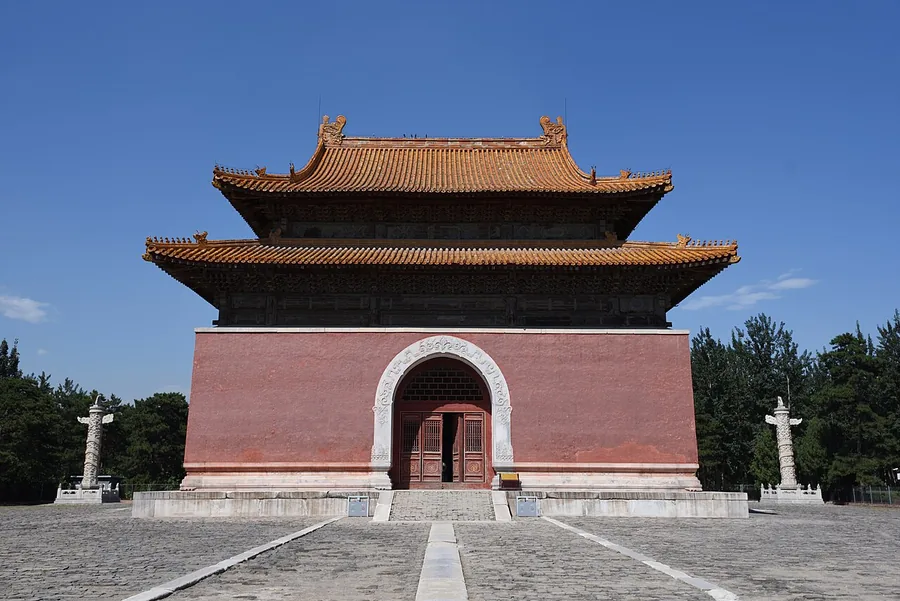 The Shengong Shengde stele pavilion on the main Sacred Way of the Western Qing Tombs, September 2016.
Western Qing tombs清西陵
The Western Qing Tombs lie beneath the hills of Yi County and contain the burial complexes of Yongzheng, Jiaqing, Daoguang and Guangxu. Each follows the broad language of Qing imperial funerary architecture, but their scale and…
Read the place guide →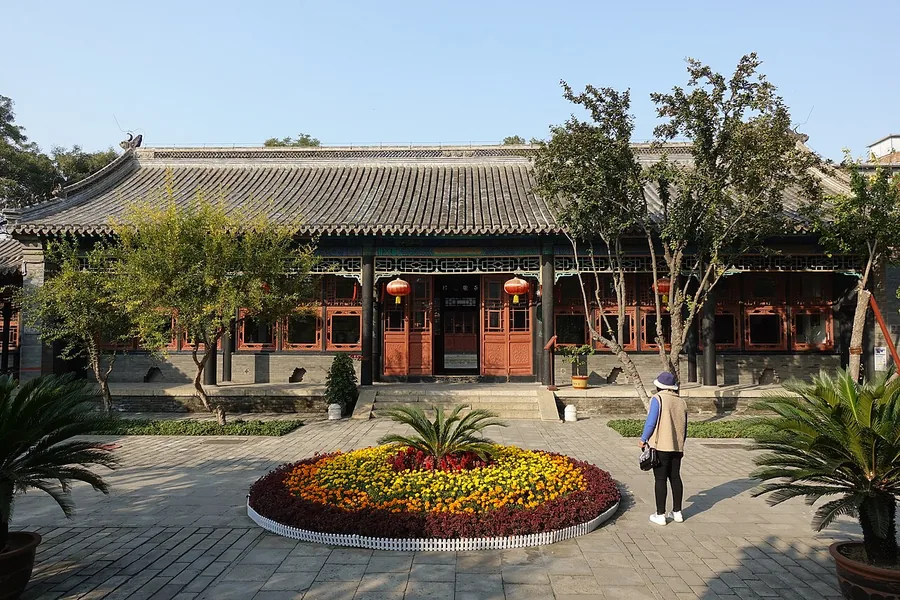 A courtyard and traditional hall inside the Zhili Governor’s Office in Baoding. Photographed on 18 October 2020.
Zhili Governor's Office直隶总督署
Baoding's former Zhili Governor's Office makes the workings of a Qing provincial administration visible through its courtyards. The public audience hall, the quieter second hall and the residential rooms occupy different…
Read the place guide →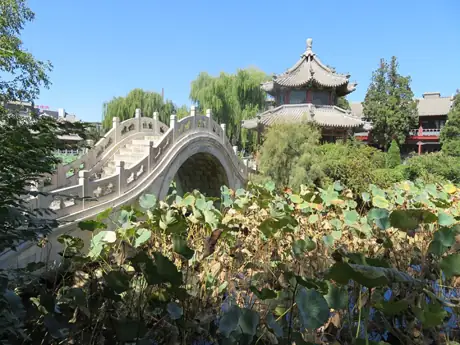 View of a bridge in the Ancient Lotus Pool (古蓮花池) in Baoding during autumn.
Ancient Lotus Pond古莲花池
Ancient Lotus Pond is a compact historic garden beside Baoding's Zhili Governor's Office area. It began as a private garden and later served imperial visitors, with water occupying a substantial part of the grounds. Towers and…
Read the place guide → The Juma River at Gougezhuang, one of the river landscapes within Yesanpo in Laishui. Photographed on 18 June 2018.
Yesanpo野三坡
Yesanpo is a collection of mountain landscapes around Laishui, with Bailixia's narrow rock corridors providing a particularly focused introduction. Its Haitangyu, Xiezigou and Shixuanxia ravines cut between steep walls, making…
Read the place guide → Flowers and pale rocky slopes at Baishishan in the Taihang Mountains, Hebei. Photographed on 3 September 2006.
Baishishan白石山
Baishishan rises above Laiyuan in a forest of pale marble peaks, with darker rock beneath and cloud often collecting between the cliffs. Its appeal is the close succession of rock walls, isolated pillars and changing viewpoints…
Read the place guide →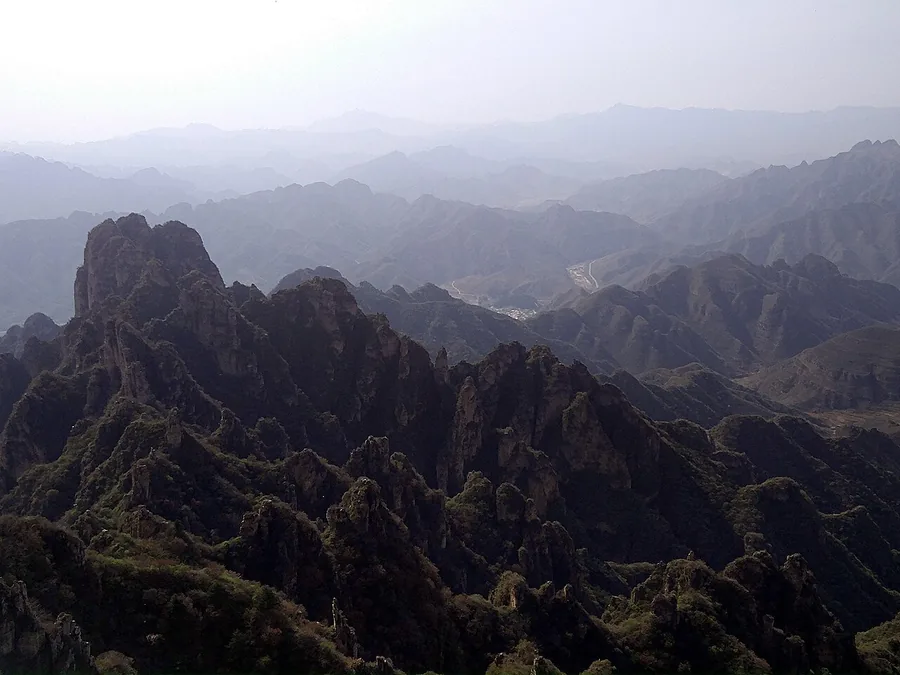 Successive rocky ridges of Langya Mountain in Hebei. Photographed on 16 April 2017.
Langya Mountain狼牙山
Langya Mountain combines sharp, wooded ridges with the wartime story of the Five Warriors. The memorial museum at the foot introduces that history through photographs and objects, including images by wartime photographer Liu…
Read the place guide → Mancheng Han Tombs · 满城汉墓
Mancheng Han Tombs满城汉墓
The Mancheng Han Tombs occupy Lingshan in Baoding's Mancheng District. The two burials belonged to Liu Sheng, king of Zhongshan, and his wife Dou Wan, and their discovery in 1968 produced some of China's best-known Han objects…
Read the place guide → Baoding Museum · 保定市博物馆
Baoding Museum保定市博物馆
Baoding Museum tells the region's story through archaeology and living traditions. The Baoding Story exhibition connects the Yan capital, the Mancheng tombs and Ding-kiln ceramics with the area's later role near the imperial…
Read the place guide → Yishui Lake lake with pedal boats moored at the shore, Yi County · 易县易水湖,岸边停靠脚踏船 Source-recorded photograph date: Taken on 8 November 2007.
Yishui Lake易水湖
Yishui Lake (易水湖) is the scenic name of Anggezhuang Reservoir, a mountain-ringed artificial lake southwest of Yi County's town centre.
Read the place guide →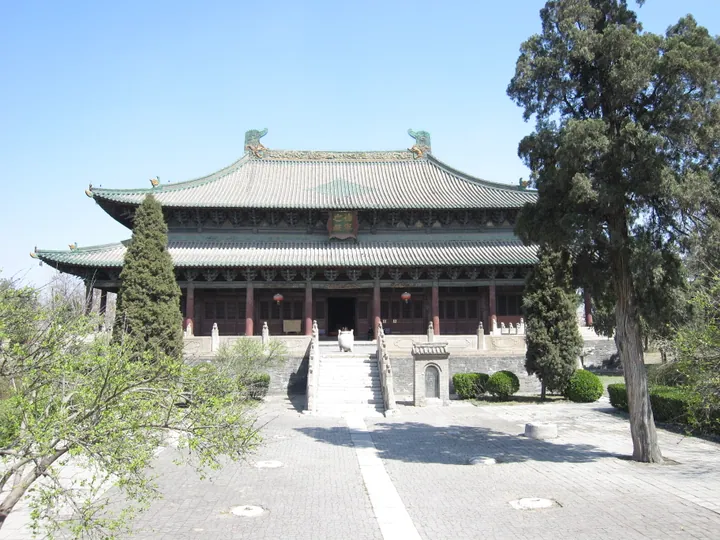 The main hall of Beiyue Temple in Quyang County, Hebei · 河北曲阳县北岳庙正殿 Source-recorded photograph date: 2009-04-05.
Beiyue Temple北岳庙
Beiyue Temple in Quyang is a historic complex associated with state worship of the Northern Sacred Mountain.
Read the place guide → Yesanpo Baili Gorge · 野三坡百里峡
Yesanpo Baili Gorge野三坡百里峡
Yesanpo Baili Gorge (野三坡百里峡) is the narrow-gorge landscape within Yesanpo in Laishui County, formed by Haitangyu, Xiezigou and Shixuanxia.
Read the place guide → AI illustration · AI 示意图(仅供参考,非该地点实拍)
Tianshengqiao Waterfalls天生桥瀑布
Tianshengqiao Waterfalls (天生桥瀑布) is the waterfall valley near Zhujiaying in Fuping, where a natural rock bridge spans the head of Yaotai Waterfall.
Read the place guide →Local life & food
Baoding local specialties
保定市特色美食 · 12 specialties to discover
 Baiyunzhang-style buns 白运章包子AI dish illustration · AI 菜品示意图
A thin, tender wrapper surrounds a generous savory filling, with sesame fragrance and rich meat juices. The contrast is filling-led rather than bread-heavy.
Source ↗Read the dish guide → Beef zhaobing 牛肉罩饼
The contrast is between tender beef, softened bread and a deeply savory liquid. The bread should retain some structure rather than disappear into a smooth porridge.
Source ↗Read the dish guide →
Photo adjustments
EXIF orientation applied where present; resized proportionally to at most 640 px on the long edge and encoded as WebP. No crop, retouching, recoloring or subject changes.
 Donkey huoshao 驴肉火烧
The bread provides a flaky or crisp edge against juicy, strongly savory meat, with added vegetables or peppers varying by seller.
Source ↗Read the dish guide →.jpg)
Photo adjustments
EXIF orientation applied where present; resized proportionally to at most 640 px on the long edge and encoded as WebP. No crop, retouching, recoloring or subject changes.
 Zhili banquet cooking 直隶官府菜AI dish illustration · AI 菜品示意图
Texture and seasoning change from course to course; diners should expect an arranged restaurant meal rather than one standard flavor or signature ingredient.
Source ↗Read the dish guide → Gaobeidian Shredded Tofu 高碑店豆腐丝AI illustration · AI 示意图(仅供参考,非实拍)
Gaobeidian Shredded Tofu (高碑店豆腐丝) is five-spice bean curd cut into fine threads and tied in bundles, made in Gaobeidian (高碑店), a city in Baoding (保定) on the Beijing–Guangzhou railway between Baoding and Beijing.
Read the dish guide → Dingzhou Menzi Pork Sausage 定州焖子AI illustration · AI 示意图(仅供参考,非实拍)
Dingzhou Menzi Pork Sausage (定州焖子) is the pork menzi of Dingzhou (定州), Hebei, a stuffed sausage that also goes by the name "肉灌肠" (meat sausage).
Read the dish guide →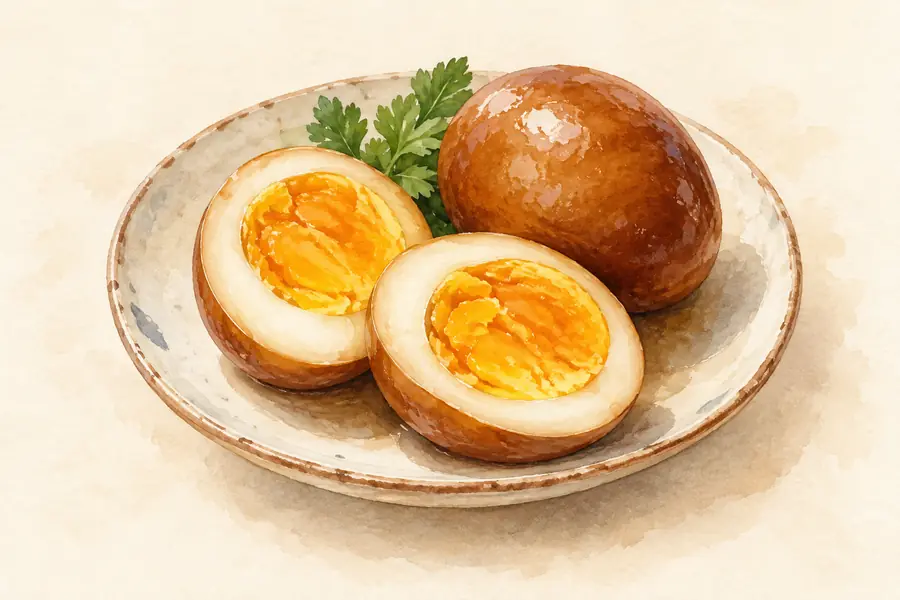 Baiyangdian Salted Duck Eggs 白洋淀咸鸭蛋AI illustration · AI 示意图(仅供参考,非实拍)
Baiyangdian Salted Duck Eggs (白洋淀咸鸭蛋) are salt-cured duck eggs from Baiyangdian (白洋淀) lake in Hebei's Xiong'an New Area (雄安新区), known locally as red-heart old cured eggs (红心老腌蛋) and also as yan qingguo (腌青果).
Read the dish guide →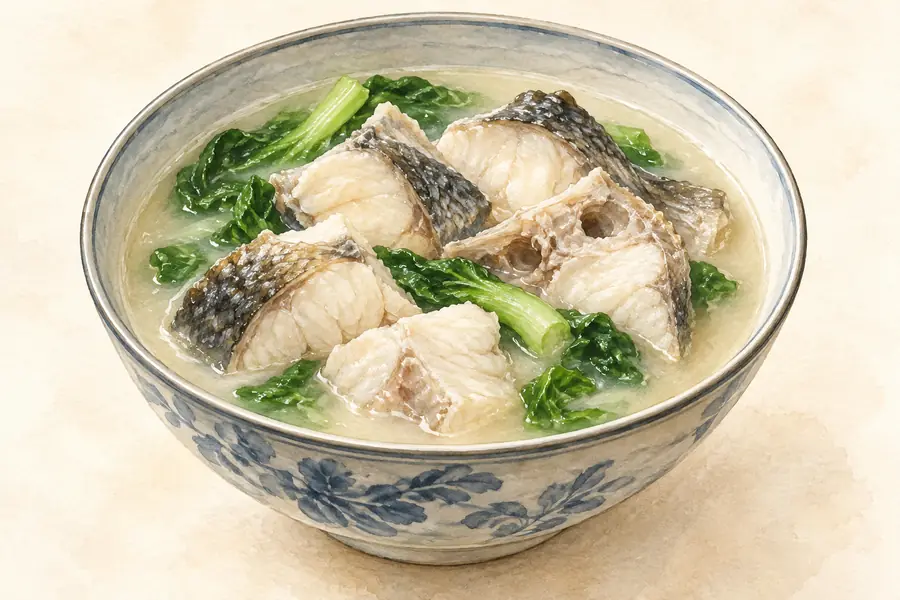 Baiyangdian Stewed Mixed Fish 白洋淀炖杂鱼AI illustration · AI 示意图(仅供参考,非实拍)
Baiyangdian Stewed Mixed Fish (白洋淀炖杂鱼) is a small pot of several kinds of fresh fish braised with streaky pork and yellow-bean paste, from the shores of Baiyangdian (白洋淀) in Hebei (河北).
Source ↗Read the dish guide →All dish names · 全部菜名 (12)
- Baiyunzhang-style buns · 白运章包子
- Beef zhaobing · 牛肉罩饼
- Donkey huoshao · 驴肉火烧
- Zhili banquet cooking · 直隶官府菜
- Gaobeidian Shredded Tofu · 高碑店豆腐丝
- Dingzhou Menzi Pork Sausage · 定州焖子
- Baiyangdian Salted Duck Eggs · 白洋淀咸鸭蛋
- Baiyangdian Stewed Mixed Fish · 白洋淀炖杂鱼
- Quyang Baked Flatbread · 曲阳烧饼
- Anguo Medicinal Herb Cuisine · 安国药膳
- Tangxian Sheep Head and Offal Bowl · 唐县碗肉
- Lixian Chinese Yam and Meat Stew · 蠡县麻山药炖肉
More dishes from across Hebei are in the Hebei food guide.
Counties & districts in Baoding
24 areas belong directly to Baoding.
24 areas
Jingxiu District 竞秀区
Jingxiu District (simplified Chinese: 竞秀区; traditional Chinese: 竞秀區; pinyin: Jìngxiù Qū) is a district of Baoding, Hebei, China. Before 2015 May, the district was known as Xinshi District (新市区; 新市區; Xīnshì Qū).
Explore the area →DistrictLianchi District 莲池区
Lianchi District (simplified Chinese: 莲池区; traditional Chinese: 蓮池區; pinyin: Liánchí Qū) is a district of Baoding, Hebei, People's Republic of China.
Explore the area →DistrictMancheng District 满城区
Mancheng District (simplified Chinese: 满城区; traditional Chinese: 滿城區; pinyin: Mànchéng Qū) is a district of west-central Hebei province, China, in the eastern foothills of the Taihang Mountains.
Explore the area →DistrictQingyuan District 清苑区
Qingyuan is a district of the city of Baoding, in the central part of Hebei province, China, covering part of the southern and eastern suburbs of Baoding.
Explore the area →Show fewer areas
Xushui District 徐水区
Xushui District (simplified Chinese: 徐水区; traditional Chinese: 徐水區; pinyin: Xúshuǐ Qū) is a district of the city of Baoding, Hebei province, China.
Explore the area →CountyLaishui County 涞水县
Laishui County (simplified Chinese: 涞水县; traditional Chinese: 淶水縣; pinyin: Láishuǐ Xiàn) is a county in central Hebei province, China, bordering the Municipality of Beijing to the north and in the basin of…
Explore the area →CountyFuping County 阜平县
Fuping is a county of west-central Hebei province, China, bordering Wutai County, Shanxi to the west. It is the westernmost county-level division of the prefecture-level city of Baoding, and is 93 km (58 mi)…
Explore the area →CountyDingxing County 定兴县
Dingxing County (simplified Chinese: 定兴县; traditional Chinese: 定興縣; pinyin: Dìngxīng Xiàn) is a county under the jurisdiction of the prefecture-level city of Baoding in central Hebei province, People's…
Explore the area →CountyTangxian 唐县
Tang County or Tangxian (simplified Chinese: 唐县; traditional Chinese: 唐縣; pinyin: Táng xiàn) is a county under the jurisdiction of Baoding prefecture-level city, in west-central Hebei province, People's…
Explore the area →CountyGaoyang County 高阳县
Gaoyang County (simplified Chinese: 高阳县; traditional Chinese: 高陽縣; pinyin: Gāoyáng Xiàn; lit. 'High Sun') is a county in the central part of Hebei province, People's Republic of China.
Explore the area →CountyRongcheng County 容城县
Rongcheng is a county in central Hebei province, China. It is under the jurisdiction of Baoding prefecture-level city.
Explore the area →CountyLaiyuan County 涞源县
Laiyuan County (simplified Chinese: 涞源县; traditional Chinese: 淶源縣; pinyin: Láiyuán Xiàn) is a county in western Hebei province, China, bordering Shanxi province to the west.
Explore the area →CountyWangdu County 望都县
Wangdu is a county of west-central Hebei province, China, directly serviced by China National Highway 107. It is under the jurisdiction of the prefecture-level city of Baoding and has a population of 233,790…
Explore the area →CountyAnxin County 安新县
Anxin is a county in central Hebei province, China. It is under the jurisdiction of Baoding City, the centre of which lies about 40 km (25 mi) to the west, and as of 2020, it has a population of 453,723…
Explore the area →CountyYixian 易县
Yi County, also known as Yi Xian or Yixian, is a county in Hebei province of China, administratively under the jurisdiction of the prefecture-level city of Baoding. It has an area of 2,538 km² (980 sq mi).
Explore the area →CountyQuyang County 曲阳县
Quyang County is a county under the administration of Baoding, Hebei Province, China. The county is famous for its stone carvings, many of which are exported abroad. The Beiyue Temple is located in Quyang city.
Explore the area →CountyLixian 蠡县
Li County or Lixian (simplified Chinese: 蠡县; traditional Chinese: 蠡縣; pinyin: Lǐ xiàn) is a county under the jurisdiction of Baoding prefecture-level city, Hebei, China.
Explore the area →CountyShunping County 顺平县
Shunping County is a rural county in the west-central part of Hebei province, China. It is under the administration of the prefecture-level city of Baoding and lies to the west of its urban core.
Explore the area →CountyBoye County 博野县
Boye is a county in south-central Hebei province, China. It is under the jurisdiction of Baoding City, about 46 km (29 mi) due north, and as of 2020, it has a population of 225,065 residing in an area of 331…
Explore the area →CountyXiongxian 雄县
Xiong County or Xiongxian is a county in the central part of Hebei province, China. It is the easternmost county-level division of the prefecture-level city of Baoding.
Explore the area →County-level cityZhuozhou 涿州市
Zhuozhou is a county-level city with 628,000 inhabitants in central Hebei province, southwest of Beijing. It is administered by Baoding prefecture-level city.
Explore the area →County-level cityDingzhou 定州市
Dingzhou, formerly romanized Tingchow and formerly known as Ding County or Dingxian, is a county-level city in the prefecture-level city of Baoding in Hebei Province, China.
Explore the area →County-level cityAnguo 安国市
Anguo (simplified Chinese: 安国; traditional Chinese: 安國; pinyin: Ānguó), nicknamed "Medicine Capital" (药都), is a county-level city under the administration of and 52 kilometres (32 mi) south of Baoding…
Explore the area →County-level cityGaobeidian 高碑店市
Gaobeidian is a county-level city in central Hebei province, People's Republic of China. It is under the administration of Baoding Prefecture-level city.
Explore the area →No areas match this name.
Plan your visit
Getting there
Search for 保定市 in a map app to find stations and your accommodation.
Where to stay →Build your route
Western Qing tombs and Zhili Governor's Office are about 60 km apart in a straight line. The linked place guides have entrance and visit details.
Continue with Hebei →More in Hebei
Sources & geographic information
Administrative names and parent areas: Official geographic directory · Reference date 2026-09-06.
Some facts checked against Western Qing tombs — Wikipedia contributors, CC BY-SA 4.0.
Photo: Western Qing tombs · Siyuwj · CC BY-SA 4.0. Proportionally resized and converted to WebP without cropping, retouching or changing the photographed subject.

Photo: Zhili Governor's Office · Suginami · CC BY-SA 4.0. Proportionally resized and converted to WebP without cropping, retouching or changing the photographed subject.

Photo: Ancient Lotus Pond · BabelStone · CC BY-SA 3.0. Resized and WebP compressed; subject not altered.

Photo: Yesanpo · Antigng · CC BY-SA 4.0. Proportionally resized and converted to WebP without cropping, retouching or changing the photographed subject.

Photo: Baishishan · Taken by Fanghong · CC BY-SA 3.0. Proportionally resized and converted to WebP without cropping, retouching or changing the photographed subject.

Photo: Langya Mountain · Huangdan2060 · CC0. Proportionally resized and converted to WebP without cropping, retouching or changing the photographed subject.

Photo: Mancheng Han Tombs · Source photographer · License not provided. EXIF orientation normalized; resized without changing aspect ratio; converted to WebP. No subject edits.
Photo: Baoding Museum · Source photographer · License not provided. EXIF orientation normalized; resized without changing aspect ratio; converted to WebP. No subject edits.
Photo: Yishui Lake · 周连绘 · CC BY 3.0. Full frame retained; proportionally resized and converted to WebP. No retouching or changes to the photographed subject. Card displays may crop the view.

Photo: Beiyue Temple · User:Zeus1234 · CC BY-SA 3.0. Full frame retained; proportionally resized and converted to WebP. No retouching or changes to the photographed subject. Card displays may crop the view.

Photo: Yesanpo Baili Gorge · 风二中 · CC BY 3.0. EXIF orientation normalized; resized without changing aspect ratio; converted to WebP. No subject edits.

Map data © OpenStreetMap contributors. Pins mark approximate centres, not entrances or boundaries.