


Get to know Taocheng District
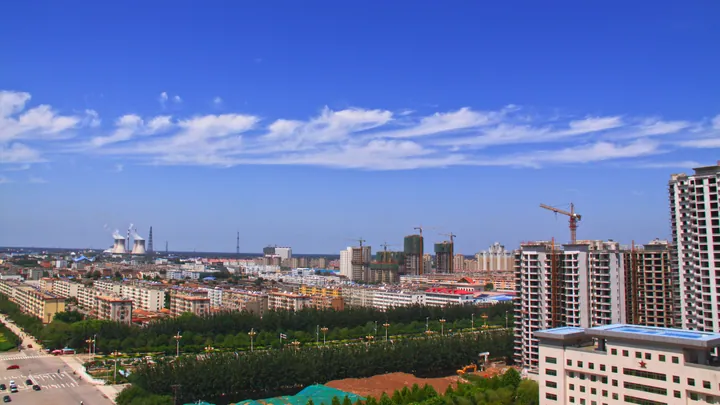
Photo adjustments
Full frame retained; proportionally resized and converted to WebP. No retouching or changes to the photographed subject. Card displays may crop the view.
- Administrative area
- District · 市辖区
- Part of
- Hengshui
- Chinese name
- 桃城区
- Local areas
- District guide
Area & population
- Area in the source
- 602.47 km²
- Population · 2020 census
- 608,586
- Administrative seat
- Zhonghua Avenue Subdistrict
Source: cited geographic source, as of the dates shown.
History
In the Western Han the area was Tao County (桃县), which was abolished under the Eastern Han. The Sui created Hengshui County in 596 and named it after the river. The Yu Gong (禹贡) chapter of the Book of Documents calls the Zhang River (漳水) the "Heng Zhang". The Han scholar Kong Anguo (孔安国) glossed this as the Zhang flowing crosswise, and the Commentary on the Water Classic (水经注) by Li Daoyuan (郦道元) calls it "Hengshui". Hengshui town became a county-level city in 1982 and absorbed the county in 1983. When Hengshui Prefecture was replaced by the prefecture-level city in July 1996, the old county-level city was renamed Taocheng District.
What to see
Baoyun Pagoda (宝云塔) in the old town of Hengshui dates from the Song dynasty; it became a Hebei provincial heritage site in 1982 and a national key cultural relics protection site in 2006. Anji Bridge (安济桥), also called the Hengshui Stone Bridge, crosses the Fuyang River. Floods repeatedly wrecked earlier wooden and stone bridges here; the present one was finished in 1766 and named by the Qianlong Emperor. Japanese troops blew up its central arch in 1937 so boats could pass; it became a national protection site in 2013.
Hebei's provincial heritage list also includes the tomb of the Tang classicist Kong Yingda (孔颖达墓) at Qianmazhuang (前马庄), and a Qing-dynasty chastity archway of the Cai family (蔡氏贞节牌坊) in Gengjia village (耿家村).
Food and local products
Taocheng is the listed home of Hengshui fatie woodblock rubbing (衡水法帖雕版拓印技艺), a national intangible heritage craft since 2011. According to China's intangible-heritage centre, a trader surnamed Yan from Yanzhuang (阎庄) began carving calligraphy models in the Yongle reign of the Ming, using fruit-tree wood instead of stone; more than ten villages took up the work, and over ten Yanzhuang shops once traded in Beijing's Liulichang (琉璃厂). The Taocheng District Fatie Museum (法帖博物馆) is the craft's protection unit.
Two other national listings belong to Hengshui city: Laobaigan (老白干) liquor, distilled from northeastern sorghum with a wheat starter, fermented in earthenware vats and stored in pottery jars, and Hengshui inside painting (衡水内画), the Ji school of painting snuff bottles from the inside, founded by Wang Xisan (王习三).
Getting oriented
The Hengshui city government gives Taocheng as lying 250 kilometres south of Beijing and 119 kilometres east of Shijiazhuang (石家庄). Hengshui Station, in the district, stands where the Beijing–Kowloon railway meets the Shijiazhuang–Dezhou railway; it opened in 1940 and its present building came into use in 1997.
Highlights
- Baoyun Pagoda 宝云塔: Song-dynasty pagoda in Hengshui's old town; national key protection site since 2006.
- Anji Bridge 安济桥: Stone bridge over the Fuyang River completed in 1766 and named by the Qianlong Emperor; national protection site since 2013.
- Tomb of Kong Yingda 孔颖达墓: Hebei provincial heritage site at Qianmazhuang.
- Hengshui fatie woodblock rubbing 衡水法帖雕版拓印技艺: Calligraphy models carved in fruit-tree wood and printed as rubbings; national intangible heritage (2011) listed for Taocheng.
Sources for this guide
衡水市人民政府 衡水概况 · Hengshui Municipal People's Government
衡水市人民政府 行政建制 · Hengshui Municipal People's Government
衡水法帖雕版拓印技艺 · China Intangible Cultural Heritage Protection Center (ihchina.cn)
蒸馏酒传统酿造技艺(衡水老白干传统酿造技艺) · China Intangible Cultural Heritage Protection Center (ihchina.cn)
衡水内画 · China Intangible Cultural Heritage Protection Center (ihchina.cn)
桃城区 · Chinese Wikipedia · CC BY-SA 4.0
桃城区各级文物保护单位列表 · Chinese Wikipedia · CC BY-SA 4.0
安济桥 (衡水) · Chinese Wikipedia · CC BY-SA 4.0
衡水站 · Chinese Wikipedia · CC BY-SA 4.0
Original English written from the listed sources and checked sentence by sentence against quoted extracts by a separate reviewer. Updated 2026-09-24.
Explore Taocheng District
Core places to explore, with English and Chinese names.
Taocheng District 桃城区
Plan your visit
Getting there
Taocheng District covers the centre of Hengshui. Search for 桃城区 in a map app to find stations and your accommodation.
Where to stay →More in Hengshui
Sources & geographic information
Administrative names and parent areas: Official geographic directory · Reference date 2026-09-06.
Some facts checked against 桃城区 — Wikipedia contributors, CC BY-SA 4.0.
Some facts checked against 桃城区各级文物保护单位列表 — Wikipedia contributors, CC BY-SA 4.0.
Some facts checked against 安济桥 (衡水) — Wikipedia contributors, CC BY-SA 4.0.
Some facts checked against 衡水站 — Wikipedia contributors, CC BY-SA 4.0.
Map data © OpenStreetMap contributors. Pins mark approximate centres, not entrances or boundaries.