

Explore the region
Why visit
Jin Shangjing History Museum is an indoor introduction to the Jin dynasty’s first capital, in Acheng District on Harbin’s southeastern edge. Its galleries give names, dates and objects to a city whose surviving walls and building foundations are now an archaeological landscape. The museum’s own description places it beside the remains of Shangjing Huining Prefecture and the mausoleum of the Jin founder, but those are separate places to visit, not one combined museum route.
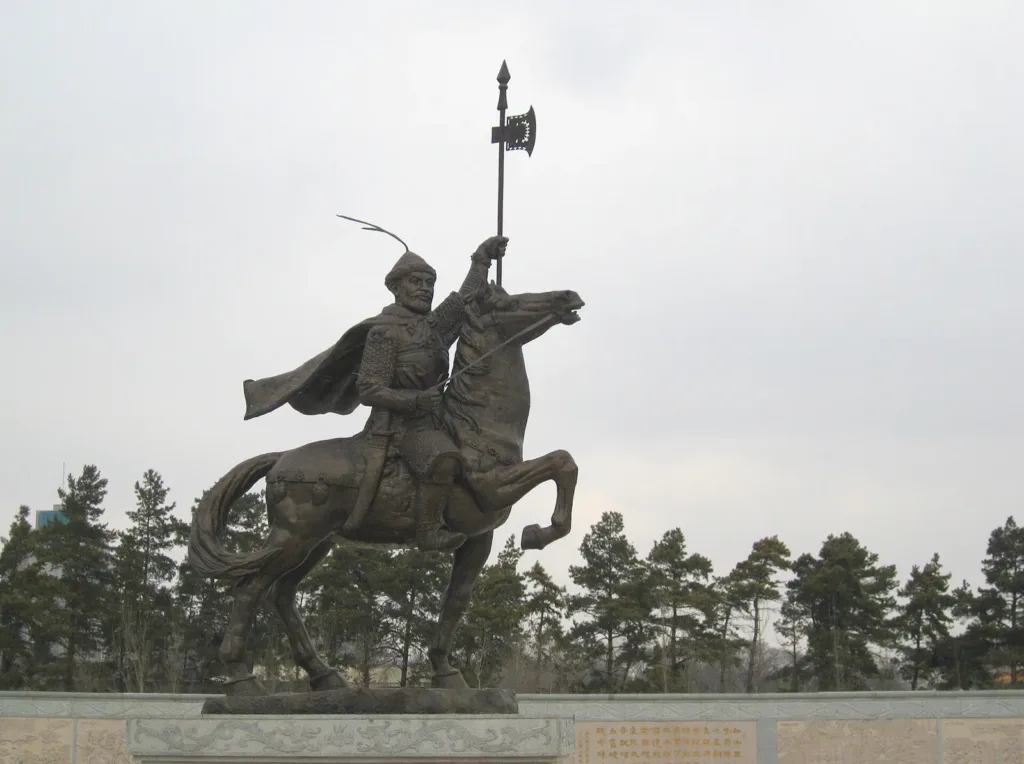
Wanyan Aguda established the capital here in 1115. The court moved to Yanjing, today’s Beijing, in 1153, after the city had served as the Jin capital through four emperors for 38 years. This is the useful historical frame for a visit: the museum is about how a Jurchen polity became an imperial state, while the nearby site shows what remains of its capital on the ground.
What to look for
Start with the museum’s sequence of nine main galleries. The preface hall uses a ring of 120 date pillars to set out the Jin period; later galleries follow Jurchen origins, the rise of the Jin state, political change, regional culture, Shangjing, the link with Jin Zhongdu, and archaeological work at Baicheng. Six specialist annexes are also listed by the museum, including a bronze-mirror gallery, a fine-relics gallery and a stone-tool corridor. Which rooms or temporary displays are open can change, so treat this as a guide to the museum’s structure rather than a promise that every annex is operating.
The most immediately readable object is the museum’s Jin double-carp bronze mirror. The museum says it was unearthed in Acheng in 1964, weighs 12.4 kilograms and measures 43 centimetres across. Look for the two carp chasing one another through water, the plain wide rim and the surrounding scrolling vegetation. The image is not just decoration: the museum connects fish imagery with the Jurchens’ fishing-and-hunting life and with wishes for prosperity and descendants.
Use the rest of the online highlights list as a comparison set rather than a checklist of guaranteed objects on view. It includes a silver plaque associated with the King of Qi, a silver ewer, a Cheng’an baohuo silver coin, a silver censer, a silver ingot and other Jin-period metalwork. One useful correction is the seated bronze dragon: the museum’s list labels its own item a replica, while a 2024 report identifies the original national first-level relic as displayed at the Heilongjiang Provincial Museum in central Harbin. Do not make the two museums interchangeable.
Allow time for maps, reconstructions and labels that explain the city’s layout. The separate Shangjing Huining Prefecture remains are a protected archaeological site with surviving earthworks, gates and defensive features; the 2024 account describes the walled city as covering about 6.28 square kilometres. Visit the museum first if you want the political and material context, then plan the ruins as a different outdoor stop with its own conditions and walking scale.
Opening and access
The museum publishes free admission, opening Tuesday to Sunday from 09:00 to 16:30, with entry stopping at 16:00; it is closed on Mondays except public holidays. Its visitor rules require real-name registration and say that entry is checked against an original identity card or a reservation QR code. They do not explain how an international visitor’s passport is handled. Contact the museum before travelling and ask specifically about passport registration and the day’s entry procedure; the route notice gives +86 451 5377 3079.
The official route notice lists local buses 7 and 27, but does not give a boarding stop, direction or return stop. For a simpler last leg, give a taxi or ride-hail driver 哈尔滨市阿城区金源路49号(金上京历史博物馆). Keep enough time for the return journey: the published bus information does not establish a late-day connection back to Acheng’s railway or coach services, and the museum’s own page does not provide a verified metro route.
Find Jin Shangjing History Museum
金上京历史博物馆 · 阿城区
The pin marks the area, not the entrance.
Sources & visit information
Sources checked on 23 October 2026. Hours, tickets, reservations and transport can change; confirm with the operator before you go.
Image credits & notes (1)
- Monument to Wanyan Aguda, founder of the Jin dynasty, in the grounds of the Jin Shangjing History Museum, Acheng, Harbin. Photo: Slb nskPhoto: CC BY-SA 3.0