


Get to know Acheng District
- Administrative area
- District · 市辖区
- Part of
- Harbin
- Chinese name
- 阿城区
- Local areas
- District guide
Area & population
- Population · 2018
- 544,514
- Administrative seat
- Jincheng Subdistrict (金城街道)
Source: English Wikipedia, as of the dates shown.
A district shaped by a first capital
Acheng is not a compact neighbourhood in central Harbin. The district government places it 23 km southeast of Harbin’s urban centre and describes a large landscape of mountains, rivers, farmland and forest at the transition between the Zhangguangcai range and the Songnen Plain. That scale matters: the Jin heritage sites, woodland parks and food-producing townships are separate outings rather than stops on one walk.
The historical centre is the Jin capital of Shangjing Huining Prefecture. In 1115, Jurchen leader Wanyan Aguda established the Jin state beside what is now the Ashi River. The court moved to Yanjing, present-day Beijing, in 1153, after four Jin emperors and 38 years at Shangjing. The former capital is now an archaeological landscape. Low earth walls, gateways and building traces make more sense when you imagine a city plan in the fields, not a restored palace street: a 2024 report describes the outer walls, moats and the surviving relief of the old city, while also noting that excavation and park planning continue.
How to read the heritage area
Use the Jin Shangjing History Museum (金上京历史博物馆) as the indoor starting point. The museum describes itself as a history museum under the Acheng District government. Its nine permanent galleries use objects and documentary material to explain Jin political, economic, cultural and military history; the collection is listed as 3,016 items or sets. Look for the material evidence of a state built in the north rather than expecting furnished palace rooms.
Then treat the museum, the Shangjing Huining Prefecture ruins and the Jin Taizu Mausoleum Garden (金太祖陵园) as related but distinct visits. The museum’s own description places it east of the former capital and beside the mausoleum garden, forming a group in which movable objects, city remains and a burial landscape complement one another. On the ruins, the surviving walls and broad fields are the point. Stay on marked or managed routes, and do not pick up fragments or enter areas closed for protection or archaeological work.
Beyond the museum
Acheng’s southeastern side changes from cultivated land to wooded foothills. The district government highlights Jinlongshan and Songfengshan among its mountain and forest destinations, alongside rice, maize, soybeans and other agricultural products. These places are not a guaranteed extension of a museum visit: seasonal opening, weather, road conditions and direct public transport can vary. Treat each as a separate day plan and confirm the operator’s current arrangements before leaving the urban area.
Food gives the district another local scale. The government profile links Pingshan with tofu, Acheng with purple-skinned garlic, and Yagou with sticky bean buns; it also describes Yagou as a “sticky bean bun town”. These are regional food leads, not a promise that one shop or one recipe represents the whole district. Ask what is being served that day, and check fillings and shared cooking surfaces if you have allergies or dietary restrictions.
Planning and getting around
The museum publishes 金上京历史博物馆, 哈尔滨市阿城区金源路49号 as its address and lists local bus routes 7 and 27. It does not publish stop names or timetables on the route page, so verify the direction, stop and return service locally rather than treating the route numbers as a complete itinerary. No metro route to the heritage area is verified in the sources used here. The district government lists road and rail corridors through Acheng, but that does not by itself identify the best station or a tested station-to-museum connection.
For a taxi or ride-hail car, show the Chinese destination 金上京历史博物馆,哈尔滨市阿城区金源路49号. This is the museum’s published address, not a universal drop-off point for the archaeological site, mausoleum garden or the district’s mountain parks. Confirm each entrance and your return plan before setting out.
The museum says admission is free. Its current visitor notice lists opening hours of 09:00–16:30, with entry stopping at 16:00, and closure on Mondays except public holidays. The notice also requires real-name registration and describes an Alipay NFC “tap” process; entry is checked against an original identity card or a reservation QR code. The notice does not explain how a foreign passport is handled. International visitors should contact the museum before travelling and should not assume that a domestic-ID procedure accepts a passport. The published enquiry number is +86 451 5377 3693.
Explore Acheng District
Core places to explore, with English and Chinese names.
Places to explore around Acheng District
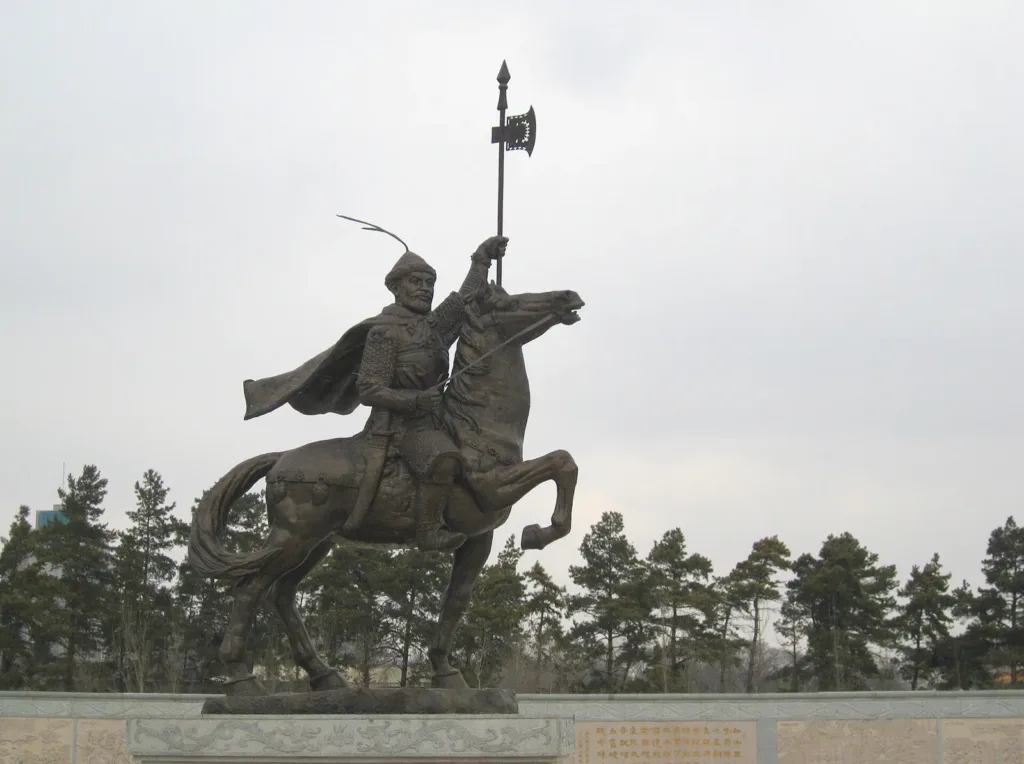 Monument to Wanyan Aguda, founder of the Jin dynasty, in the grounds of the Jin Shangjing History Museum, Acheng, Harbin. Photo: Slb nsk · CC BY-SA 3.0
Plan your visit
Getting there
Acheng District is about 35 km (straight-line distance) from central Harbin. Search for 阿城区 in a map app to find stations and your accommodation.
Where to stay →Build your route
Start with Jin Shangjing History Museum. The linked place guides have entrance and visit details.
Continue with Harbin →More in Harbin
Sources & geographic information
Administrative names and parent areas: Official geographic directory (dmfw.mca.gov.cn) · Reference date 2026-09-06.
Background text adapted from Acheng, Harbin — Wikipedia contributors, under CC BY-SA 4.0. Text has been shortened and reorganized; source revision 1356979337.
Map data © OpenStreetMap contributors. Pins mark approximate centres, not entrances or boundaries.
Image credits & notes (1)
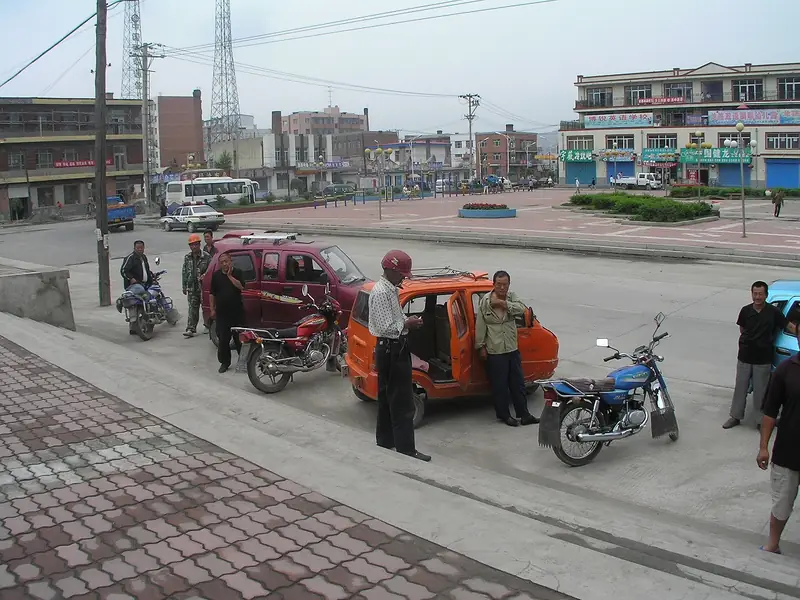
- Representative view in Acheng District · 阿城区代表景观。Photo: 朕邦萬広 · CC BY-SA 3.0Resized for the web; the photo itself has not been edited. Thumbnails may show a cropped view. Original file title: 玉泉站前.
