

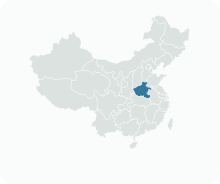
Get to know Hualong District
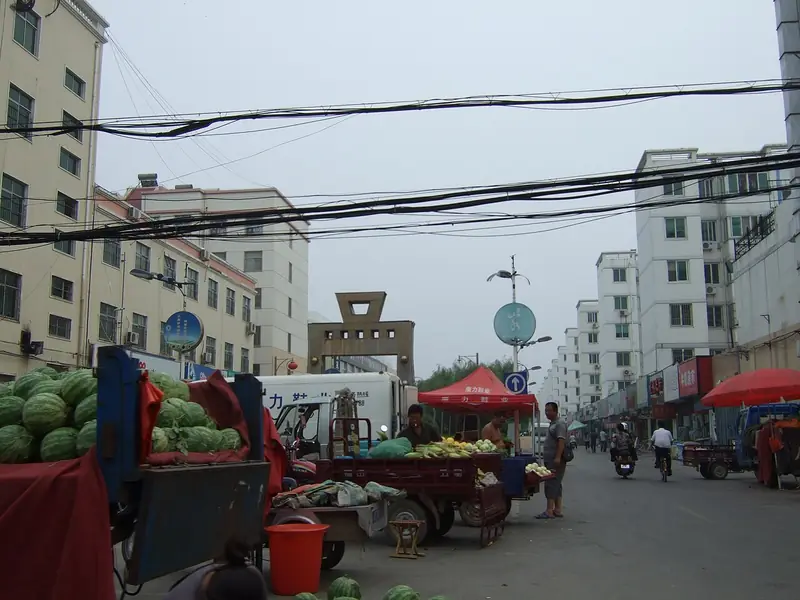
Photo adjustments
Full frame retained; EXIF orientation normalized, proportionally resized to at most 800 pixels and converted to WebP. No generated pixels or subject changes. Cards may crop the display.
- Administrative area
- District · 市辖区
- Part of
- Puyang
- Chinese name
- 华龙区
- Local areas
- District guide
Area & population
- Area in the source
- 255.00 km²
- Population · 2019
- 760,300
Source: cited geographic source, as of the dates shown.
History
In the Spring and Autumn period the state of Wei (卫国) had its capital in this area, and the rulers of other states met for covenants at Qicheng. Modern Hualong is much younger. Oil flowed from the Zhongyuan Oilfield's discovery well in September 1975, and in September 1983 the State Council created Puyang city to support the oilfield's development. The city's urban area took the name Hualong District in 2002.
The name comes from Puyang's title "dragon capital of China" (华夏龙都). In 1987 archaeologists at Xishuipo (西水坡) in Puyang uncovered burials with a dragon and a tiger laid out in shells, dated to about 6,400 years ago; the shell dragon is known as the "First Dragon of China".
What to see
The Qicheng site in Qicheng village (戚城村) was a Wei border town and a fief of the Sun family, later of Kong Kui (孔悝), a grandson of Duke Ling of Wei through his daughter, so it is also called Kong Kui's City. The Spring and Autumn Annals and the Zuo Commentary record seven covenant meetings of the states here. It was on Henan's first list of provincial protected sites and joined the national list in 1996. A scenic area built around it from 1991 covers 760 mu. Among the district's historic remains, the district government lists Kong Kui's City along with the tomb of Zilu (子路坟), the disciple of Confucius, the Kuaikui Terrace (蒯愦台) and a covenant terrace (会盟台).
Dongbeizhuang village in Yuecun town (岳村镇) holds Hualong's one national AAAA scenic area, the Dongbeizhuang Acrobatics Culture Park (东北庄杂技文化园区). The district government calls the village a home of Chinese acrobatics and pairs it with Wuqiao (吴桥) in Hebei as the art's two homes, north and south.
Dongbeizhuang acrobatics entered the national intangible-heritage list in 2008. According to the national heritage centre, the craft took shape here at the end of the Yuan and start of the Ming and has been passed down in the village for more than 500 years; its main performing groups are the Liu, Qiao and Li family troupes. Under the Qianlong emperor the Qiao troupe toured more than twenty countries, including Japan and India. Well-known acts include the double rocking board, straw hats, stacked chairs for women performers, the swaying ladder, bowl balancing and the flying fork. Thirteen acrobat families still live in the village, which holds more than a thousand acrobatic props and relics.
Highlights
- Qicheng site 戚城遗址: Spring and Autumn Wei town where seven covenant meetings are recorded; national protected site since 1996.
- Dongbeizhuang Acrobatics Culture Park 东北庄杂技文化园区: The district's national AAAA scenic area, in the acrobatics village of Dongbeizhuang.
- Dongbeizhuang acrobatics 东北庄杂技: National intangible heritage since 2008; formed in the late Yuan and early Ming, with the Liu, Qiao and Li family troupes as its main performers.
Sources for this guide
区情概况-华龙区人民政府 · Hualong District People's Government, Puyang
东北庄杂技 - 中国非物质文化遗产网 · China Intangible Cultural Heritage Protection Center (ihchina.cn)
戚城遗址 · Wikipedia (Chinese) · CC BY-SA 4.0
濮阳市 · Wikipedia (Chinese) · CC BY-SA 4.0
Original English written from the listed sources and checked sentence by sentence against quoted extracts by a separate reviewer. Updated 2026-09-24.
Explore Hualong District
Core places to explore, with English and Chinese names.
Places to explore around Hualong District
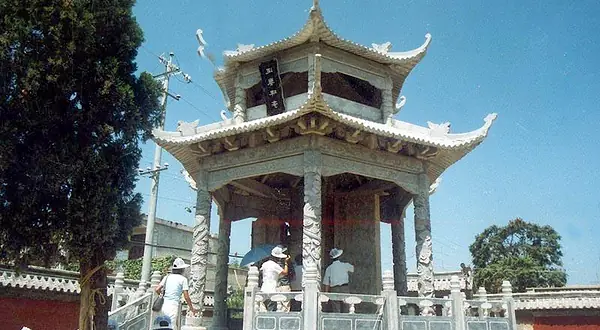 Qicheng Cultural Relics Scenic Area ·
 Plan your visit
Getting there
Hualong District is about 4 km in a straight line from central Puyang. Search for 华龙区 in a map app to find stations and your accommodation.
Where to stay →Build your route
Start with Qicheng Cultural Relics Scenic Area. The linked place guides have entrance and visit details.
Continue with Puyang →More in Puyang
Sources & geographic information
Administrative names and parent areas: Official geographic directory · Reference date 2026-09-06.
Some facts checked against 戚城遗址 — Wikipedia contributors, CC BY-SA 4.0.
Some facts checked against 濮阳市 — Wikipedia contributors, CC BY-SA 4.0.
Photo: Qicheng Cultural Relics Scenic Area · Source photographer · License not provided. EXIF orientation normalized; resized without changing aspect ratio; converted to WebP. No subject edits.
Map data © OpenStreetMap contributors. Pins mark approximate centres, not entrances or boundaries.