


Get to know Echeng District
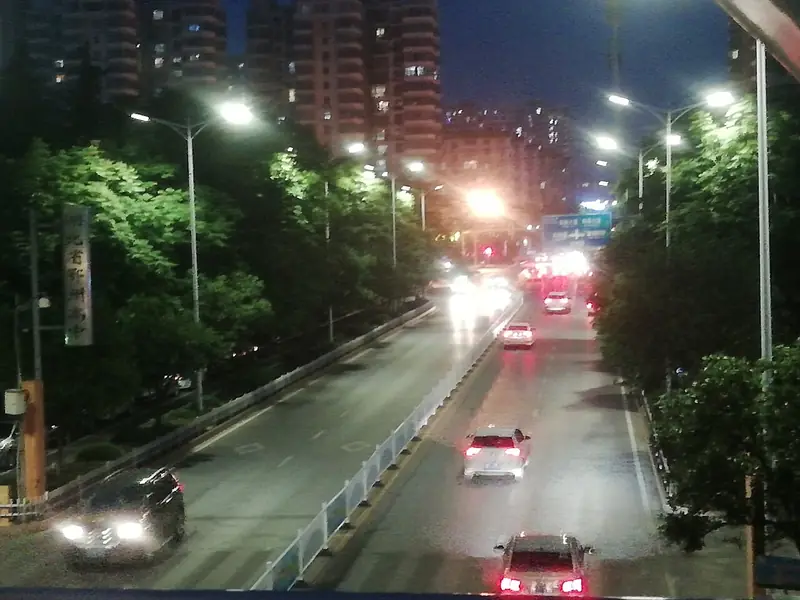
Photo adjustments
Full frame retained; EXIF orientation normalized, proportionally resized to at most 800 pixels and converted to WebP. No generated pixels or subject changes. Cards may crop the display.
- Administrative area
- District · 市辖区
- Part of
- Ezhou
- Chinese name
- 鄂城区
- Local areas
- District guide
Area & population
- Area in the source
- 520.00 km²
- Population · 2020 census
- 695,697
- Administrative seat
- Fenghuang Subdistrict
Source: cited geographic source, as of the dates shown.
History
The district government calls Echeng "the root of Hubei and the source of Wuchang". In the Shang period the E people founded the state of E (鄂国) here, and the Qin set up E County with its seat in what is now the old town of Ezhou. In 221 Sun Quan (孙权) of Eastern Wu moved here from Gong'an (公安), renamed the county Wuchang (武昌), meaning "to prosper through arms", and built a walled city; in 229 he declared himself emperor at Wuchang. The name Wuchang stayed largely unchanged for more than 1,700 years; the county became Echeng in 1914, and in 1983 Echeng District was set up as the administrative centre of the new city of Ezhou.
Remains of Wu King's City (吴王城), the Eastern Wu capital, lie around Baizifan (百子畈) in the city: a 60-metre stretch of rammed-earth south wall and part of the moat survive, and the site was listed as a provincial heritage site in 1992. The Yiting inscription (怡亭铭), a Tang cliff carving on a natural rock on the Yangtze bank outside the Xiaobeimen gate, has been a national key heritage site since 1988.
What to see
Xishan (西山), in the west of Gulou subdistrict (古楼街道) on the south bank of the Yangtze, is a national 4A scenic area whose main peak, Shimen Mountain (石门山), rises to 170 metres. Its sights include the Wu King's summer palace (吴王避暑宫), the old Lingquan Temple (古灵泉寺), Songfeng Pavilion (松风阁), Jiuqu Pavilion (九曲亭) and the place where Pang Tong (庞统) is said to have studied. Lianhua Mountain (莲花山), a 3A scenic area, stands by Yanglan Lake (洋澜湖), the "South Lake" south of the city. Sifeng Mountain (四峰山), which the district government gives as the highest peak in Ezhou at 485.8 metres, has an old village, old tea groves and a hiking trail. Zhaoyin Temple (招隐寺) on Dongshan (峒山) in Changgang (长港镇) was first built in 1640.
Food and local products
The district government names Echeng as the original home of Wuchang fish (武昌鱼), made famous by Mao Zedong's 1956 line "才饮长沙水,又食武昌鱼" ("just drunk the water of Changsha, now eating Wuchang fish"). The district has 43 lakes and is an export base for Hubei pearls and crabs. It is also known as a home of ancient bronze mirrors.
Getting oriented
Ezhou Huahu Airport (鄂州花湖机场), an international air-cargo hub, lies within the district. The Wuhan–Jiujiang Railway and the Wuhan–Huangshi intercity line cross it, with stations at Ezhou, Ezhou East and Huahu, and the Yangtze runs past it for 46 km.
Highlights
- Xishan Scenic Area 西山风景区: National 4A scenic area with Wu King's summer palace, Lingquan Temple and Songfeng Pavilion.
- Wu King's City 吴王城: Eastern Wu capital; a stretch of rammed-earth wall survives; provincial heritage site since 1992.
- Yiting inscription 怡亭铭摩崖石刻: Tang cliff carving on the Yangtze bank; national key heritage site since 1988.
- Sifeng Mountain 四峰山: Given by the district government as the highest peak in Ezhou, at 485.8 metres, with old tea groves.
- Wuchang fish 武昌鱼: Echeng is named by the district government as its place of origin.
Explore Echeng District
Core places to explore, with English and Chinese names.
Places to explore around Echeng District
 Lacquered wooden gift boxes from the collection of the Ezhou Museum · 鄂州市博物馆藏漆器礼盒 Source-recorded photograph date: 2017-05-30 13:14:53.
Ezhou Museum鄂州市博物馆
Ezhou Museum brings together bronze-mirror craftsmanship, the city’s Three Kingdoms associations and local everyday traditions. Its raised, Han-inspired building gives the collections a monumental setting, but the detailed…
Read the place guide →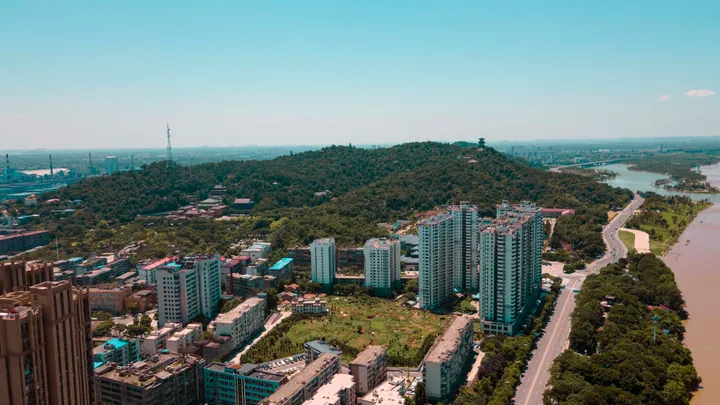 Aerial view of Xishan hill in Ezhou, with its hilltop pavilion rising above the forested park and the riverfront · 鄂州西山远望,山顶阁楼与滨江城区 Source-recorded photograph date: 2024-07-21 13:23:44.
Ezhou West Hill鄂州西山
Xishan (鄂州西山) is a wooded hill on the edge of Ezhou city in Echeng District, Hubei, protected as a provincial scenic and historic area since 1987. It combines an old Buddhist temple with a group of sites tied to the Wu court of the Three Kingdoms.
Read the place guide →Plan your visit
Getting there
Echeng District covers the centre of Ezhou. Search for 鄂城区 in a map app to find stations and your accommodation.
Where to stay →Build your route
Ezhou Museum and Ezhou West Hill are both listed here. The linked place guides have entrance and visit details.
Continue with Ezhou →More in Ezhou
Sources & geographic information
Administrative names and parent areas: Official geographic directory · Reference date 2026-09-06.
Photo: Ezhou Museum · Huangchenhai · CC BY-SA 4.0. Full frame retained; proportionally resized and converted to WebP. No retouching or changes to the photographed subject. Card displays may crop the view.

Photo: Ezhou West Hill · Saigyouji-Noriko · CC BY-SA 4.0. Full frame retained; proportionally resized and converted to WebP. No retouching or changes to the photographed subject. Card displays may crop the view.

Map data © OpenStreetMap contributors. Pins mark approximate centres, not entrances or boundaries.