


Get to know Xisaishan District
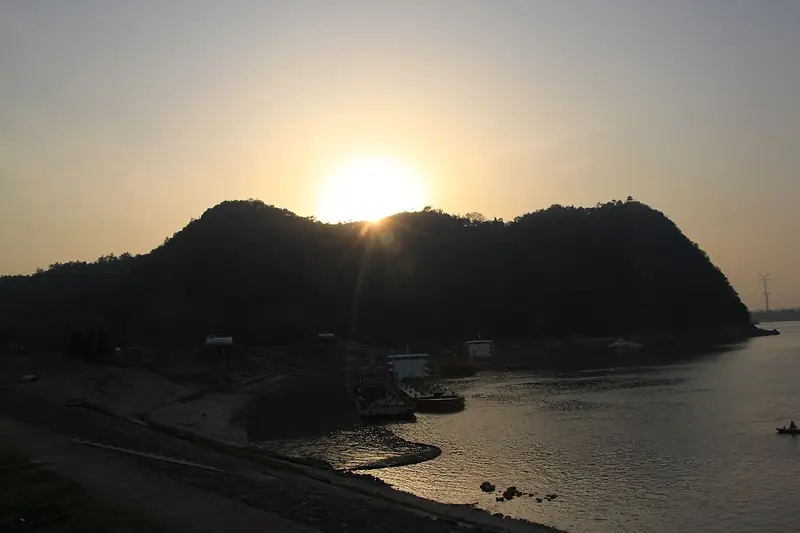
Photo adjustments
EXIF orientation normalized; resized without changing aspect ratio; converted to WebP. No subject edits.
- Administrative area
- District · 市辖区
- Part of
- Huangshi
- Chinese name
- 西塞山区
- Local areas
- District guide
Area & population
- Area in the source
- 113.20 km²
- Population · 2020 census
- 197,217
Source: cited geographic source, as of the dates shown.
What to see
Xisai Hill (西塞山), in Hekou town (河口镇), is enclosed by the river on three sides and linked to the hills behind only by a narrow ridge. It was long a Yangtze defence point: the Huangshi city government lists Sun Ce's attack on Huang Zu (孙策攻黄祖) and the "iron chains across the river" among the battles fought here. The Xisai Hill scenic area was rated national 2A in June 2024. Its main sights include the Beiwang Pavilion (北望亭), Bao'en Taoist temple (报恩观), the Peach Blossom Cave (桃花古洞), the Yuanzhenzi Fishing Terrace (元真子钓台), Longku Temple (龙窟寺) and an old gun battery. Rock inscriptions there include one of Zhang Zhihe's "Fisherman's Song" (渔歌子).
The industrial past is visible on the ground. The site of the Hanyeping coal and iron works (汉冶萍煤铁厂矿旧址), founded in 1889 under the Huguang viceroy Zhang Zhidong (张之洞), keeps iron furnaces, a blast-furnace trestle, four Japanese-style houses and one European-style house, a watchtower and a statue of Zhang. In the workers' village (工人村) of Tianyuan community (田园社区), 21 Soviet-style buildings from the Daye Steel Works (大冶钢厂) expansion that began in 1954 were listed as Huangshi municipal protected sites in 2016.
History
The Shilongtou Palaeolithic site (石龙头旧石器遗址) is dated to 284,000 years ago and is the earliest trace of human activity found in the Huangshi area. The district government calls the district a "cradle of steel" and "home of cement": the Daye Ironworks (大冶铁厂), built from 1914 to 1916, is the forerunner of today's Xinyegang (新冶钢) steel group, and the Huaji Hubei Cement Works (华记湖北水泥厂) was the earliest cement works in central China.
Shihuiyao District (石灰窑区) was formed on 7 April 1979 by merging three city districts; Hekou town joined it at the end of 1994. It was renamed Xisaishan District in October 2001.
The Xisai Shenzhou festival
The Xisai Shenzhou festival (西塞神舟会) is the Dragon Boat Festival rite of Daoshifu village (道士洑村). Work on the "god boat" begins on the eighth day of the fourth lunar month, and the festival proper runs from the 15th to the 18th of the fifth month, some 40 days in all, with opera, sacrifices, a procession and the launching of the boat. On 30 September 2009 UNESCO inscribed the Dragon Boat Festival, of which this festival is one of four components, on its Representative List of the Intangible Cultural Heritage of Humanity.
Highlights
- Xisai Hill 西塞山: Hill in the Yangtze with river on three sides; national 2A scenic area since June 2024.
- Xisai Shenzhou festival 西塞神舟会: 40-day Dragon Boat Festival rite of Daoshifu village, part of the 2009 UNESCO inscription.
- Site of the Hanyeping coal and iron works 汉冶萍煤铁厂矿旧址: Founded in 1889 under Zhang Zhidong; furnaces, trestle and Japanese and European houses survive.
- Daye Steel Works Soviet-style buildings 大冶钢厂苏式建筑: 21 buildings in the workers' village, listed as municipal protected sites in 2016.
Sources for this guide
区情介绍 — 西塞山区人民政府 · Xisaishan District People's Government, Huangshi
历史沿革 — 西塞山区人民政府 · Xisaishan District People's Government, Huangshi
西塞山区国保、省保、市保文物一览表 · Xisaishan District Bureau of Culture and Tourism
2025年A级旅游景区基本情况 · Xisaishan District People's Government, Huangshi
西塞山 — 黄石政府网 · Huangshi Municipal People's Government (Culture and Tourism Bureau)
西塞神舟会 — 黄石政府网 · Huangshi Municipal People's Government
Original English written from the listed sources and checked sentence by sentence against quoted extracts by a separate reviewer. Updated 2026-09-24.
Explore Xisaishan District
Core places to explore, with English and Chinese names.
Xisaishan District 西塞山区
Plan your visit
Getting there
Xisaishan District is about 7 km in a straight line from central Huangshi. Search for 西塞山区 in a map app to find stations and your accommodation.
Where to stay →More in Huangshi
Sources & geographic information
Administrative names and parent areas: Official geographic directory · Reference date 2026-09-06.
Map data © OpenStreetMap contributors. Pins mark approximate centres, not entrances or boundaries.