


Get to know Zhonglou District
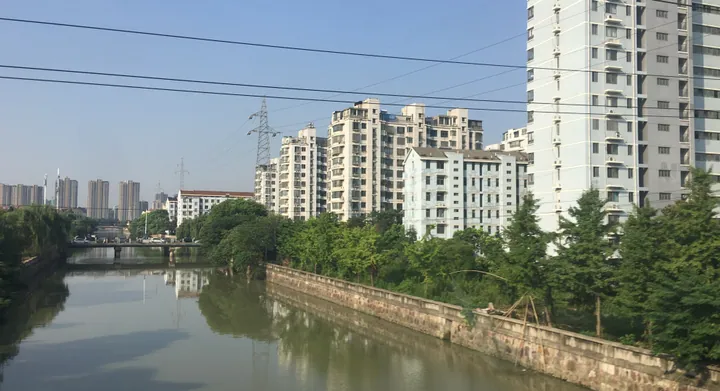
Photo adjustments
Full frame retained; proportionally resized and converted to WebP. No retouching or changes to the photographed subject. Card displays may crop the view.
- Administrative area
- District · 市辖区
- Part of
- Changzhou
- Chinese name
- 钟楼区
- Local areas
- District guide
Area & population
- Population · 2020
- 658,537
Source: cited geographic source, as of the dates shown.
What to see
The Nandajie Ancient Canal Cultural Tourism Area (常州古运河南大街文化旅游区) lies on the north bank of the old city canal between Jinling Middle Road and Huaide Bridge (怀德桥). It covers Biji Lane (篦箕巷), whose name the Changzhou city government credits to the Qianlong Emperor, a stretch of Ming-dynasty city wall at Xiyingmen (西瀛门), the Minyuanli (民元里) and Shuanggui Fang (双桂坊) quarters, the latter known for food, and Chongfa Temple (崇法寺), founded in the Tang dynasty. It was rated a national 4A scenic area in 2011.
The Qu Qiubai Memorial (瞿秋白纪念馆) at 188 Yanling West Road combines the former residence of Qu Qiubai (瞿秋白), originally the Qu family ancestral hall built in the Guangxu reign and a national key heritage site since 1996, with a two-storey courtyard exhibition hall built in 1999. Qingguo Lane, known for its prominent old families, is split at Jinling Middle Road, and the part west of that road belongs to Zhonglou.
Qingfeng Park, in the Zhonglou Economic Development Zone, opened in May 2008 on 45 hectares of man-made hills, cascades, streams and lakes. It holds more than 800 plant species and twelve specialist gardens, among them a cherry grove, a willow bay and a crabapple garden.
Crafts and local products
Chinese Wikipedia lists two Changzhou crafts among the district's specialities. Changzhou combs (常州梳篦), on the national intangible heritage list since 2008, were supplied to the Ming court; fine-toothed combs are made from bamboo, ox bone and raw lacquer in more than seventy steps, and wooden combs from boxwood or photinia in 28 steps. Changzhou random-stitch embroidery (常州乱针绣), created by Yang Shouyu (杨守玉) in 1912 and listed nationally in 2021, abandons neat parallel stitches for crossing stitches of different lengths, so that a piece looks disordered up close and lifelike from a distance.
Highlights
- Nandajie Ancient Canal Cultural Tourism Area 常州古运河南大街文化旅游区: Canal-side quarter with Biji Lane, the Ming wall at Xiyingmen and the Tang-founded Chongfa Temple; 4A since 2011.
- Qu Qiubai Memorial 瞿秋白纪念馆: Qu family ancestral hall (national key heritage site, 1996) and a 1999 exhibition hall.
- Qingfeng Park 青枫公园: 45-hectare park opened in 2008 with more than 800 plant species.
- Changzhou combs 常州梳篦: National intangible heritage since 2008; bamboo combs take more than seventy steps.
- Changzhou random-stitch embroidery 常州乱针绣: Created by Yang Shouyu in 1912; national list 2021.
Sources for this guide
钟楼区 · Wikipedia (Chinese) · CC BY-SA 4.0
南大街 · Changzhou Municipal People's Government
瞿秋白纪念馆 · Changzhou Municipal People's Government (Changzhou Former Residences of Notable People Management Centre)
青果巷 · Wikipedia (Chinese) · CC BY-SA 4.0
青枫公园 · Changzhou Municipal People's Government
常州梳篦 · China Intangible Cultural Heritage Protection Center (ihchina.cn)
苏绣(常州乱针绣) · China Intangible Cultural Heritage Protection Center (ihchina.cn)
Original English written from the listed sources and checked sentence by sentence against quoted extracts by a separate reviewer. Updated 2026-09-25.
Explore Zhonglou District
Core places to explore, with English and Chinese names.
Zhonglou District 钟楼区
Plan your visit
Getting there
Zhonglou District is about 6 km in a straight line from central Changzhou. Search for 钟楼区 in a map app to find stations and your accommodation.
Where to stay →More in Changzhou
Sources & geographic information
Administrative names and parent areas: Official geographic directory · Reference date 2026-09-06.
Some facts checked against 钟楼区 — Wikipedia contributors, CC BY-SA 4.0.
Some facts checked against 青果巷 — Wikipedia contributors, CC BY-SA 4.0.
Map data © OpenStreetMap contributors. Pins mark approximate centres, not entrances or boundaries.