

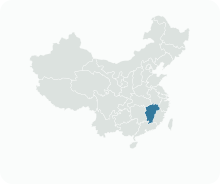
Get to know Le'an County
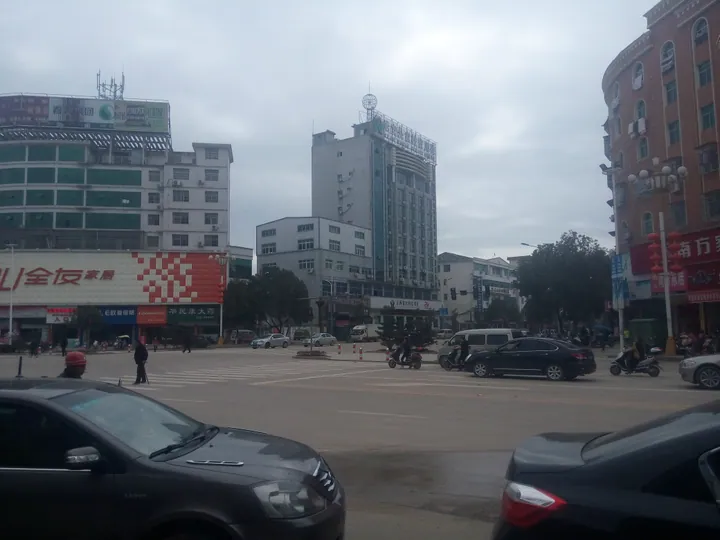
Photo adjustments
Full frame retained; proportionally resized and converted to WebP. No retouching or changes to the photographed subject. Card displays may crop the view.
- Administrative area
- County · 县
- Part of
- Fuzhou
- Chinese name
- 乐安县
- Local areas
- County guide
Area & population
- Area in the source
- 2,412.59 km²
Source: cited geographic source, as of the dates shown.
Setting and history
The county is longer from north to south than from east to west. The ground rises to the south and east, with low hills in the north; the highest point is Shibapai (十八排) in the south-east at 1,370.5 metres. Its main rivers are the Niutian River (牛田河) of the Wu River (乌江) system and the Gongbei River (公陂河) of the Fu River system. The seat is Aoxi (鳌溪镇).
Le'an became a county in 1149, under the Southern Song, formed from three townships of Chongren (崇仁) and one of Yongfeng (永丰), and belonged to Fuzhou through the Yuan, Ming and Qing. During the Communist revolution the county was the northern gateway of the Soviet base area, and many slogans and sites from that period survive.
What to see
Liukeng Village (流坑村), in the south-east of Niutian town (牛田镇), was founded in the Southern Tang and is inhabited mostly by the Dong (董) clan. The traveller Xu Xiake (徐霞客) described it as a busy market town. It keeps 19 Ming-era buildings or sites and more than 250 from the Qing, became a national key protected site in 2001 and was among the first China Historic and Cultural Villages in 2003. The Niutian River, also called the En River (恩江), runs past the village, and more than ten thousand old camphor trees line its banks downstream.
Other listed sites include the six-pillared Kejia Congfang memorial arch (科甲丛芳六脚牌坊) and the Lan Kejin ancestral hall (蓝科进公祠), listed by Chinese Wikipedia as the best-preserved old She (畲) building in Jiangxi. Huping Village (湖坪村) is also a China Historic and Cultural Village, and Mount Dahua (大华山) is the founding place of the Tianxin school of Taoism.
Food, products and customs
Le'an spotted pigs (乐安花猪) and Le'an bamboo shoots are national geographical-indication products. Local dishes include fermented "zhuangyuan fish" (状元鱼), fermented tofu and the She people's "eight big bowls" (畲族八大碗).
Le'an Nuo dance (乐安傩舞) comes from Donghu Village (东湖村), where the Yang (杨) clan has handed down an old Nuo rite called "rolling Nuo gods" (滚傩神). Its 18 masks, including a pig-snout and a chicken-beak, cover only the forehead and the mouth, and a troupe of 12 dances to a single drum and gong. It entered the first national intangible-heritage list in 2006.
Highlights
- Liukeng Village 流坑村: Dong-clan village with Ming and Qing buildings; national key protected site since 2001.
- Le'an Nuo dance 乐安傩舞: Donghu Village masked rite with 18 half-masks; national intangible heritage since 2006.
- Huping Village 湖坪村: China Historic and Cultural Village.
- Mount Dahua 大华山: Founding place of the Tianxin school of Taoism.
- Le'an spotted pig 乐安花猪: National geographical-indication product.
Sources for this guide
乐安县 - 维基百科,自由的百科全书 · Wikipedia (Chinese) · CC BY-SA 4.0
傩舞(乐安傩舞 ) - 中国非物质文化遗产网·中国非物质文化遗产数字博物馆 · China Intangible Cultural Heritage Network (China National Intangible Cultural Heritage Protection Center)
流坑村 - 维基百科,自由的百科全书 · Wikipedia (Chinese) · CC BY-SA 4.0
Original English written from the listed sources and checked sentence by sentence against quoted extracts by a separate reviewer. Updated 2026-09-25.
Explore Le'an County
Core places to explore, with English and Chinese names.
Places to explore around Le'an County
 Liukeng Old Village ·
 Plan your visit
Getting there
Le'an County is about 80 km in a straight line from central Fuzhou. Search for 乐安县 in a map app to find stations and your accommodation.
Where to stay →Build your route
Start with Liukeng Old Village. The linked place guides have entrance and visit details.
Continue with Fuzhou →More in Fuzhou
Sources & geographic information
Administrative names and parent areas: Official geographic directory · Reference date 2026-09-06.
Some facts checked against 乐安县 — Wikipedia contributors, CC BY-SA 4.0.
Some facts checked against 流坑村 — Wikipedia contributors, CC BY-SA 4.0.
Photo: Liukeng Old Village · Source photographer · License not provided. EXIF orientation normalized; resized without changing aspect ratio; converted to WebP. No subject edits.
Map data © OpenStreetMap contributors. Pins mark approximate centres, not entrances or boundaries.