

Explore the region
Tap any red Chinese text to hear it in Mandarin.
Why visit
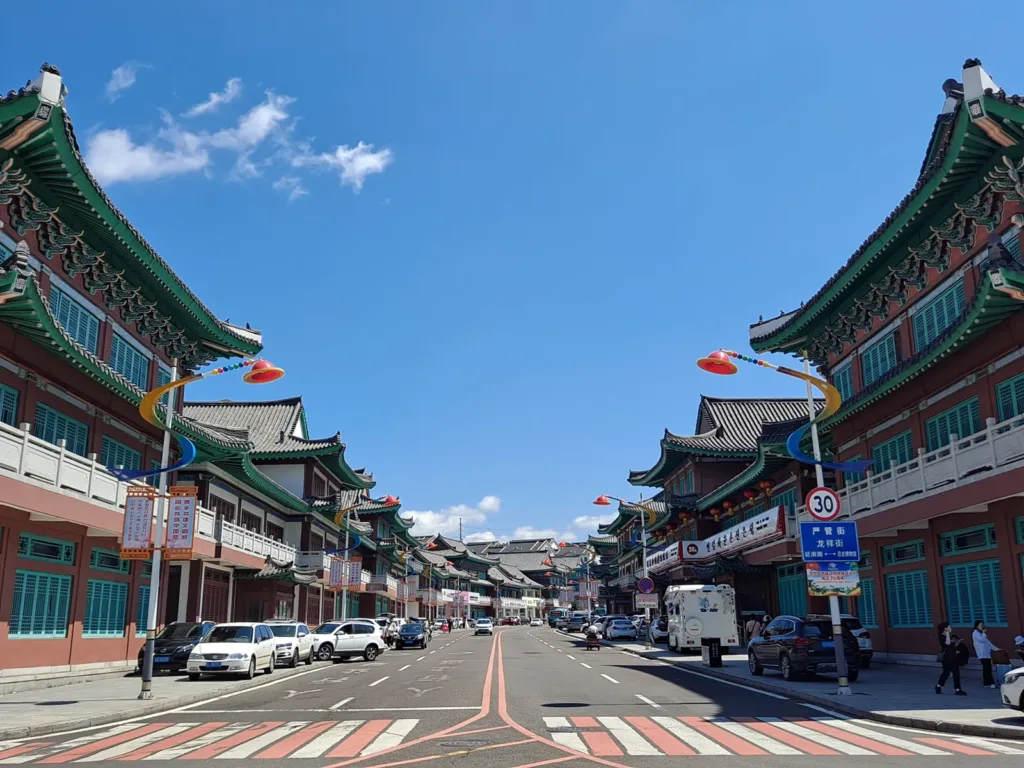
The park is a concentrated introduction to the Korean cultural landscape of Yanbian. It was built in 2012 and later upgraded, and its present layout combines traditional-looking streets and courtyards with exhibition, performance, food, photography and shopping uses. The site covers about 9.4 hectares and contains 40 Korean-style buildings; nine are described by a recent provincial case study as more than 130 years old.
That mixture is the point. Some houses carry the visual weight of older domestic architecture, while the surrounding visitor setting is deliberately arranged for demonstrations and participation. The park is therefore better understood as a purpose-built folk-culture destination with historic buildings and living cultural practices, not as an untouched historical village.
What to look for
Start with the courtyards and house fronts. Roof tiles, jars, timber and heated-floor traditions are used to shape the setting, and the winding lanes connect small yards that can be read as a sequence of domestic scenes rather than one large museum hall.
A reported five-zone plan includes traditional-culture displays, old houses, traditional sports, folk activities and traditional food. Depending on the day, the practical highlights can include Korean-style costume experience, rice-cake and kimchi making, rice wine or sweet rice drink, traditional instruments, pottery, archery, swings and seesaw-style sports. The provincial tourism route specifically lists costume photography, rice-cake and kimchi-making experiences, while a 2025 local report recorded four-beat music, traditional instruments and a traditional swing performance at a special programme.
Treat demonstrations as programmes, not as a promise that every activity runs continuously. The Yanbian government has also documented a traditional Korean coming-of-age celebration held here and describes the park as a venue where costume, rice-cake-making and rice-wine-making heritage projects are brought into tourist sites.
The park also has a modern evening side. Earlier reporting described food and drink, restaurants, homestays, photography, creative shops, light shows and other night-time uses; later coverage recorded a night event and fireworks for a specific anniversary. These are useful clues to the park’s changing atmosphere, but they are not a daily timetable.
Plan the visit
Give yourself time to look beyond the most photographed house fronts. Compare the older-looking residences with the newer experience spaces, then choose one hands-on activity only if it is operating and you are comfortable with its separate arrangements. Costume photography is a major reason many visitors come, but it is not the only way to use the park: the lanes, food workshops, instruments and traditional sports give a more grounded introduction to everyday cultural forms.
If you want a performance, workshop or evening lighting programme, check the venue’s same-day notices before building your itinerary around it. Current public sources do not establish a single year-round programme, a universal ticket or reservation rule, or a separate arrangement for visitors using foreign passports. Confirm those details with the venue or the booking channel before setting out.
Getting there and getting back
For navigation, search the Chinese name 中国朝鲜族民俗园 Zhōngguó Cháoxiǎnzú Mínsúyuán in Amap (Gaode Maps). The map listing places it at 延边朝鲜族自治州延吉市建工街道延南路与延龙路交叉口东150米. The park is at the foot of Mao’er Mountain; Mao’er Mountain Forest Park and other nearby attractions are separate destinations, so do not assume that a ticket or gate for one covers the others.
A public travel listing gives one usable bus lead: take 46路 and get off at 海兰江花园 (Hailanjiang Garden), then walk to the park. Check the live route, direction and stop position in Amap on the day, because the listing does not establish a permanent timetable or a precise walking time.
For a taxi or ride-hailing car, show the Chinese name and the full Chinese address above, and ask the driver to confirm the visitor entrance rather than stopping at a nearby mountain or parking area. The sources read for this article do not establish one universal gate for every current programme. Before leaving, check the reverse-direction bus at the stop or arrange a taxi back using the same Chinese destination; do not assume that a seasonal or event shuttle is operating.
Combine your visit
Suggested order within this visit:
-
Traditional-house area
Begin with the architectural setting and interpretation.
-
Food-culture area
Compare the village theme with regional food offerings.
-
Sports and performance space
Add a scheduled activity only if one is operating during the visit.
This sequence is an editorial suggestion based on the features described in the sources. Access to individual buildings or areas should be checked locally; no travel time or shared admission is implied.
Find Korean Folk Customs Park of China
中国朝鲜族民俗园 · 延边朝鲜族自治州
The pin marks the area, not the entrance.
More places nearby
Approximate straight-line distances between map pins, not travel distances.
Yanji Dinosaur Museum 延吉恐龙博物馆
Less than 1 km awayYanji's dinosaur museum grew from fossil discoveries made at Longshan on Mao'er Mountain's southern slope. Its six Korean-style buildings divide the visit between a broad Dinosaur Planet introduction and the Dragon Rising in…
View guide →Head Mountain 延吉帽儿山
3 km awayMao'er Mountain takes its name from a hat-like profile above Yanji's southern outskirts. The approach moves from a forest boardwalk to a long stair climb, ending at a lookout over the city, river valleys and surrounding rice…
View guide →Yanbian Museum 延边博物馆
6 km awayYanbian Museum connects local archaeology with the history and cultural life of ethnic Korean communities in China. The excavated-relics galleries introduce the region's earlier societies, while the folk-customs displays bring…
View guide →Sources & visit information
Sources checked on 1 November 2026. Hours, tickets, reservations and transport can change; confirm with the operator before you go.
Image credits & notes (1)
- A streetscape of China Korean Folk Park in Yanji, showing Korean-style buildings, tiled roofs and the visitor-road setting. Photo: EditQPhoto: CC BY-SA 4.0