

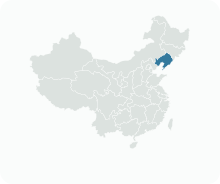
Get to know Shuangta District
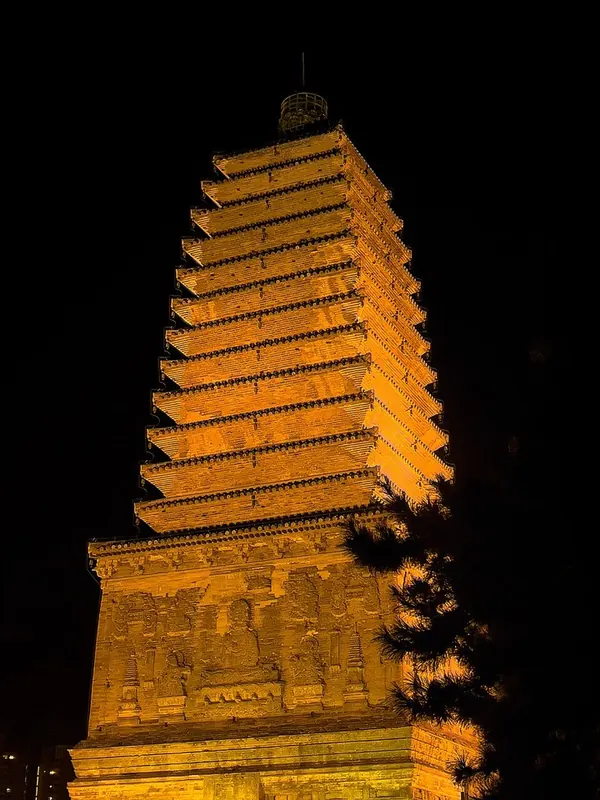
Photo adjustments
Full frame retained; proportionally resized and converted to WebP. No retouching or changes to the photographed subject. Card displays may crop the view.
- Administrative area
- District · 市辖区
- Part of
- Chaoyang
- Chinese name
- 双塔区
- Local areas
- District guide
Area & population
- Area in the source
- 501.76 km²
- Population · 2020 census
- 463,543
- Administrative seat
- Shuangta Subdistrict
Source: cited geographic source, as of the dates shown.
Setting and landscape
The Daling runs for about 20 kilometres through the district from south-west to north-east. North of the city it takes in the Damiao River (大庙河), and at Taohuatu town (桃花吐镇) it is joined by the Gudong River (顾洞河) before flowing on into Beipiao (北票). The district government describes the climate as semi-arid to semi-humid and prone to drought, with dry, windy springs, an average annual temperature of 8.4°C and average rainfall of 483.1 millimetres.
What to see
The North Pagoda (朝阳北塔) is a 13-tier brick pagoda 42.6 metres high on North Street (北大街). Around 485 Empress Feng of the Northern Wei built a wooden pagoda here on the old palace site of Longcheng (龙城), capital of the Former Yan, Later Yan and Northern Yan; the present structure wraps Sui and Tang brickwork inside a Liao shell. It was listed as a national key protected site in 1988, the year that excavation of its upper relic chamber yielded two relics of Shakyamuni Buddha and more than a thousand objects.
The South Pagoda (朝阳南塔), a square, hollow 13-tier Liao brick pagoda, is a provincial protected site. In October 2004 builders found a Liao stone relic chamber beside it; its inscription, dated 984, records relics of Shakyamuni and 18 relics of Dipankara Buddha.
Youshun Temple (佑顺寺), begun in 1699 and named by the Kangxi Emperor, is a Tibetan Buddhist temple of five courtyards; it became a national key protected site in 2006. Murong Street (慕容街), formerly Shuangta Old Street, links the two pagodas, Youshun Temple, a Guandi temple and remains of the Yan-period city wall. Its name was written by the novelist Jin Yong, and it is the government-approved place for selling fossils as souvenirs.
Fenghuang Mountain (凤凰山), east of the city, is a national forest park and 4A scenic area covering 67.84 square kilometres, with three Liao pagodas and several temples. According to the district government, the Qianlong Emperor renamed it from Dragon Mountain to Phoenix Mountain, drawing on a line in the Book of Songs, and renamed Longcheng as Chaoyang.
Food and local products
Sunjiawan town (孙家湾镇), about 10 kilometres south of the city, was named China's home of the Dapingding jujube (大平顶枣) by the Ministry of Agriculture. Its jujubes are deep red, large, small-stoned, thin-skinned and crisp, and the main growing village, Huazhangyingzi (花章营子村), lies at the southern foot of Fenghuang Mountain.
Highlights
- North Pagoda of Chaoyang 朝阳北塔: 42.6-metre, 13-tier pagoda on the Longcheng palace site; national key protected site since 1988; Buddha relics found in 1988.
- South Pagoda of Chaoyang 朝阳南塔: Liao brick pagoda; a stone relic chamber inscribed in 984 was found beside it in 2004.
- Youshun Temple 佑顺寺: Kangxi-era Tibetan Buddhist temple begun in 1699; national key protected site since 2006.
- Murong Street 慕容街: Old street joining the two pagodas and the temple; name written by Jin Yong; licensed fossil shops.
- Fenghuang Mountain 凤凰山: National forest park and 4A scenic area east of the city with three Liao pagodas.
- Sunjiawan jujubes 孙家湾大枣: Large, thin-skinned, crisp Dapingding jujubes from the town south of the city.
Sources for this guide
区域位置-朝阳市双塔区人民政府 · Shuangta District People's Government, Chaoyang
自然条件-朝阳市双塔区人民政府 · Shuangta District People's Government, Chaoyang
朝阳北塔-朝阳市双塔区人民政府 · Shuangta District People's Government, Chaoyang
朝阳南塔-朝阳市双塔区人民政府 · Shuangta District People's Government, Chaoyang
慕容街-朝阳市双塔区人民政府 · Shuangta District People's Government, Chaoyang
大枣之乡-孙家湾-朝阳市双塔区人民政府 · Shuangta District People's Government, Chaoyang
佑顺寺-朝阳市双塔区人民政府 · Shuangta District People's Government, Chaoyang
凤凰山旅游景区-朝阳市双塔区人民政府 · Shuangta District People's Government, Chaoyang
Original English written from the listed sources and checked sentence by sentence against quoted extracts by a separate reviewer. Updated 2026-09-26.
Explore Shuangta District
Core places to explore, with English and Chinese names.
Places to explore around Shuangta District
North Pagoda of Chaoyang illuminated at night. Photograph date recorded by the source: 2025-08-26 20:25:24.North Pagoda of Chaoyang朝阳北塔
Chaoyang's North Pagoda contains several periods of construction within its square brick form. Earlier tower cores and foundations were incorporated into later rebuilding, while the closely spaced eaves and sculpted exterior…
Read the place guide →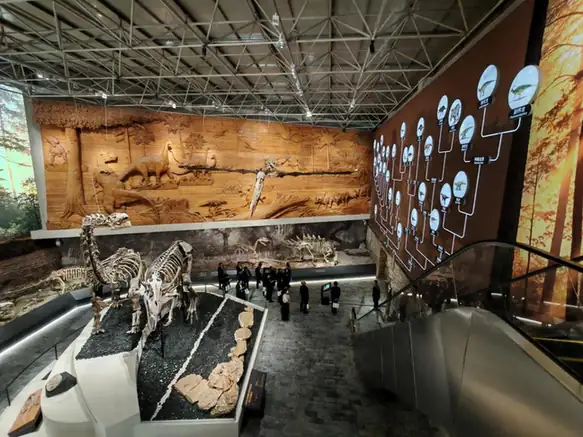 Chaoyang Bird Fossil National Geopark · 朝阳鸟化石国家地质公园
Chaoyang Bird Fossil National Geopark朝阳鸟化石国家地质公园
Chaoyang fossil park and museum for the Jehol Biota: an in-situ excavation site, a fossil museum and a forest of petrified trees.
Read the place guide →Plan your visit
Getting there
Shuangta District covers the centre of Chaoyang. Search for 双塔区 in a map app to find stations and your accommodation.
Where to stay →Build your route
North Pagoda of Chaoyang and Chaoyang Bird Fossil National Geopark are both listed here. The linked place guides have entrance and visit details.
Continue with Chaoyang →More in Chaoyang
Sources & geographic information
Administrative names and parent areas: Official geographic directory · Reference date 2026-09-06.
Photo: North Pagoda of Chaoyang · RestFree · CC BY 4.0. Full frame retained; proportionally resized and converted to WebP. No retouching or changes to the photographed subject. Card displays may crop the view.

Photo: Chaoyang Bird Fossil National Geopark · Source photographer · License not provided. EXIF orientation normalized; resized without changing aspect ratio; converted to WebP. No subject edits.
Map data © OpenStreetMap contributors. Pins mark approximate centres, not entrances or boundaries.