

Explore the region
Tap any red Chinese text to hear it in Mandarin.
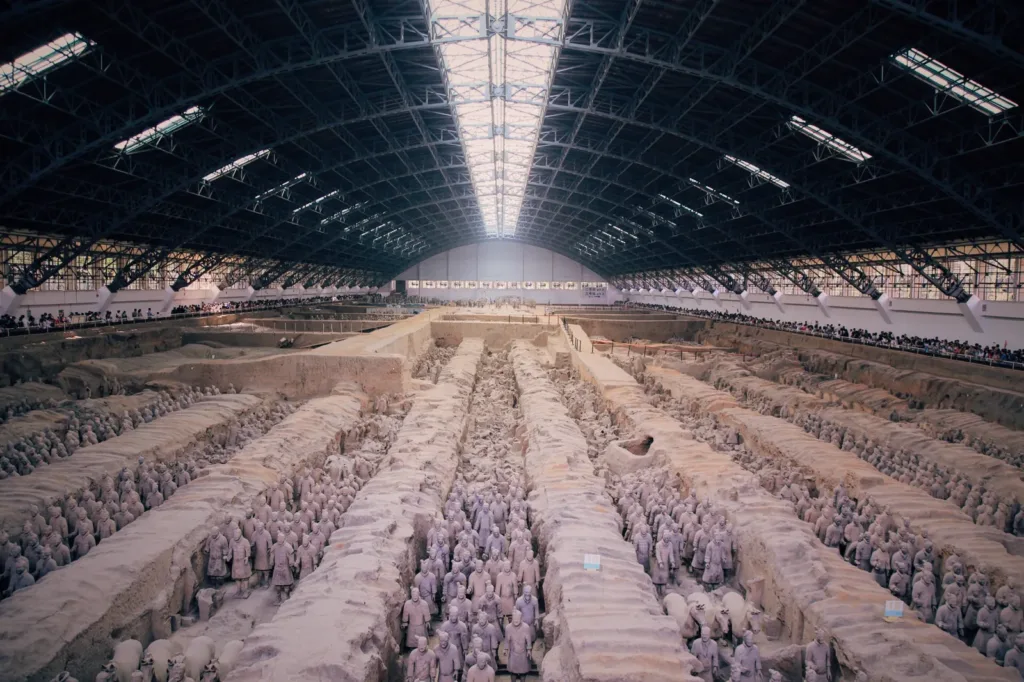
The visitor attraction commonly called the Terracotta Army is the Museum of the Terracotta Warriors and Horses, part of the larger Qinshihuang Mausoleum Site Museum (秦始皇帝陵博物院) in Lintong District (临潼区), east of central Xi’an. The UNESCO-listed property is a broad funerary landscape rather than a single hall: its accompanying pits contain life-size figures, horses, chariots and weapons, while other discoveries across the mausoleum include varied burial and architectural remains.
Inside the museum, begin with the long ranks in Pit 1 and look across the formation from the visitor galleries. Then compare Pit 2, whose excavated units show different troop arrangements, with the smaller, U-shaped Pit 3, interpreted by the museum as a command-related space. The figures are not a uniform row of copies: differences in dress, equipment, posture and surviving traces of paint reward a slower look at individual details as well as the overall formation.
Keep the two visitor precincts straight when planning your day. The Terracotta Warriors museum halls are one part; Lishanyuan (丽山园), the mausoleum archaeological-site park, is a separate area. The museum’s visitor guide describes a free shuttle between them under the museum visit arrangement and identifies the bronze-chariot museum in the Lishanyuan area. Confirm the current shuttle boarding point and operating arrangements on site, rather than assuming the two areas share one entrance or can be crossed on foot.
Getting there: From Xi’an, travel to Textile City (纺织城) and change to Metro Line 9 toward Qinling West; leave at Huaqingchi (华清池). A Xi’an local visitor guide specifies Exit C, then about 197 m on foot to Huaqingchi bus stop. It lists Lintong Tourist Bus 613 (临潼游613路) toward Qin Yong Cun (秦俑村) and Lintong Bus 602 (临潼602路) toward Qin Bingma Yong (秦兵马俑); the listed museum bus stop is followed by about 170 m on foot to the museum. The guide does not establish live departures or last-bus times, so check the destination sign and return service before boarding. The official museum visitor route identifies the north gate as the entrance and the east gate as the exit.
For a taxi or ride-hail, enter 秦始皇帝陵博物院北门 Qín Shǐhuángdì Líng Bówùyuàn Běimén as the destination; the listed street address is 秦陵北路, 临潼区, 西安市 Qínlíng Běi Lù, Líntóng Qū, Xī’ān Shì. The published visitor guide confirms the north gate as the visitor entrance, but the sources checked do not identify a specific authorized taxi curb. Follow police and posted traffic directions and use only a lawful set-down point serving the north-gate approach; do not request the east exit as an entrance.
The museum’s official site is the place to check its latest visitor notices and ticket link. A museum visitor guide published in 2023 instructed visitors to book a timed visit online, but live ticket availability, today’s hours and current shuttle details could not be confirmed from the public pages available for this check. Reconfirm them through the official museum site before travelling; do not rely on old third-party prices or timetables.
Combine your visit
Suggested order within this visit:
-
Pit 3
Start with the smaller arrangement and study the figures.
-
Pit 2
Compare troop types and excavation conditions.
-
Pit 1
Finish with the largest formation and broad view of the army.
This sequence is an editorial suggestion based on the features described in the sources. Access to individual buildings or areas should be checked locally; no travel time or shared admission is implied.
Find Terracotta Army
秦始皇兵马俑 · 临潼区
The pin marks the area, not the entrance.
More places nearby
Approximate straight-line distances between map pins, not travel distances.
Qin Shi Huang Mausoleum 秦始皇陵
2 km awayThe emperor’s burial mound is the center of a much larger funerary landscape at Lishanyuan, separate from the familiar Terracotta Army halls. The main underground chamber remains unexcavated. A visit instead combines the mound’s…
View guide →Huaqing Pool 华清池
6 km awayHuaqing Pool is the hot-spring and palace complex at the foot of Mount Li, also called Huaqing Palace. The excavated Tang bathing pools are its most distinctive remains: their different shapes connect the site with imperial…
View guide →Sources & visit information
Sources checked on 21 October 2026. Hours, tickets, reservations and transport can change; confirm with the operator before you go.
Image credits & notes (1)
- View into Pit 1 at the Terracotta Army museum, photographed from the central aisle. Photo: Legolas1024Photo: CC BY-SA 4.0