

Explore the region
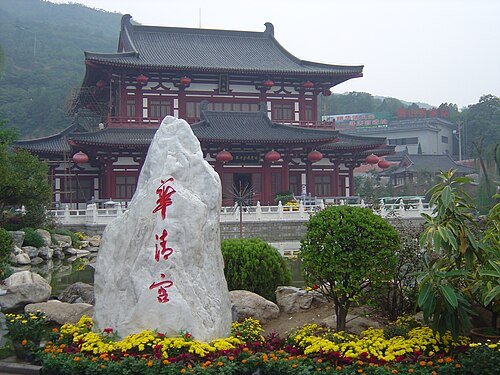
Huaqing Palace Scenic Area—also widely called Huaqing Pool—is a historic garden and heritage site in Lintong District, within Xi’an. It brings together the Huaqing Pool grounds and Mount Li visitor area; it is not the separate Terracotta Army museum nearby. The setting under Mount Li helps explain the site’s long association with royal retreats and hot springs. Emperors from several dynasties established palaces or villas here, and the Tang imperial baths are among the site’s most distinctive remains.
What to see and how to explore
Start with the Tang Imperial Hot Spring Ruins Museum. Read the excavated bath features as archaeological remains, not as working public bathing pools. The named baths are associated with the Tang court and its celebrated stories of Emperor Xuanzong and Yang Guifei; the spring-water setting is part of the site’s history, while today’s visitor experience is a museum-and-garden visit.
Continue through the garden landscape around Furong Lake and Jiulong Lake, looking at how halls, water and the Mount Li backdrop frame views across the grounds. The Tang Pear Garden Ruins Museum introduces the court’s performance tradition. At Wujian Hall (Five-Room Hall), look for the site’s connection to the 1936 Xi’an Incident. These are different layers of the place: archaeological displays, later garden architecture and a modern-history memorial, rather than one intact Tang palace.
If you have time and want a steeper walk, extend the visit uphill into the Mount Li area for shrines, historic sites and views. The attraction includes many steps and stone paths; wear comfortable, non-slip shoes and allow for the extra climb. The mountain route is optional, not a short level walk from the palace gardens.
A practical order is to see the bath remains first, then the lakes and garden buildings, and finish at Wujian Hall or the Pear Garden displays according to your interests. The attraction’s English guide describes a west-to-east route from Wangjing Gate toward Jinyang Gate; check the day’s visitor arrangements because routes and access to individual buildings can change.
Getting there
Take Xi’an Metro Line 9 to Huaqingchi Station (华清池站). Use Exit B or C and follow the signed pedestrian approach to Wangjing Gate (望京门), the West Gate; the attraction guide estimates a 3–5 minute walk. For the return, walk back to Huaqingchi Station and take Line 9 in the direction you need. Check the current last-train information before an evening visit.
The 306 Tourist Bus (游5 / 306) now departs from Xi’an East Station (西安东站), goes via Fangzhicheng Transit Hub (纺织城枢纽站) and serves Huaqing Palace; a local report dated 29 August 2026 gives operating hours of 07:00–19:00. That report does not establish the exact stop-board name at the palace or a last return departure, so confirm the current 306 itinerary and return service at the stop before relying on the bus.
For a taxi or ride-hail, enter 华清宫景区,陕西省西安市临潼区华清路3号 as the destination and ask to approach the Wangjing Gate / West Gate entrance. The public visitor guide identifies the address and gate, but the sources checked do not identify a designated legal curbside drop-off point. Have the driver use only a signed, authorized passenger drop-off or public parking area; do not ask for an unsignposted roadside stop.
Hours and tickets
The attraction’s Chinese visitor FAQ publishes seasonal reference hours—07:30–18:00 in summer and 07:30–17:30 in winter—and explicitly says to follow the scenic area’s announcement for the day. It does not settle the schedule for every date or season. Check the current official booking/announcement channel for opening, admission, and any separately ticketed evening performance before setting out; no particular price or performance time is promised here.
Combine your visit
Suggested order within this visit:
-
Tang bathing-pool remains
Begin with the hot-spring archaeology that defines the place.
-
Palace gardens
Follow the landscaped setting between the historic areas.
-
Five-Room Hall
Finish with the separate twentieth-century story.
This sequence is an editorial suggestion based on the features described in the sources. Access to individual buildings or areas should be checked locally; no travel time or shared admission is implied.
Find Huaqing Pool
华清池 · 临潼区
The pin marks the area, not the entrance.
More places nearby
Approximate straight-line distances between map pins, not travel distances.
Mount Li 骊山
Less than 1 km awayMount Li rises directly behind Huaqing Palace in Lintong. Its paths connect wooded slopes with shrines, the Beacon Tower and memorials to the 1936 Xi’an Incident. Bingjian Pavilion marks the mountainside story of Chiang…
View guide →Qin Shi Huang Mausoleum 秦始皇陵
5 km awayThe emperor’s burial mound is the center of a much larger funerary landscape at Lishanyuan, separate from the familiar Terracotta Army halls. The main underground chamber remains unexcavated. A visit instead combines the mound’s…
View guide →Terracotta Army 秦始皇兵马俑
6 km awayThe Terracotta Army is an excavated part of Qin Shi Huang’s burial complex, where life-size soldiers, horses and chariots were arranged in underground military formations. The roofed pits show both reconstructed figures and the…
View guide →Sources & visit information
Sources checked on 21 October 2026. Hours, tickets, reservations and transport can change; confirm with the operator before you go.
Image credits & notes (1)
- Huaqing Palace · 华清宫Photo: The original uploader was Yyk at Chinese Wikipedia . · CC BY-SA 3.0Wikimedia Commons image, fitted to the card frame.
