


Get to know Lintong District
- Administrative area
- District · 市辖区
- Part of
- Xi’an
- Chinese name
- 临潼区
- Local areas
- District guide
Area & population
- Area
- 915.97 km²
- Population · 2020
- 675,961
Source: English Wikipedia, as of the dates shown.
Understand the district
Lintong is a current county-level district of Xi’an, not a separate city and not a development-zone name. Shaanxi’s 2025 administrative-code directory lists Lintong District as code 610115, with 23 subdistricts; Xi’an’s municipal profile includes it among the city’s 11 districts and two counties. “Lintong County” is an older name, not the present administrative status.
For visitors, think of Lintong as a broad eastern district rather than one compact attraction. Its best-known heritage stops sit in two distinct visitor areas: the Qin Shi Huang Emperor’s Mausoleum Site Museum near Qinling Subdistrict, and Huaqing Palace beside Mount Li in the Lishan area. They are not one site and each has its own entrance and visit plan. The district also extends well beyond this familiar tourism corridor, so a hotel, station, or taxi destination should be chosen for the particular place you intend to visit rather than for “Lintong” in general.
A Qin-to-Tang heritage route
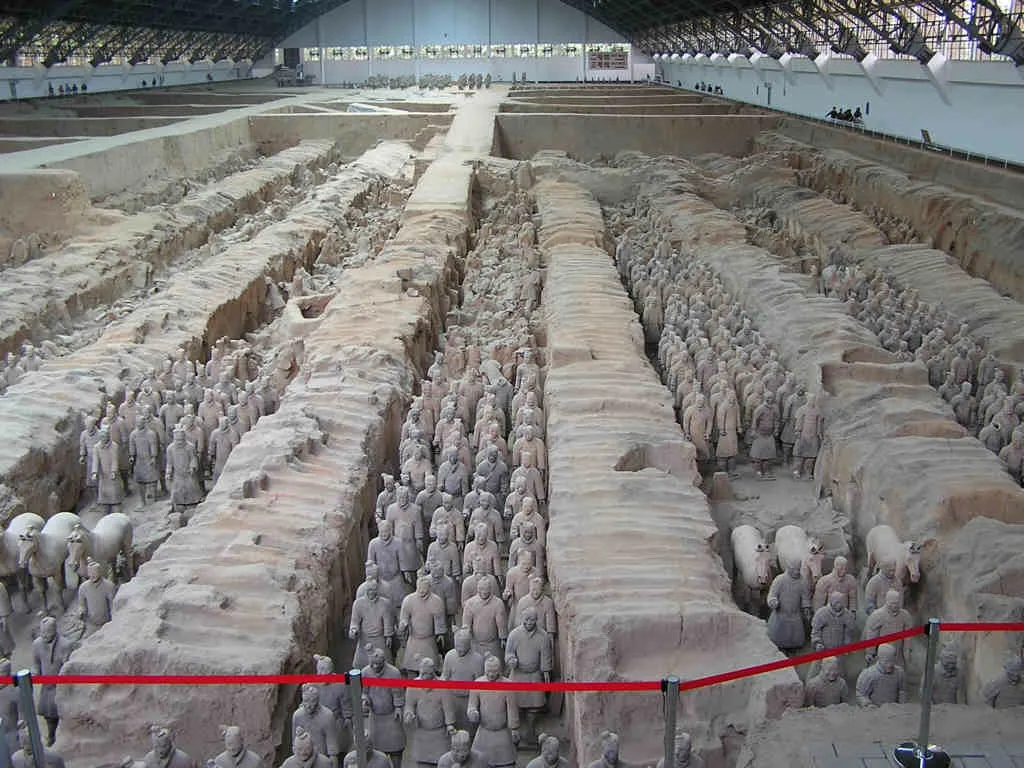
At the mausoleum museum, begin at the North Gate and allow time to understand the separate but connected parts of the complex. The three covered Terracotta Army pits show an excavated military formation, with different arrangements of infantry, cavalry, archers, and chariots. Look across the rows rather than treating the figures as a single crowd: pit layouts and the surviving traces of excavation make the military organization legible. The museum’s official visitor information identifies Pit 1, Pit 2, and Pit 3 as distinct viewing areas.
The Qin Shi Huang Mausoleum Archaeological Site Park, commonly called Lishan Garden (丽山园), is a separate area within the same museum institution. It is not the familiar terracotta-pit hall. Visitors can see the low imperial tomb mound in its landscape setting and visit the Bronze Chariots and Horses exhibition and other archaeological displays. The museum says visitors may take its free shuttle between the Terracotta Warriors museum and Lishan Garden; follow the current on-site signs and staff directions for the boarding point and return.
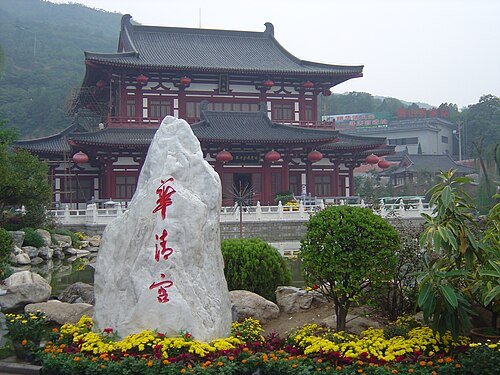
At Huaqing Palace (华清宫), the mountain immediately behind the historic garden is part of the experience. Walk the palace grounds and look for the excavated imperial bathing pools, lakeside spaces, and buildings; then take in how Mount Li frames the site. The place connects the Tang court’s hot-spring retreat with later layers of history, including the Five-Room Hall and the Xi’an Incident. It is worth allowing time to move through the grounds rather than stopping only for a photograph at the entrance. The contemporary visitor complex is called Huaqing Palace; “Huaqing Pool” is also widely used for the same site, not a second attraction.
These stops make a useful thematic pairing, but not a single walk: the Qin imperial burial landscape and the Tang palace gardens are separate attractions. Visit the Terracotta Army and Lishan Garden together if you want a full mausoleum-site day; pair Huaqing Palace with a Mount Li visit on a separate or longer day. The district’s well-known evening performance The Song of Everlasting Sorrow is staged at Huaqing Palace, but it is a separately ticketed performance with dates and transport needs that should be checked before planning around it.
Getting around
For Huaqing Palace, take Xi’an Metro Line 9 to Huaqingchi (华清池) and leave by Exit C. The performance’s official route page says the scenic-area entrance is about a three-minute walk from that exit. The published address is 38 Huaqing Road, Lintong District (临潼区华清路38号); for a taxi, use 华清宫景区 Huáqīng Gōng Jǐngqū and follow signs to the visitor entrance, rather than asking for a district-wide drop-off.
For the Terracotta Warriors, Line 9 also reaches Huaqingchi. From Exit C, the published visitor route continues by Lintong local bus You 613 (临潼游613路) or 602 (临潼602路) to the Terracotta Warriors stop; the guide also identifies Qinyong Village (秦俑村) as a stop for You 613. Continue on foot to the museum’s North Gate, the designated entrance. Confirm the current stop and return service locally before boarding; route frequency and late-evening service are not stated here as guarantees. For a taxi, use 秦始皇帝陵博物院北门 Qín Shǐhuángdì Líng Bówùyuàn Běimén; the museum’s published address is on Qinling North Road (秦陵北路), Lintong District. Follow signs to the museum’s visitor entrance, since the North Gate is the designated entrance and other gates should not be assumed to accept visitors.
These routes serve the two main visitor clusters, not every town or rural attraction in the district. There is no single district entrance or district-wide taxi drop-off. For an outlying village, lodging, or other venue, use its exact Chinese name and confirm the local connection separately. No district-wide rail or water route is needed for this visitor orientation.
Before you go
The museum currently describes timed, real-name advance reservations through its official website and official WeChat channels. Its live ticket page is the place to confirm availability, entry rules, and any changes before travel. Huaqing Palace and the Song of Everlasting Sorrow are separate visitor products; verify the palace’s current admission and the performance’s date-specific ticket and return arrangements independently. No district-wide ticket covers these sites.
Guide sources
- 2025 Shaanxi administrative division codes
- Xi’an Municipal Government city profile
- Qin Shi Huang Emperor’s Mausoleum Site Museum ticketing and visitor information
- Lintong: building a world-class tourism destination
- The Song of Everlasting Sorrow official route and venue page
- Xi’an Terracotta Warriors transit guide
- Qin Shi Huang Emperor’s Mausoleum Site Museum official portal
Explore Lintong District
Core places to explore, with English and Chinese names.
Places to explore around Lintong District
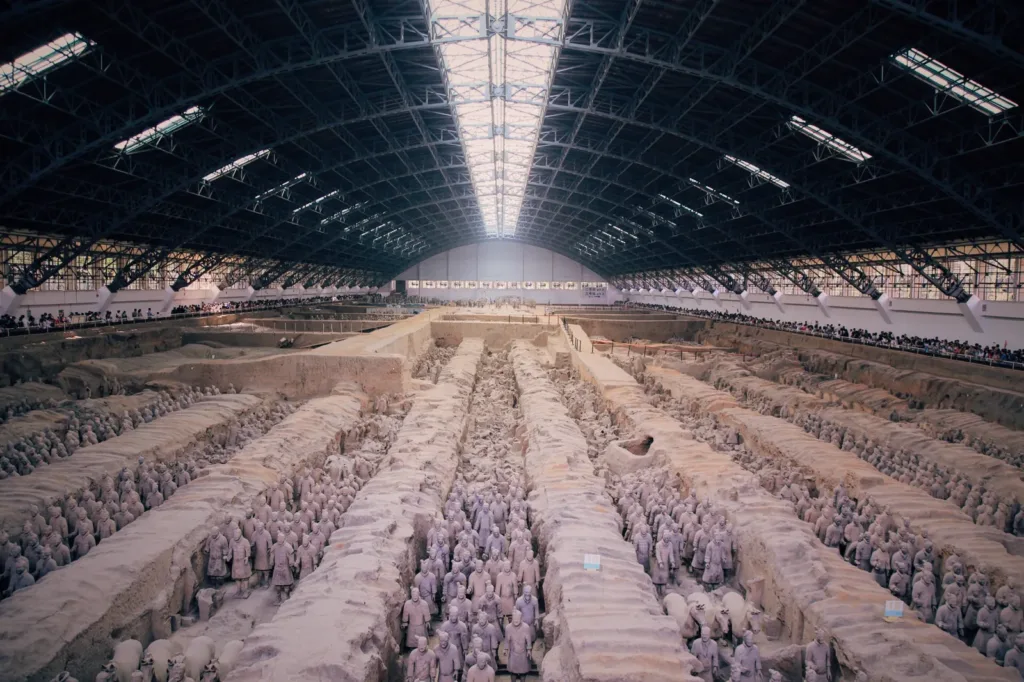 View into Pit 1 at the Terracotta Army museum, photographed from the central aisle. Photo: Legolas1024 · CC BY-SA 4.0
Terracotta Army秦始皇兵马俑
In Lintong, the Qinshihuang Mausoleum Site Museum brings visitors close to the life-size terracotta soldiers, horses and chariots buried as part of the First Qin Emperor’s mausoleum. Compare the three excavation halls, then treat the separate Lishanyuan precinct as a distinct part of the larger site.
Read the place guide → Burial mound at Qin Shi Huang’s Mausoleum, Lintong. Photo: wit · CC BY-SA 2.0
Qin Shi Huang Mausoleum秦始皇陵
In Lintong, the visitor-facing Qin Shi Huang Mausoleum is explored at Lishan Garden, part of the Emperor Qinshihuang’s Mausoleum Site Museum. The visit centers on the burial mound’s setting, bronze chariots and selected subsidiary-pit displays—not entry to the sealed central tomb.
Read the place guide →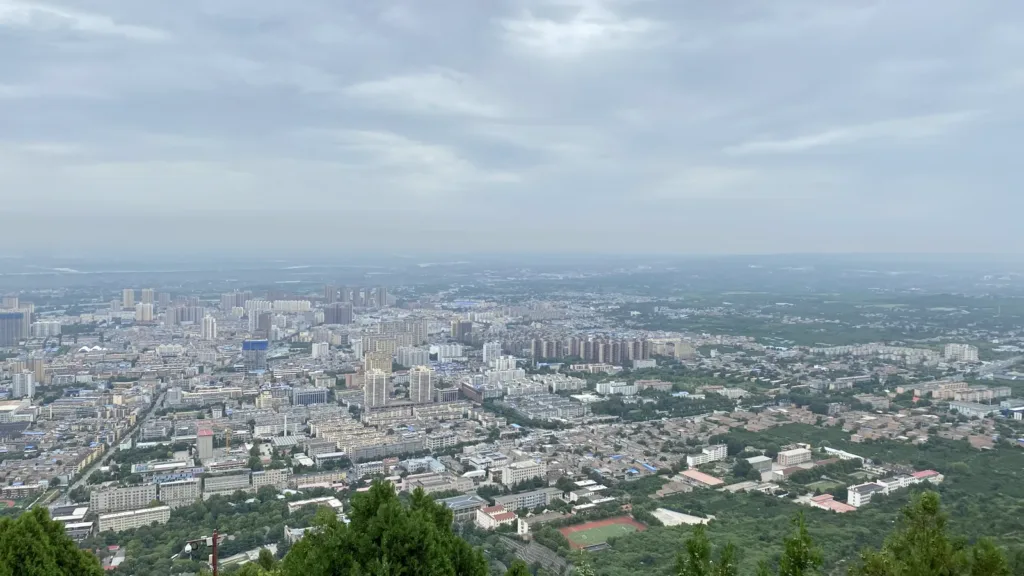 View across Lintong from Mount Li, photographed at about 800 metres elevation. Photo: Liuboyoupeter · CC BY-SA 4.0
Mount Li骊山
A wooded mountain above Lintong’s Huaqing Palace, Mount Li pairs hillside paths and traditional shrines with the Beacon Tower and the Xi’an Incident memorial setting at Bingjian Pavilion.
Read the place guide →Huaqing Palace · 华清宫Huaqing Pool华清池
At the foot of Mount Li in Xi’an’s Lintong District, Huaqing Palace combines imperial hot-spring remains, lakeside gardens, Tang-court heritage and buildings associated with the 1936 Xi’an Incident.
Read the place guide →The Song of Everlasting Sorrow《长恨歌》演出
An outdoor historical dance drama at Huaqing Palace in Lintong, staging the Tang-era love story of Emperor Xuanzong and Yang Guifei against the palace’s lake, gardens, and mountain setting.
Read the place guide →Plan your visit
Getting there
Lintong District is about 30 km (straight-line distance) from central Xi’an. Search for 临潼区 in a map app to find stations and your accommodation.
Where to stay →Build your route
Terracotta Army and Qin Shi Huang Mausoleum are about 2 km apart (straight-line distance). The linked place guides have entrance and visit details.
Continue with Xi’an →More in Xi’an
Sources & geographic information
Administrative names and parent areas: Official geographic directory (dmfw.mca.gov.cn) · Reference date 2026-09-06.
Background text adapted from Lintong, Xi'an — Wikipedia contributors, under CC BY-SA 4.0. Text has been shortened and reorganized; source revision 1361530580.
Photo: Huaqing Pool · The original uploader was Yyk at Chinese Wikipedia . · CC BY-SA 3.0. Wikimedia Commons image, fitted to the card frame.

Map data © OpenStreetMap contributors. Pins mark approximate centres, not entrances or boundaries.
Image credits & notes (2)
- Huaqing Palace in Lintong District, Xi'an. Source date: 17 December 2006 (original upload date). Source date: 17 December 2006 (original upload date).Photo: The original uploader was Yyk at Chinese Wikipedia . · CC BY-SA 3.0Wikimedia Commons image, fitted to the card frame.
- Rows of terracotta figures in an excavated pit at the Terracotta Army museum. Photo: Richard ChambersPhoto: CC BY-SA 3.0