


Get to know Lanshan District
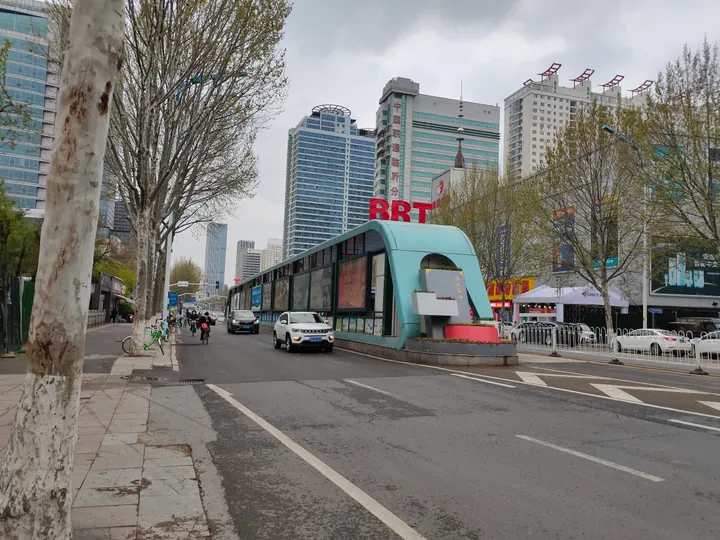
Photo adjustments
Full frame retained; proportionally resized and converted to WebP. No retouching or changes to the photographed subject. Card displays may crop the view.
- Administrative area
- District · 市辖区
- Part of
- Linyi
- Chinese name
- 兰山区
- Local areas
- District guide
Area & population
- Area in the source
- 818.00 km²
- Population · 2019
- 1,373,000
Source: cited geographic source, as of the dates shown.
History
The town began in 492 BC under Duke Ai of Lu (鲁哀公) as Qiyang (启阳). The Western Han made it a county and renamed it Kaiyang (开阳) to avoid the personal name of Emperor Jing, Liu Qi (刘启). From AD 80, when it became the capital of Liu Jing (刘京), Prince of Langya, it served as the seat of Langya (琅琊) commandery and kingdom. Under the Sui it took the name Linyi, "facing the Yi", because the river runs along the east side of the city. The Qing set up Lanshan County here as the seat of Yizhou prefecture (沂州府), and in 1914 Lanshan County was renamed Linyi County.
What to see
The Yinqueshan Han Tombs Bamboo Slips Museum (银雀山汉墓竹简博物馆) on Yimeng Road stands on the site where tombs 1 and 2 yielded a large find of bamboo slips in April 1972. The texts included Sunzi's Art of War (孙子兵法) together with Sun Bin's Art of War (孙膑兵法), which had been lost for more than a thousand years. The museum opened in 1989, and new galleries opened in September 2021.
Wang Xizhi's Former Residence (王羲之故居) on Xiyanchi Street is where the calligrapher was born in Langya Linyi (琅琊临沂) in 303 and where he lived until his family moved south. When his family moved south to Jiankang (建康, now Nanjing) in 315, the house was given up to become a Buddhist temple, later called Puzhao Chan Temple (普照禅寺). Expansion work in 2003 uncovered the Xiyanchi Jin tombs (洗砚池晋墓), listed among the ten major archaeological discoveries of that year and made a national protected site in 2006.
The East China Revolutionary Martyrs' Cemetery (华东革命烈士陵园), begun in April 1949, covers 15 hectares and faces south, with a memorial tower and hall on its central axis. It was in the first group of national key martyrs' memorials listed by the State Council in October 1986.
Food and local products
The district government compares Linyi fried chicken (临沂炒鸡) to Peking duck in Beijing. The chicken is stir-fried over high heat in a sauce, which some cooks sun-dry themselves and others make with Sichuan pepper.
Getting oriented
The Yanzhou–Shijiusuo railway (兖石铁路), the Rizhao–Lankao high-speed railway (日兰高速铁路) and the Beijing–Shanghai Expressway (京沪高速公路) pass through the district, which borders Fei County (费县) to the west, Luozhuang District (罗庄区) to the south and Yinan County (沂南县) to the north.
Highlights
- Yinqueshan Han Tombs Bamboo Slips Museum 银雀山汉墓竹简博物馆: Site museum of the 1972 find that brought Sunzi's and Sun Bin's texts on warfare to light together.
- Wang Xizhi's Former Residence 王羲之故居: Birthplace of the calligrapher Wang Xizhi; the Xiyanchi Jin tombs were found in its grounds in 2003.
- East China Revolutionary Martyrs' Cemetery 华东革命烈士陵园: Memorial cemetery begun in 1949, listed as a national key martyrs' memorial in 1986.
- Linyi fried chicken 临沂炒鸡: Chicken stir-fried over high heat in home-made sun-dried sauce or Sichuan-pepper paste.
Sources for this guide
兰山区 - 维基百科,自由的百科全书 · Wikipedia (Chinese) · CC BY-SA 4.0
银雀山汉墓竹简博物馆-兰山区人民政府 · Lanshan District People's Government, Linyi
王羲之故居-兰山区人民政府 · Lanshan District People's Government, Linyi
华东革命烈士陵园-兰山区人民政府 · Lanshan District People's Government, Linyi
寻味金雀山丨来金雀山吧,品味地道临沂美食(炒鸡篇)-兰山区人民政府 · Lanshan District People's Government, Linyi
Original English written from the listed sources and checked sentence by sentence against quoted extracts by a separate reviewer. Updated 2026-09-23.
Explore Lanshan District
Core places to explore, with English and Chinese names.
Places to explore around Lanshan District
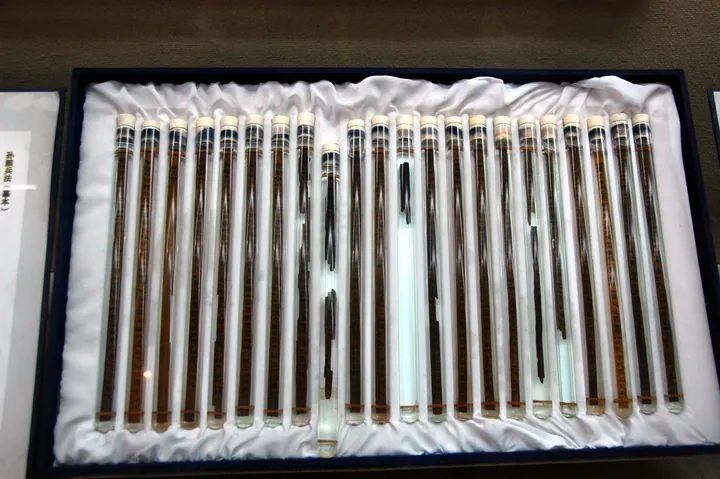 Han-dynasty bamboo slips from the Yinqueshan tombs on display at the Yinqueshan Han Tombs Bamboo Slips Museum, Lanshan District, Linyi · 临沂市兰山区银雀山汉墓竹简博物馆展出的银雀山汉墓出土竹简 Source-recorded photograph date: 2008-09-14 10:07.
Yinqueshan Han Tomb Bamboo Slips Museum银雀山汉墓竹简博物馆
The Yinqueshan Han Tomb Bamboo Slips Museum (银雀山汉墓竹简博物馆) in Linyi, Shandong, is devoted to the manuscripts recovered from the Yinqueshan Han tombs in the city. Those manuscripts include bamboo-slip copies of Sunzi's Art of War and Sun Bin's Art of War.
Read the place guide →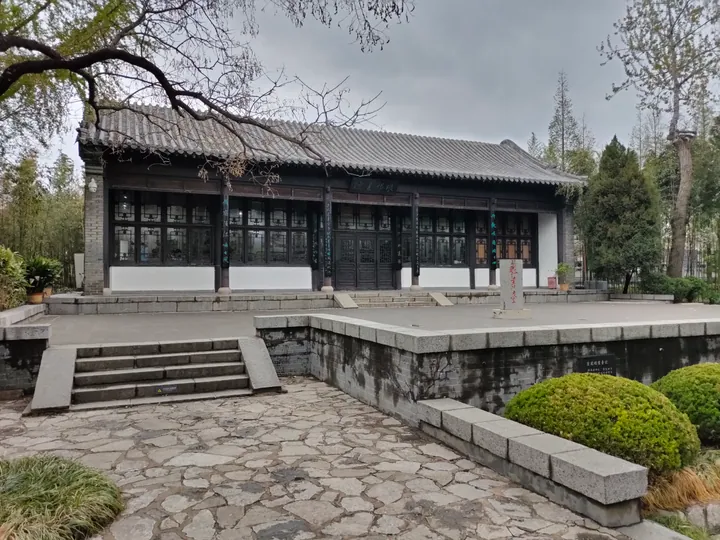 Former Residence of Wang Xizhi, Lanshan District, Linyi · 临沂王羲之故居,兰山区 Source-recorded photograph date: 2021-04-03 11:39:06.
Wang Xizhi Former Residence王羲之故居
The Wang Xizhi Former Residence (王羲之故居) occupies a walled classical garden on Xiyanchi Street in Lanshan District, Linyi, Shandong, laid out on the ground where the Eastern Jin calligrapher spent his childhood and where a Buddhist temple later stood.
Read the place guide →Plan your visit
Getting there
Lanshan District is about 10 km in a straight line from central Linyi. Search for 兰山区 in a map app to find stations and your accommodation.
Where to stay →Build your route
Yinqueshan Han Tomb Bamboo Slips Museum and Wang Xizhi Former Residence are both listed here. The linked place guides have entrance and visit details.
Continue with Linyi →More in Linyi
Sources & geographic information
Administrative names and parent areas: Official geographic directory · Reference date 2026-09-06.
Some facts checked against 兰山区 — Wikipedia contributors, CC BY-SA 4.0.
Photo: Yinqueshan Han Tomb Bamboo Slips Museum · kanegen from Tokyo, Japan · CC BY 2.0. Full frame retained; proportionally resized and converted to WebP. No retouching or changes to the photographed subject. Card displays may crop the view.
.jpg)
Photo: Wang Xizhi Former Residence · Sprt98 · CC BY-SA 4.0. Full frame retained; proportionally resized and converted to WebP. No retouching or changes to the photographed subject. Card displays may crop the view.

Map data © OpenStreetMap contributors. Pins mark approximate centres, not entrances or boundaries.