

Get to know Zezhou County
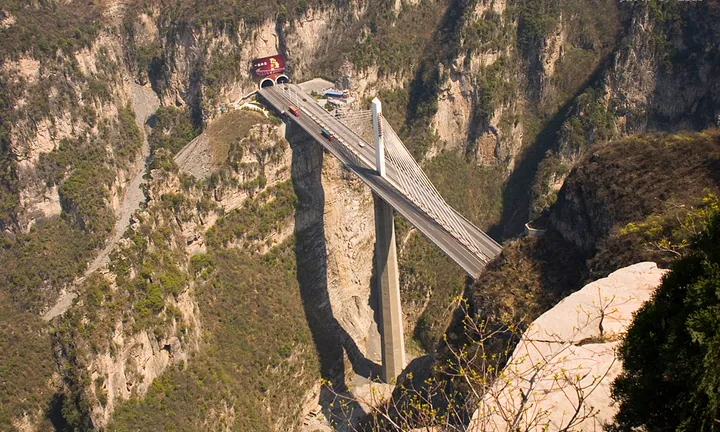
Photo adjustments
Full frame retained; proportionally resized and converted to WebP. No retouching or changes to the photographed subject. Card displays may crop the view.
- Administrative area
- County · 县
- Part of
- Jincheng
- Chinese name
- 泽州县
- Local areas
- County guide
Area & population
- Population · 2010
- 480,000
Source: cited geographic source, as of the dates shown.
Setting and landscape
Mountains, hills and flat land occur in the ratio 6:3:1. The ground is higher in the north and ringed by mountains; the highest point is the main peak of Wushen Mountain (武神山) in the northwest, at 1,346.6 metres, and the lowest is Sangu Spring (三姑泉), 296 metres, where the Dan River (丹河) leaves the county. The Qin (沁河) and the Dan, both in the Yellow River system, flow onto the north Henan plain. In the south, Tianjing Pass (天井关) is one of the eight passes of the Taihang (太行八陉) and was long fought over.
History
The area took the name Jincheng County in 620, and from 627 until the prefectures were abolished in the Republican era it was the seat of Zezhou (泽州). In 1728 it became Fengtai County (凤台县), and in 1913 it was Jincheng County again. From 1985 the area was Jincheng's suburban district, renamed Zezhou County in 1996. Local lore sets the story of Nüwa (女娲) mending the sky here.
What to see
Gaodu Jingde Temple (高都景德寺) in Gaodu town (高都镇) was founded in 572 and received its present name in 1007. Its rear hall was built in 1087 and rebuilt in 1205; four of its six octagonal front columns are original 1087 stone, and most of the green-glazed dragon ridge ornaments are Ming work. It was counted with Biluo Temple (碧落寺) among the four great temples of old Zezhou, and both are major national heritage sites.
Zezhou has 20 major national heritage sites, among them Qinglian Temple (青莲寺) and the Jade Emperor Temple at Fucheng (府城玉皇庙). Dayang (大阳), Zhoucun (周村) and Gaodu are listed as Chinese historical and cultural towns, and Tianjing Pass village (天井关村) as a historical and cultural village.
Getting oriented
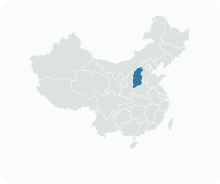
Lingchuan lies to the east, Yangcheng (阳城) and Qinshui (沁水) to the west and Gaoping (高平) to the north, while Huixian (辉县), Xiuwu (修武), Bo'ai (博爱), Qinyang (沁阳) and Jiyuan (济源) in Henan lie to the south. Jincheng East station on the Zhengzhou–Taiyuan high-speed railway (郑太高速铁路) is in the county, and the Erenhot–Guangzhou and Jincheng–Jiyuan expressways cross it.
Highlights
- Gaodu Jingde Temple 高都景德寺: Founded 572; rear hall of 1087, rebuilt 1205, with original Song stone columns.
- Tianjing Pass 天井关: One of the eight passes of the Taihang, in the south of the county.
- Qinglian Temple 青莲寺: Major national heritage site.
- Dayang 大阳: Listed as a Chinese historical and cultural town.
Sources for this guide
泽州县 · Chinese Wikipedia · CC BY-SA 4.0
泽州概况 · Zezhou County People's Government (county Party history and local chronicles office)
泽州文保 | 高都景德寺:一寺看尽宋金风华 · Zezhou County People's Government (county tourism development service centre)
Original English written from the listed sources and checked sentence by sentence against quoted extracts by a separate reviewer. Updated 2026-09-26.
Explore Zezhou County
Core places to explore, with English and Chinese names.
Zezhou County 泽州县
Plan your visit
Getting there
Zezhou County is about 15 km in a straight line from central Jincheng. Search for 泽州县 in a map app to find stations and your accommodation.
Where to stay →More in Jincheng
Sources & geographic information
Administrative names and parent areas: Official geographic directory · Reference date 2026-09-06.
Some facts checked against 泽州县 — Wikipedia contributors, CC BY-SA 4.0.
Map data © OpenStreetMap contributors. Pins mark approximate centres, not entrances or boundaries.