

Juntun guokui 军屯锅盔
A crisp, savory, laminated bread associated with Pengzhou in greater Chengdu, Juntun guokui is made by layering dough with seasoned filling and baking it until golden; recipes and fillings vary by maker.
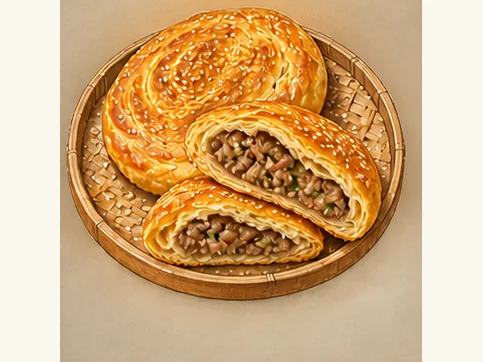
What it is and how it is made
Juntun guokui—also called Juntun guokui in the “魁” spelling, 军屯锅魁—is a savory, many-layered wheat bread associated with Pengzhou. The Chengdu Intangible Cultural Heritage Protection Centre lists flour, fresh pork, rapeseed oil, Sichuan pepper, black pepper, ginger, scallion, sesame, starter dough and other seasonings among the ingredients of the traditional technique. That is a documented ingredient list, not a guarantee that every shop uses the same recipe.
A field report on a Pengzhou maker describes a characteristic sequence: rested dough is stretched and slapped into a long sheet; seasoned meat and an oil paste are spread over it; the sheet is rolled up, shaped, then turned repeatedly in a pan before baking. The layering traps the filling and fat between thin folds. The reported method is an artisan example rather than a single compulsory recipe for all sellers.
Look for a deep golden, crisp exterior and distinct flaky layers. One maker describes the shell as fragrant and crisp, with a fuller, tender interior; a Sichuan Online food feature also highlights the peppery, numbing aroma and a crumb that breaks down easily in the mouth. Freshly cooked, the crust is more audible and brittle, while the center stays substantial rather than dry.
Ordering and variations
Ask what filling is in the batch and whether it is pork, another meat, or meat-free; recipes and stock differ by vendor. If it has just come from the oven, eat it warm. A traditional maker interviewed in 2024 suggested using paper to hold it and peeling the flaky layers apart as you eat.
The style has changed over time. Chengdu’s official heritage account describes earlier plain breads, then pepper-and-salt and scallion-oil versions, followed later by pork and other richer fillings. A 2024 report on the local association’s standards says the categories distinguish meat, meat-containing, meat-free and unfilled guokui. These are evidence of variation, not a promise that every shop offers each type.
Pengzhou roots
The dish is associated with Junle Town in Pengzhou, formerly called Juntun Town, and is now found across Chengdu.
Stories connect the name and the food to troops under the Shu-Han general Jiang Wei and say the bread developed from military provisions. Chengdu’s heritage account presents this as a local tradition and a later expert inference, not as settled documentary history. It is best understood as a place-linked origin story, rather than a proven account of the dish’s invention.
Where to eat it
You can find Juntun guokui all over Chengdu, so there is no need to seek out one particular restaurant. To find one near you, search for “军屯锅盔” in Meituan (美团) or Amap (高德地图) and check recent reviews, distance and opening hours.
More dishes to compare
Explore related local specialties and compare their names, preparation notes and ordering guidance.
Baijia feichangfen 白家肥肠粉 →
Sweet-potato-starch noodles are cooked in a savory broth with prepared pork intestine and seasonings. Crisp legumes, pickles or herbs may be added by the shop. The noodles are slippery and resilient, contrasting with the intestine's rich chew. Chili oil and aromatics give the broth a strong finish.
Chengdu youcha 成都油茶 →
Rice flour is cooked into a smooth savory porridge, then finished with seasonings and crisp fried sanzi strands. The toppings are added near serving so they retain some crunch. Soft, warm paste contrasts with brittle fried dough, while sesame, pepper or other condiments add aroma. Despite the name, this version is not a brewed-tea drink.
Sources & reading
Recipes and servings vary between kitchens.