


Get to know Shou County
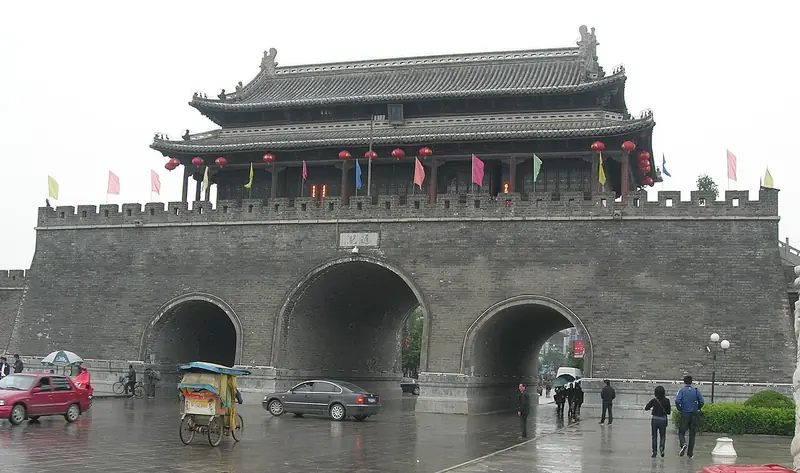
Photo adjustments
Full frame retained; EXIF orientation normalized, proportionally resized to at most 800 pixels and converted to WebP. No generated pixels or subject changes. Cards may crop the display.
- Administrative area
- County · 县
- Part of
- Huainan
- Chinese name
- 寿县
- Local areas
- County guide
Area & population
- Area in the source
- 2,986.00 km²
- Population · 2020
- 838,507
- Administrative seat
- Shouchun Town
Source: cited geographic source, as of the dates shown.
History
Late in the Warring States, Chu moved its capital here and called it Ying (郢); the ruins of that Chu city lie southeast of the present town. Chu ruled from Shouchun for only 18 years, but finds such as the bronze tally of Lord Qi of E (鄂君启金节), Chu gold coins and the great Chu ding cauldron came from the county. The discovery of the Lisangudui (李三孤堆) royal tomb in the 1930s opened the study of Chu culture.
Under the Western Han, Liu An (刘安), King of Huainan, had the Huainanzi (淮南子) compiled here. In 383 the Battle of Fei River (淝水之战) was fought around Mount Bagong and the Fei River. The Sui and Tang renamed the town Shouzhou (寿州). The name Shou County dates from 1912, and the county was named a national historic and cultural city in 1986.
What to see
The city wall, 7,417 metres long, was rebuilt in the Xining years of the Northern Song and repaired in the Jiading years of the Southern Song. Its lower courses are stone blocks from Mount Bagong, its upper bricks come from Ming and Qing repairs, and its inner face slopes, a defensive design known as an "earth-slope war city". Its flood defences, such as the yueba (月坝), were built in the Ming; in 1991 the walls kept floodwater out while about 300,000 people sheltered inside. Binyang Gate (宾阳门) is the best-preserved gate.
The Anhui Chu Culture Museum (安徽楚文化博物馆) stands in the Shouchun City National Archaeological Park; its entrance echoes the layout of the old city gates and the building follows Chu high-platform architecture. Anfeng Pond (安丰塘), also called Quebei (芍陂), is an ancient water-conservancy work traditionally credited to Sunshu Ao (孙叔敖) of the Chu state, though some scholars since the 1970s have argued it cannot predate the Han. Both the pond and the wall are national protected sites.
Food and local products
Shou County's tofu-making craft entered the national intangible heritage list in 2014. Makers use yellow soybeans from Bagongshan Township (八公山乡) and Agate Spring (玛瑙泉) water, grind the soaked beans on stone mills, press the raw milk through cloth bags and set the hot milk with measured gypsum; the main products are fresh tofu, pressed tofu and qianzhang sheets. Beef soup shops stand in front of Binyang Gate, and local dishes include Huaiwang fish (淮王鱼), Wanxi white goose (皖西白鹅) and pungent "chouyao" fish (臭腰鱼).
Highlights
- Shou County old city wall 寿县古城墙: Song-dynasty wall of 7,417 metres with Ming flood works; national protected site.
- Anhui Chu Culture Museum 安徽楚文化博物馆: Museum in the Shouchun City National Archaeological Park, built in Chu high-platform style.
- Anfeng Pond 安丰塘: Ancient water-conservancy work, also called Quebei, traditionally credited to Sunshu Ao; national protected site.
- Shou County tofu 寿县豆腐: Shou County tofu-making craft, on the national intangible heritage list since 2014.
Sources for this guide
走进安徽寿县古城_寿县人民政府 · Shou County People's Government (reprinting Anhui Daily)
寿县 - 维基百科,自由的百科全书 · Wikipedia (Chinese) · CC BY-SA 4.0
楚风汉韵,一城百味——央视财经《欢乐大猜想》约您畅游淮南寿县_寿县人民政府 · Shou County People's Government (on a CCTV-2 feature)
芍陂 - 维基百科,自由的百科全书 · Wikipedia (Chinese) · CC BY-SA 4.0
豆腐传统制作技艺 - 中国非物质文化遗产网·中国非物质文化遗产数字博物馆 · China Intangible Cultural Heritage Network (China National Intangible Cultural Heritage Protection Center)
Original English written from the listed sources and checked sentence by sentence against quoted extracts by a separate reviewer. Updated 2026-09-23.
Explore Shou County
Core places to explore, with English and Chinese names.
Places to explore around Shou County
 Anhui Chu Culture Museum · 安徽楚文化博物馆
Anhui Chu Culture Museum安徽楚文化博物馆
Anhui Chu Culture Museum presents the archaeology of Chu and the history of Shouxian in the museum’s new-town building, opened in 2022.
Read the place guide →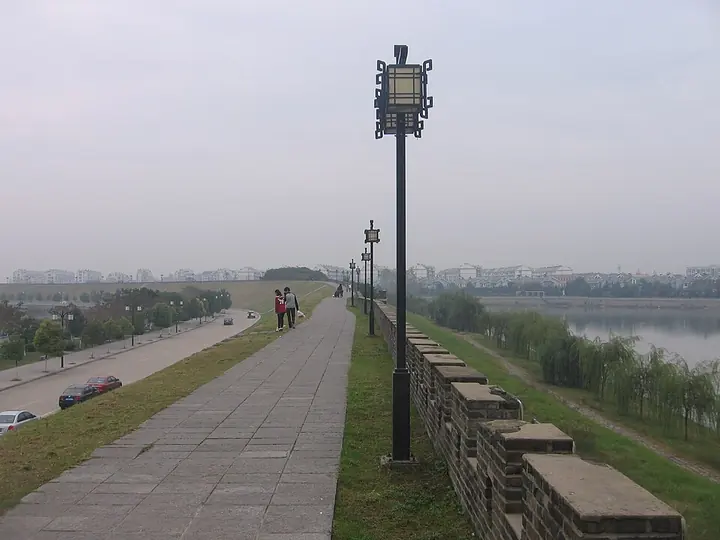 Rampart walkway and moat-side setting of Shou County’s historic city wall · 寿县古城墙步道. Source-recorded photograph date: 2014-11-09 10:50:09.
Shouxian Ancient City寿县古城
Shouxian Ancient City is a walled settlement beside the Huai River whose defences evolved to resist both attack and floodwater.
Read the place guide →Plan your visit
Getting there
Shou County is about 25 km in a straight line from central Huainan. Search for 寿县 in a map app to find stations and your accommodation.
Where to stay →Build your route
Anhui Chu Culture Museum and Shouxian Ancient City are both listed here. The linked place guides have entrance and visit details.
Continue with Huainan →More in Huainan
Sources & geographic information
Administrative names and parent areas: Official geographic directory · Reference date 2026-09-06.
Some facts checked against 寿县 — Wikipedia contributors, CC BY-SA 4.0.
Some facts checked against 芍陂 — Wikipedia contributors, CC BY-SA 4.0.
Photo: Anhui Chu Culture Museum · Source photographer · License not provided. EXIF orientation normalized; resized without changing aspect ratio; converted to WebP. No subject edits.
Photo: Shouxian Ancient City · Zhou Guanhuai · CC BY-SA 4.0. Full source framing retained; proportionally resized and converted to WebP. No retouching or subject alteration. Card displays may crop the view.

Map data © OpenStreetMap contributors. Pins mark approximate centres, not entrances or boundaries.