


Get to know Bowang District
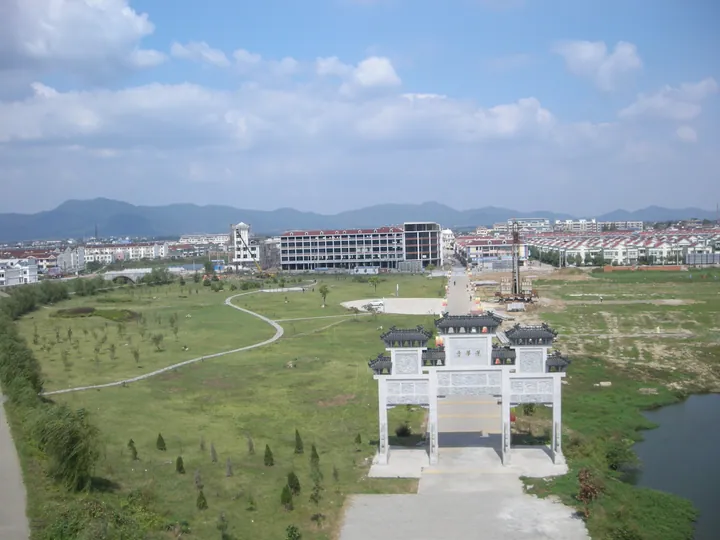
Photo adjustments
Full frame retained; proportionally resized and converted to WebP. No retouching or changes to the photographed subject. Card displays may crop the view.
- Administrative area
- District · 市辖区
- Part of
- Ma'anshan
- Chinese name
- 博望区
- Local areas
- District guide
Area & population
- Area in the source
- 351.00 km²
- Population · 2020
- 158,483
- Administrative seat
- Bowang Town
Source: cited geographic source, as of the dates shown.
History
When the Qin introduced commanderies and counties in 221 BC, the seat of Danyang county was set at what is now Danyang town, and the town was also once the seat of the old Danyang commandery (丹阳郡). Early in the Tang Zhenguan reign the county was abolished and Danyang became a town. In the Kangxi reign of the Qing it was divided in two: the northern half is now Hengxi Subdistrict (横溪街道) in Jiangning, Jiangsu, and the southern half is the Anhui town.
The name Bowang arrived with migrants. After the collapse of the Western Jin, northern families who fled south named their new homes after the places they had left, and migrants from Nanyang commandery (南阳郡) in Henan founded Bowang and Huyang (湖阳) counties at the foot of Hengshan (横山).
Dialect and crafts
People in Bowang speak a Wu dialect of the Xuanzhou group, and a 2005 study of the dialects of old Dangtu groups Bowang and Huyang into a lakeside zone along Shijiu Lake (石臼湖), the zone with the strongest Wu character, where communication with people from elsewhere in the county is very difficult. Bowang is known as a home of blades: before the reform era many families worked iron, and the town was famous for its "three knives" (博望三刀): the kitchen cleaver, scissors and the sickle.
Within the Dangtu folk-song tradition (当涂民歌), the Bowang, Huyang and Xinshi area has its own forms: boat songs, fishing songs and lantern songs.
Highlights
- Danyang town 丹阳镇: Seat of Danyang county from 221 BC and later of the old Danyang commandery.
- Bowang three knives 博望三刀: Kitchen cleavers, scissors and sickles made by Bowang ironworkers.
Sources for this guide
行政区划_马鞍山市人民政府 · Ma'anshan Municipal People's Government
历史沿革—当涂县人民政府 · Dangtu County People's Government
博望区 - 维基百科,自由的百科全书 · Wikipedia (Chinese) · CC BY-SA 4.0
博望镇 (马鞍山市) - 维基百科,自由的百科全书 · Wikipedia (Chinese) · CC BY-SA 4.0
丹阳镇 (马鞍山市) - 维基百科,自由的百科全书 · Wikipedia (Chinese) · CC BY-SA 4.0
当涂民歌_当涂县人民政府 · Dangtu County People's Government
Original English written from the listed sources and checked sentence by sentence against quoted extracts by a separate reviewer. Updated 2026-09-23.
Explore Bowang District
Core places to explore, with English and Chinese names.
Bowang District 博望区
Plan your visit
Getting there
Bowang District is about 35 km in a straight line from central Ma'anshan. Search for 博望区 in a map app to find stations and your accommodation.
Where to stay →More in Ma'anshan
Sources & geographic information
Administrative names and parent areas: Official geographic directory · Reference date 2026-09-06.
Some facts checked against 博望区 — Wikipedia contributors, CC BY-SA 4.0.
Some facts checked against 博望镇 (马鞍山市) — Wikipedia contributors, CC BY-SA 4.0.
Some facts checked against 丹阳镇 (马鞍山市) — Wikipedia contributors, CC BY-SA 4.0.
Map data © OpenStreetMap contributors. Pins mark approximate centres, not entrances or boundaries.