


Get to know Dongguan
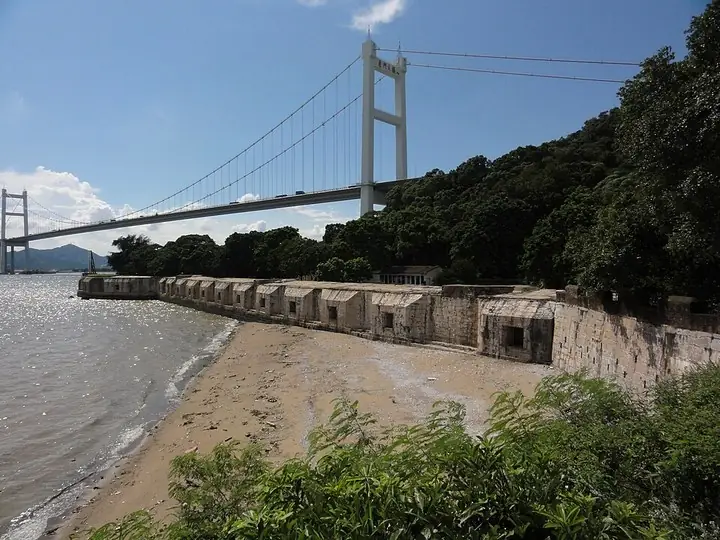
Photo adjustments
The exact downloaded source bytes are separately retained and hashed. Prepared JPEG is proportionally reduced to a maximum 720-pixel long edge; full frame retained, no subject alteration. Final website rendition: full frame retained, proportionally resized to at most 720 pixels and converted to WebP. No additional retouching or subject alteration. Card displays may crop the view.
- Administrative area
- Prefecture-level city · 地级市
- Part of
- Guangdong
- Chinese name
- 东莞市
- Local areas
- Prefecture-level city guide
Area & population
- Area in the source
- 2,465.00 km²
- Population · 2024 census
- 10,570,800
- Administrative seat
- Nancheng Subdistrict
Source: cited geographic source, as of the dates shown.
Setting and landscape
Some 96 per cent of the city lies in the Dong River basin. The land is higher in the southeast, where Yinpingzui Mountain (银瓶嘴山) reaches 898 metres, and falls to a northwestern delta of low fields laced with waterways; the southwest is tidal plain on the estuary. The climate is subtropical monsoon, with long summers and no real winter.
History
The Haogang shell-midden site (蚝岗贝丘遗址), more than 5,000 years old, keeps pits, graves and house foundations and is described by the city as the earliest settlement found in Guangdong. The county was founded in 331 as Bao’an (宝安县) and renamed Dongguan in 757; Xiangshan (香山县), today’s Zhongshan, was split from it in 1152, and Xin’an (新安县), today’s Shenzhen, in 1573. When the Qing confined foreign trade to Guangzhou, ships bound for its Thirteen Hongs had to pass Humen (虎门), where Lin Zexu (林则徐) destroyed confiscated opium in 1839. Dongguan became a prefecture-level city in 1988.
What to see
In Humen, Lin Zexu’s opium-destruction pools lie within the grounds of the Opium War Museum (鸦片战争博物馆); the pools and the Humen forts have been national key protected sites since 1982. Keyuan (可园), a garden in Guancheng (莞城) that the Qing official Zhang Jingxiu (张敬修) began building in 1850, is one of Guangdong’s four famous gardens. Two villages are China Historic and Cultural Villages: Nanshe (南社村) in Chashan (茶山镇), founded in the late Southern Song with comb-pattern lanes, and Tangwei (塘尾村) in Shipai (石排镇), whose 21 ancestral halls stand inside an 860-metre wall with 17 watchtowers.
Food and local products
Guanxiang (莞香), a prized agarwood that thrived in Dongguan’s soil, was sent as tribute and shipped overseas along the Maritime Silk Road; one view holds that Hong Kong, the “fragrant harbour”, was named for the incense its ports shipped. Its making technique, from Dalingshan (大岭山镇), has been on the national intangible heritage list since 2014. Daojiao zongzi (道滘裹蒸粽) wrap glutinous rice, salted egg yolk, lotus seeds, mung beans and pork belly in bamboo leaves and are boiled for hours, and Houjie sausages (厚街腊肠), made since Ming and Qing times, are oval, dark purple and slightly larger than a pigeon’s egg.
Getting oriented
Guangzhou lies to the north, Shenzhen to the south and Huizhou to the east; central Guangzhou is 59 km to the northwest, central Shenzhen 99 km to the southeast and central Hong Kong 140 km away. The Ganzhou–Shenzhen high-speed railway (赣深高铁) and the Foshan–Dongguan intercity line (佛莞城际) serve the city, which has a metro.
Highlights
- Opium War Museum 鸦片战争博物馆: Museum in Humen whose grounds hold Lin Zexu's opium-destruction pools.
- Keyuan 可园: Garden begun in 1850 by the Qing official Zhang Jingxiu, one of Guangdong's four famous gardens.
- Nanshe Village 南社村: Village in Chashan founded in the late Southern Song, with comb-pattern lanes.
- Tangwei Village 塘尾村: Walled village in Shipai with 21 ancestral halls and 17 watchtowers on its wall.
Sources for this guide
自然地理_东莞市人民政府门户网站 · Dongguan Municipal People's Government
建制沿革_东莞市人民政府门户网站 · Dongguan Municipal People's Government
东莞2个历史文化名村保护规划获省政府批复_东莞市人民政府门户网站 · Dongguan Municipal People's Government
中国历史文化名村——石排镇塘尾村_东莞市人民政府门户网站 · Dongguan Municipal People's Government
从这些“全国第一”“全省前列”,读懂东莞何以挑大梁_东莞市人民政府门户网站 · Dongguan Municipal People's Government
东莞历史文化符号 “一带一路”璀璨闪耀_东莞市人民政府门户网站 · Dongguan Municipal People's Government
鸦片战争博物馆 - 维基百科,自由的百科全书 · Wikipedia (Chinese) · CC BY-SA 4.0
道滘裹蒸粽_东莞市人民政府门户网站 · Dongguan Municipal People's Government
厚街腊肠_东莞市人民政府门户网站 · Dongguan Municipal People's Government
林则徐销烟池 - 维基百科,自由的百科全书 · Wikipedia (Chinese) · CC BY-SA 4.0
传统香制作技艺(莞香制作技艺) - 中国非物质文化遗产网·中国非物质文化遗产数字博物馆 · China Intangible Cultural Heritage Network (ihchina.cn)
可园博物馆简介 -东莞市可园博物馆 · Dongguan Keyuan Museum
可园历史沿革 -东莞市可园博物馆 · Dongguan Keyuan Museum
鸦片战争博物馆 · Opium War Museum, Dongguan
Original English written from the listed sources and checked sentence by sentence against quoted extracts by a separate reviewer. Updated 2026-09-30.
Explore Dongguan
Core places to explore, with English and Chinese names.
Places to explore around Dongguan
 The side entrance of Keyuan Garden on Keyuan Road, Guancheng, Dongguan · 广东东莞市莞城街道可园路可园侧门 Source-recorded photograph date: 2019-03-30 19:43:10.
Keyuan可园
Keyuan is a compact Lingnan garden in Dongguan’s Guancheng district, created as the home of Zhang Jingxiu and a gathering place for painters and writers. Its pavilions and rooms are closely arranged around planted courts and…
Read the place guide →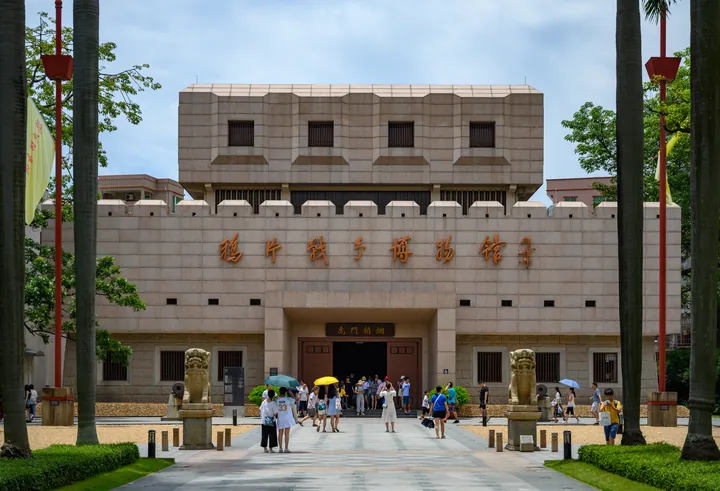 The main building and entrance plaza of the Opium War Museum, Humen, Dongguan · 东莞虎门鸦片战争博物馆主楼及入口广场 Source-recorded photograph date: 2019-08-04 13:03.
Opium War Museum鸦片战争博物馆
The Opium War Museum’s Jiefang Road site combines the opium-destruction pool remains with a commemorative courtyard and historical displays. The main axis passes sculptures before reaching a building whose facade recalls a…
Read the place guide →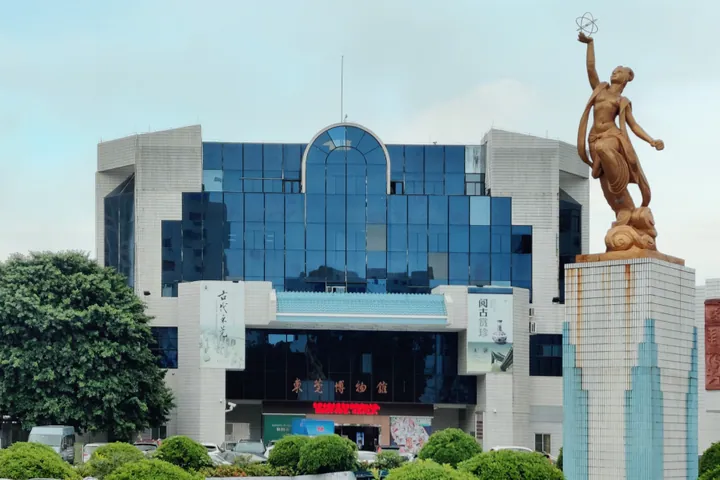 The Dongguan Museum building, Dongguan · 东莞博物馆 Source-recorded photograph date: 2019-05-28 12:14:44.
Dongguan Museum东莞市博物馆
Dongguan Museum introduces the city through archaeological finds and local artistic traditions. The Ancient Dongguan exhibition occupies the third floor, while the lower galleries host changing collection displays and visiting…
Read the place guide →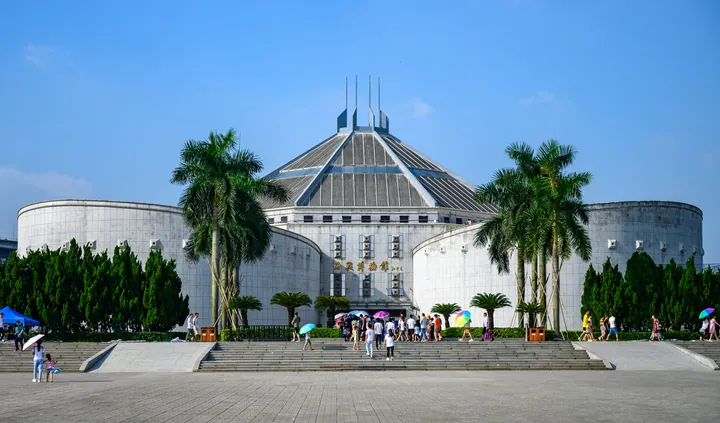 A wide frontal view of a large museum: a low white-tiled building with curved wings and a central pyramid of glass and steel panels topped by three fins, its entrance inscribed 海战博物馆, with a broad flight of steps, palms and a crowd of visitors in the foreground.
Sea Battle Museum海战博物馆
The Sea Battle Museum at Humen explains the Opium Wars through their causes, campaigns and consequences. Its opening comparison of Qing China and Enlightenment-era Europe sets the two histories alongside one another before the…
Read the place guide →Weiyuan Fort waterfront batteries with Humen Bridge behind · 威远炮台沿江炮位与远处虎门大桥 Photograph date recorded by the source: 13 September 2010, 15:42.Weiyuan Fort威远炮台
Weiyuan Fort is a nineteenth-century coastal-defence work at Humen, associated with the fighting of the Opium Wars. The surviving fort belongs to the defensive landscape around the entrance to the Pearl River. Its value lies in…
Read the place guide → Guanyin Mountain National Forest Park · 东莞观音山国家森林公园
Guanyin Mountain National Forest Park东莞观音山国家森林公园
Dongguan’s Guanyin Mountain combines a wooded uphill route with religious and natural-history landmarks. The Jixiang Road ascent leads through the park towards the summit statue, while the Ancient Tree Museum introduces…
Read the place guide → Elevated panorama of Songshan Lake, Dongguan · 东莞松山湖俯瞰 Photograph date recorded by the source: 30 October 2018, 09:49.
Songshan Lake松山湖
Songshan Lake is a reservoir landscape threaded with public lakeside paths, planted gardens and recreation areas. Songhu Yanyu provides a practical first section, while lotus-viewing spaces, water-lily pools and Taoyuan Park add…
Read the place guide → Guanyin Mountain (观音山), Dongguan. Photograph: "South Gate of Guanyin Mountain Forest Park, Guangdong".
Guanyin Mountain观音山
Guanyinshan (观音山) is a forest park in Zhangmutou, Dongguan, Guangdong, developed from secondary-growth forest into a national forest park over the 2000s and now graded a national AAAA tourist area.
Read the place guide → AI illustration · AI 示意图(仅供参考,非该地点实拍)
Tangwei Old Village塘尾古村落
Tangwei (塘尾古村落), formerly called Lianxi, is a walled Ming-Qing village in Shipai town, Dongguan, Guangdong, founded at the end of the Southern Song dynasty and now a Major Historical and Cultural Site Protected at the National Level.
Read the place guide →AI illustration · AI 示意图(仅供参考,非该地点实拍)Nanshe Ming and Qing Old Village南社明清古村落
Nanshe (南社明清古村落) is a Cantonese lineage village in Chashan township, Dongguan, Guangdong, first built at the end of the Southern Song dynasty and now protected in part as a Major Historical and Cultural Site Protected at the National Level.
Read the place guide →Local life & food
Dongguan local specialties
东莞市特色美食 · 10 specialties to discover
 Houjie roast-goose lai fun 厚街烧鹅濑粉AI illustration · AI 示意图
The noodles are smooth and resilient, contrasting with tender meat and the firmer roast skin. The broth is richer where the goose rests.
Source ↗Read the dish guide →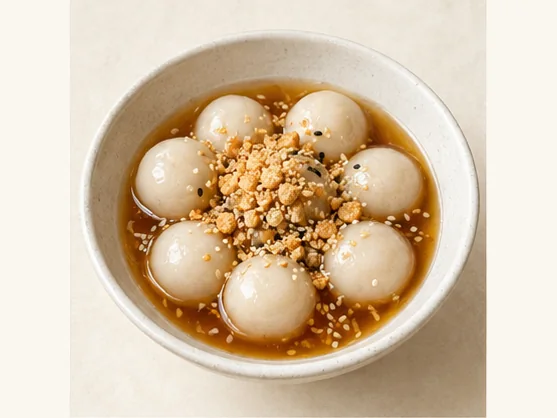 Cantonese sweet rice dumplings with peanuts 糖不甩AI dish illustration / AI 菜品示意图
The centre is elastic and soft, with sweetness concentrated on the outside. Peanut crumbs and sesame give a roasted contrast. A warm serving is generally softer than one that has stood and cooled.
Source ↗Read the dish guide → Dongguan Cured Sausage 东莞腊肠AI illustration · AI 示意图(仅供参考,非实拍)
Dongguan Cured Sausage (东莞腊肠) is the Cantonese-style cured pork sausage made across Dongguan (东莞), Guangdong.
Read the dish guide →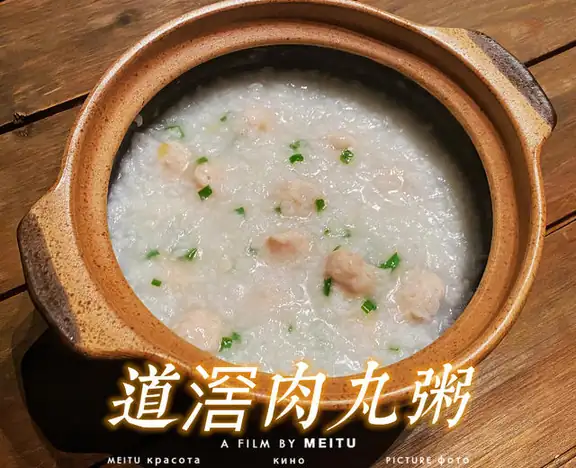 Daojiao Pork Ball Congee 道滘肉丸粥
Daojiao Pork Ball Congee (道滘肉丸粥) is rice congee cooked with pork bones, with hand-beaten pork balls simmered in it, from the town of Daojiao (道滘) in Dongguan (东莞), Guangdong.
Read the dish guide →Photo adjustments
EXIF orientation normalized; resized without changing aspect ratio; converted to WebP. No subject edits.
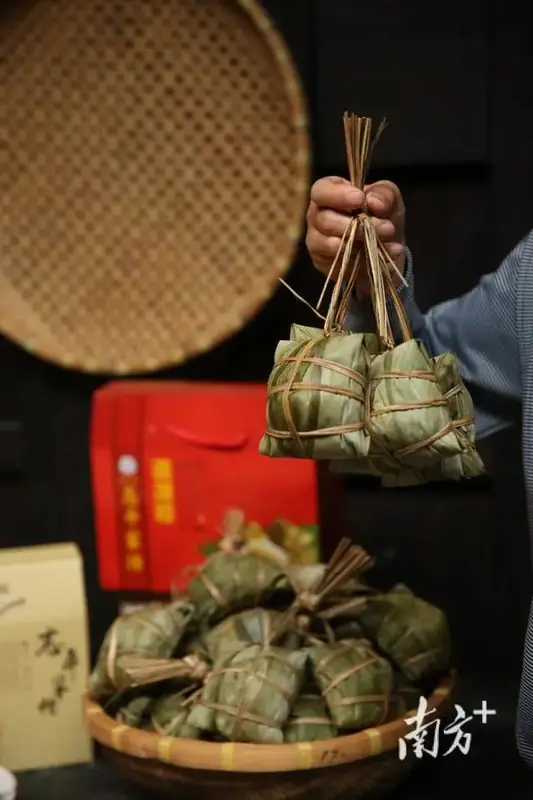 Daojiao Leaf-Wrapped Rice Dumplings 道滘裹蒸粽
Daojiao Leaf-Wrapped Rice Dumplings (道滘裹蒸粽), known locally simply as Daojiao zongzi (道滘粽), are glutinous rice parcels filled with mung beans, pork belly and salted duck egg yolk, made in Daojiao (道滘), a town in Dongguan (东莞), Guangdong.
Read the dish guide →Photo adjustments
EXIF orientation normalized; resized without changing aspect ratio; converted to WebP. No subject edits.
 Humen Roe-Rich Mud Crab 虎门膏蟹AI illustration · AI 示意图(仅供参考,非实拍)
Humen Roe-Rich Mud Crab (虎门膏蟹) is the roe-filled crab of Humen (虎门), a town of Dongguan (东莞), Guangdong, on the east bank of the Pearl River mouth.
Read the dish guide → Zhongtang Chajiao Fish-Paste Dumplings 中堂槎滘鱼包AI illustration · AI 示意图(仅供参考,非实拍)
Zhongtang Chajiao Fish-Paste Dumplings (中堂槎滘鱼包) are dumplings whose wrappers are rolled from mud-carp (鲮鱼) paste, filled with pork, Chinese sausage and mushroom and folded into the shape of a goldfish.
Read the dish guide →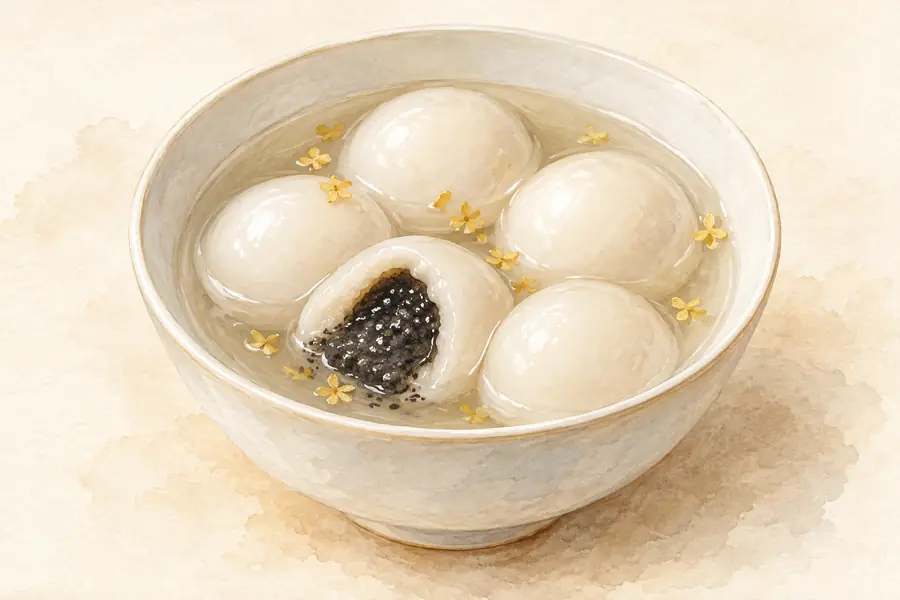 Guancheng Glutinous Rice Balls in Ginger Syrup 莞城糖不甩AI illustration · AI 示意图(仅供参考,非实拍)
Guancheng Glutinous Rice Balls in Ginger Syrup (莞城糖不甩) are tangbushuai (糖不甩), a traditional Dongguan (东莞) snack of glutinous rice balls cooked in syrup, as sold in Guancheng (莞城).
Read the dish guide →All dish names · 全部菜名 (10)
- Houjie roast-goose lai fun · 厚街烧鹅濑粉
- Cantonese sweet rice dumplings with peanuts · 糖不甩
- Dongguan Cured Sausage · 东莞腊肠
- Daojiao Pork Ball Congee · 道滘肉丸粥
- Daojiao Leaf-Wrapped Rice Dumplings · 道滘裹蒸粽
- Humen Roe-Rich Mud Crab · 虎门膏蟹
- Zhongtang Chajiao Fish-Paste Dumplings · 中堂槎滘鱼包
- Guancheng Glutinous Rice Balls in Ginger Syrup · 莞城糖不甩
- Black-Eyed Pea Cake · 眉豆糕
- Wanjiang Dried Tofu Skin · 万江腐竹
More dishes from across Guangdong are in the Guangdong food guide.
Plan your visit
Getting there
Search for 东莞市 in a map app to find stations and your accommodation.
Where to stay →Build your route
Keyuan and Opium War Museum are about 25 km apart in a straight line. The linked place guides have entrance and visit details.
Continue with Guangdong →More in Guangdong
Sources & geographic information
Administrative names and parent areas: Official geographic directory · Reference date 2026-09-06.
Some facts checked against 鸦片战争博物馆 — Wikipedia contributors, CC BY-SA 4.0.
Some facts checked against 林则徐销烟池 — Wikipedia contributors, CC BY-SA 4.0.
Photo: Keyuan · David290 · CC BY-SA 4.0. Full frame retained; proportionally resized and converted to WebP. No retouching or changes to the photographed subject. Card displays may crop the view.

Photo: Opium War Museum · xiquinhosilva · CC BY 2.0. Full frame retained; proportionally resized and converted to WebP. No retouching or changes to the photographed subject. Card displays may crop the view.
.jpg)
Photo: Dongguan Museum · Augoustoshai · CC BY-SA 4.0. Full frame retained; proportionally resized and converted to WebP. No retouching or changes to the photographed subject. Card displays may crop the view.

Photo: Sea Battle Museum · xiquinhosilva · CC BY 2.0. Full frame retained; proportionally resized and converted to WebP. No retouching or changes to the photographed subject. Card displays may crop the view.
.jpg)
Photo: Weiyuan Fort · Hinnne · Hinnne — Humen_Bridge-5.jpg — CC BY-SA 2.0 · CC BY-SA 2.0. The exact downloaded source bytes are separately retained and hashed. Prepared JPEG is proportionally reduced to a maximum 720-pixel long edge; full frame retained, no subject alteration. Final website rendition: full frame retained, proportionally resized to at most 720 pixels and converted to WebP. No additional retouching or subject alteration. Card displays may crop the view.

Photo: Guanyin Mountain National Forest Park · Source photographer · License not provided. EXIF orientation normalized; resized without changing aspect ratio; converted to WebP. No subject edits.
Photo: Songshan Lake · drnan tu from Shenzhen, China · drnan tu from Shenzhen, China — 东莞松山湖 (45804269842).jpg — CC BY-SA 2.0 · CC BY-SA 2.0. The exact downloaded source bytes are separately retained and hashed. Prepared JPEG is proportionally reduced to a maximum 720-pixel long edge; full frame retained, no subject alteration. Final website rendition: full frame retained, proportionally resized to at most 720 pixels and converted to WebP. No additional retouching or subject alteration. Card displays may crop the view.
.jpg)
Photo: Guanyin Mountain · X-SHLIED · CC BY-SA 4.0. Full frame retained; EXIF orientation normalized, proportionally resized to at most 800 pixels and converted to WebP. No generated pixels or subject changes. Cards may crop the display.

Map data © OpenStreetMap contributors. Pins mark approximate centres, not entrances or boundaries.