

Changsha local food
Local dishes, ingredients and the stories behind them.
← Changsha travel guideAll Hunan food →Food from all of China →
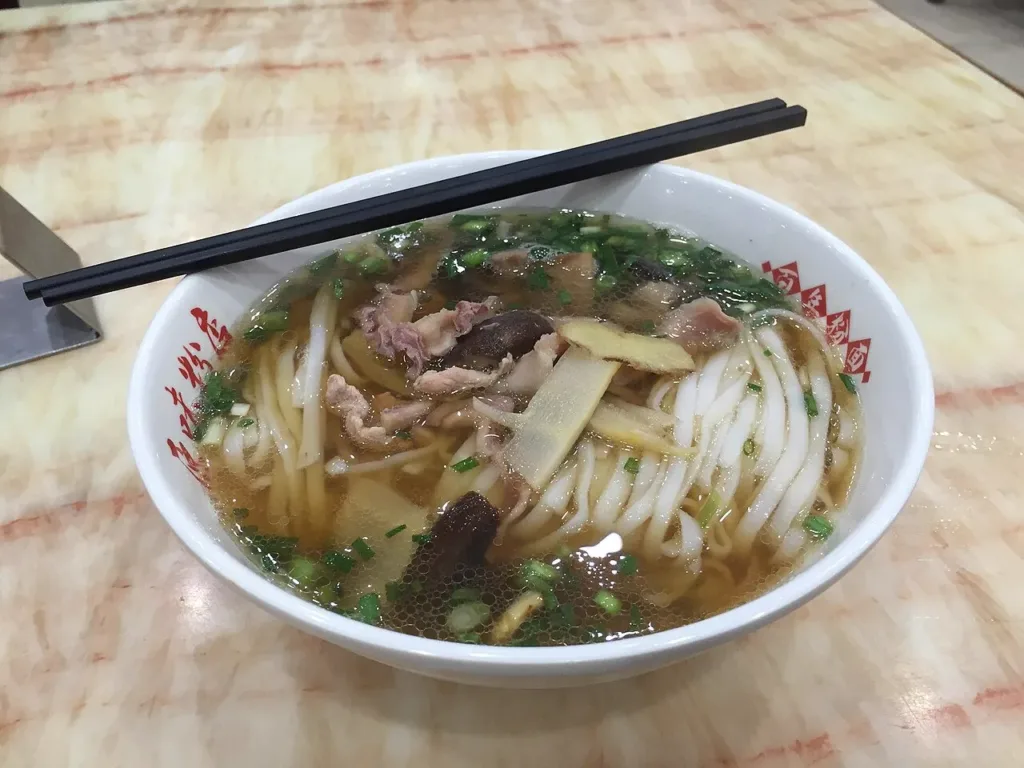
Changsha rice noodles 长沙米粉
Changsha rice noodles are a breakfast bowl of fresh rice noodles, clear broth and a chosen mazi (topping). The Changsha style is especially associated with flat-cut noodles, long-simmered stock and a choice between toppings cooked ahead and toppings stir-fried to order; you finish the bowl with pickles or chilli to suit yourself.
Read dish guide →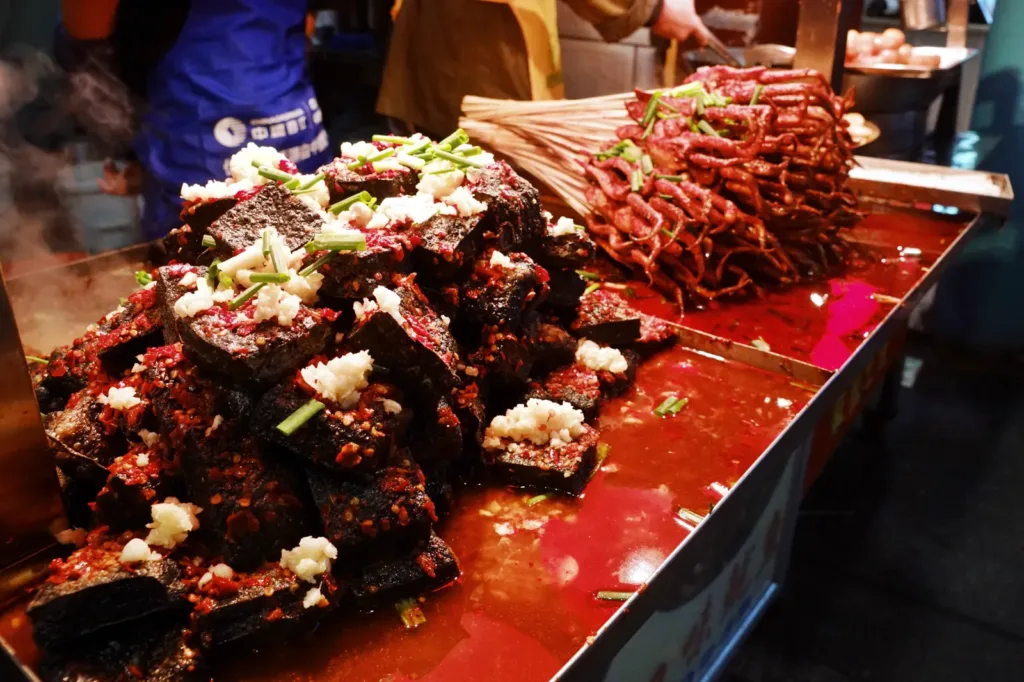
Changsha stinky tofu 长沙臭豆腐
Changsha stinky tofu is a pungent, locally associated tofu snack: tofu is soaked in a seasoned brine, fried until the outside darkens and crisps, then finished with chilli, garlic and other savoury sauce. Its particular pleasure is the contrast between the assertive aroma, a crisp shell and a soft centre—not a single fixed recipe.
Read dish guide →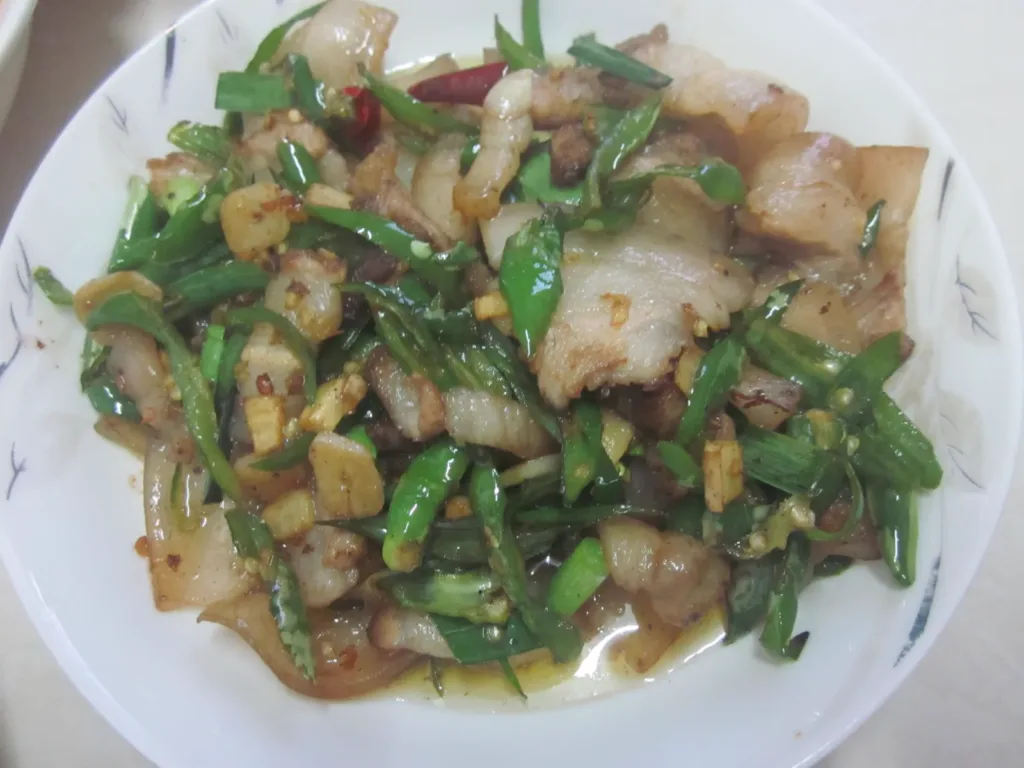
Pork with fresh peppers 辣椒炒肉
Pork with fresh peppers (辣椒炒肉) is a Hunan home-style stir-fry closely associated with Changsha. Thin-sliced pork and fresh chillies meet a hot wok; the appeal is the contrast between savoury meat, fragrant heat and peppers that can retain a little bite. It is a rice dish rather than a fixed recipe, and the choice of pork cut, chilli and seasoning matters.
Read dish guide →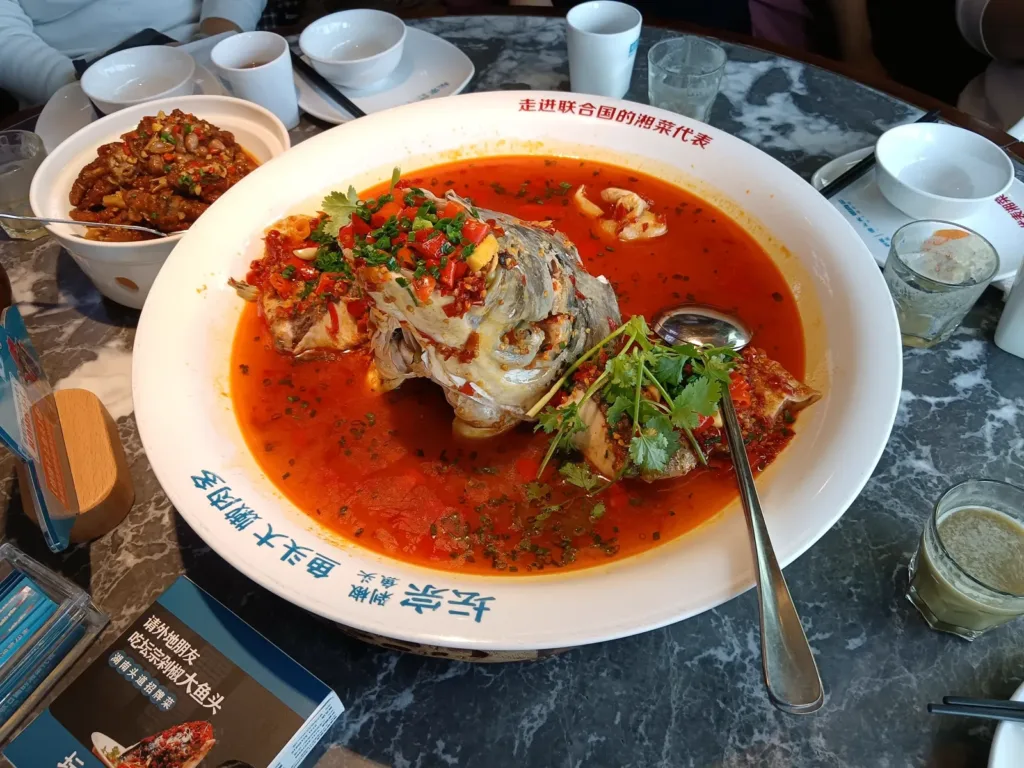
Fish head with chopped chilies 剁椒鱼头
Fish head with chopped chilies (剁椒鱼头, duòjiāo yútóu) is a shared Hunan steamed dish built around a large fish head and rough-chopped salted chilies. In Changsha, order it as a Hunan specialty, not as a proven dish invented only by this city: the Hunan provincial government lists steamed fish head with chopped chili among the foods visitors should try in the province.
Read dish guide →
Hunan quick-fried beef 小炒黄牛肉
A Hunan small-stir-fry of thinly sliced beef and fresh or pickled chillies, valued in Changsha for its fast wok cooking, direct heat and rice-friendly savouriness—not a single fixed recipe or a Changsha-only invention.
Read dish guide →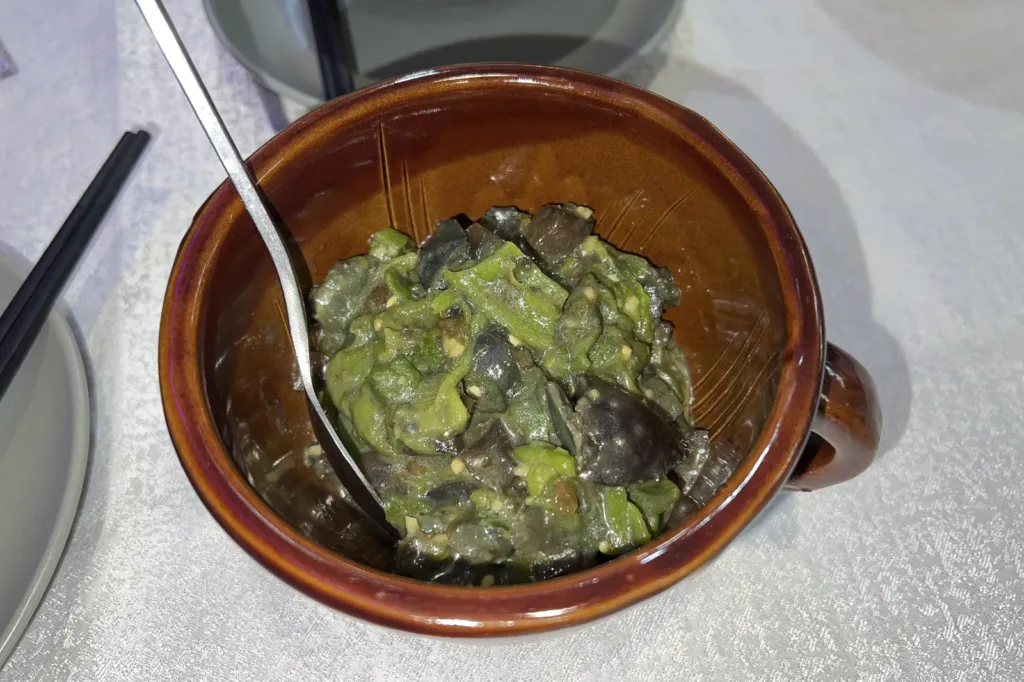
Pounded chillies with century eggs 擂辣椒皮蛋
A Hunan dish of blistered green chillies and century eggs pounded into a coarse, smoky, savoury mixture. Its character comes from the contrast between charred pepper skin, heat, and the gelatinous white and creamy yolk of the preserved egg—not from one fixed recipe.
Read dish guide →
Changsha spicy crayfish 长沙口味虾
Changsha spicy crayfish (长沙口味虾, Changsha Kouwei Xia) is a shared dish of whole freshwater crayfish cooked in a strongly seasoned sauce or broth. Its appeal in Changsha is less a fixed recipe than a local way of eating: red shell-on crayfish, firm tail meat, sauce for dipping, and house-specific choices of chilli, garlic and aromatics.
Read dish guide →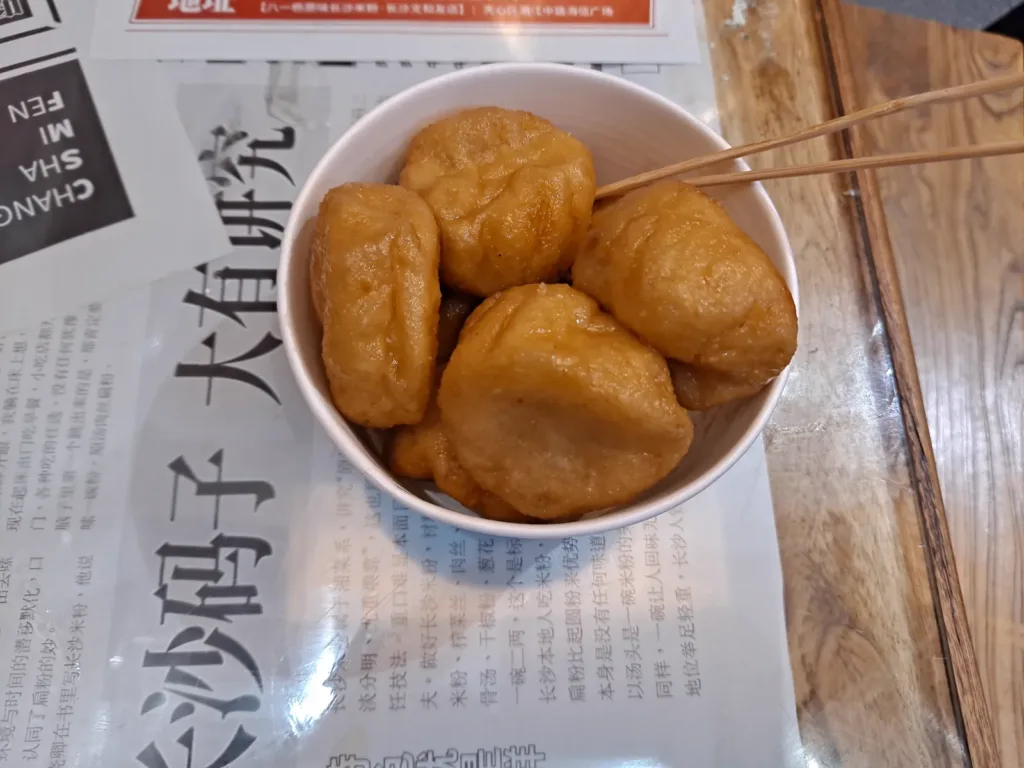
Tangyou baba 糖油粑粑
Tangyou baba is a Changsha-associated street sweet made from small glutinous-rice dough cakes cooked in oil and sugar. Fresh pieces are glossy and lightly crisp outside, soft and chewy inside; buy a small serving and let it cool briefly before eating.
Read dish guide →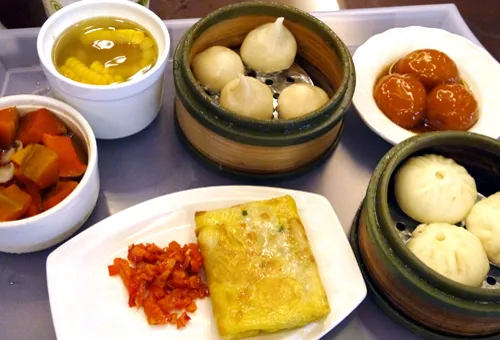
Zimei tuanzi 姊妹团子
Zimei tuanzi is a Changsha snack of small steamed glutinous-rice dumplings made in a matched sweet-and-savory pair. Its special feature is the contrast between the fillings and the shapes: one dumpling may hold a fragrant sweet centre, while its partner holds seasoned pork and mushroom filling. It is a two-part tasting rather than a single sweet.
Read dish guide →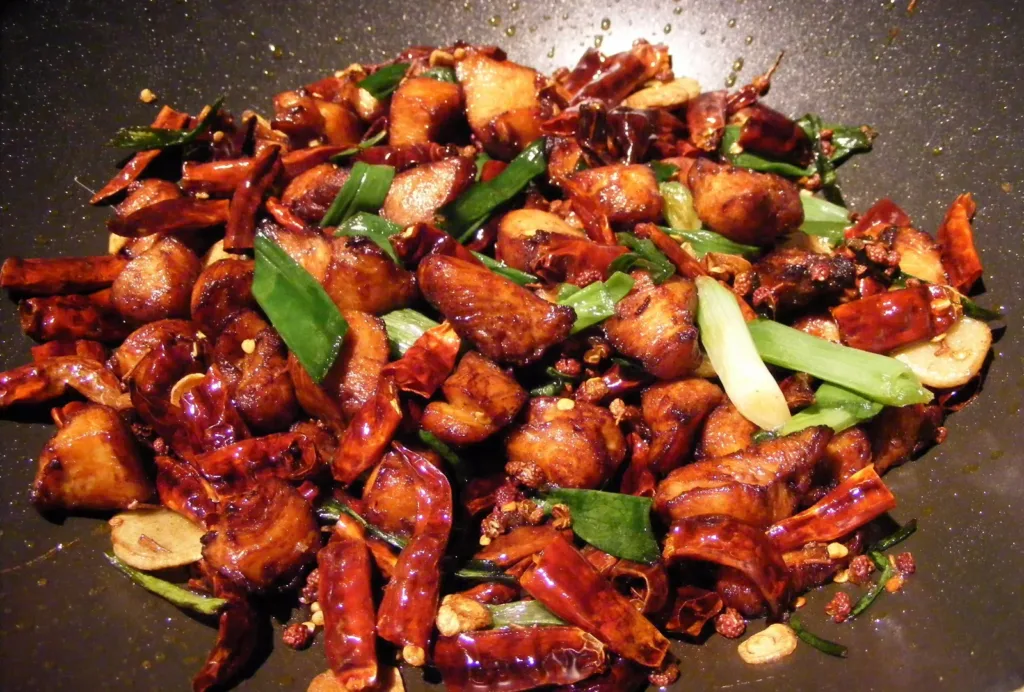
Numbing and Spicy Young Chicken 麻辣仔鸡
A Changsha-associated Hunan chicken dish linked to the old Yuloudong restaurant: a young chicken cooked with chillies, yellow vinegar and garlic, valued for its crisp outside, tender centre and savoury heat.
Read dish guide →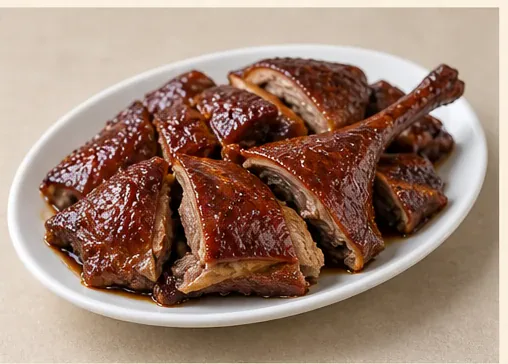
Spiced Pressed Duck 酱板鸭
Jiangban ya is a firm, deeply seasoned duck dish from Hunan's wider food culture. The version most clearly tied to a place is Changde jiangban ya: a flattened duck roasted, slowly braised with soy and aromatics, glazed, and served in pieces. In Changsha, try it as a regional Hunan specialty rather than as a dish invented by the city.
AI dish illustration / AI 菜品示意图 — not a restaurant photograph
Read dish guide →
Fried Scallion Rice Rings 葱油粑粑
A savoury Changsha-associated Hunan snack made from fermented rice batter and chopped scallion, fried in a round iron mould. Its defining contrast is a crisp, flaky shell, a soft centre and a small hole that makes the cake look like a large bronze coin.
AI illustration · AI 示意图(仅供参考,非实拍)
Read dish guide →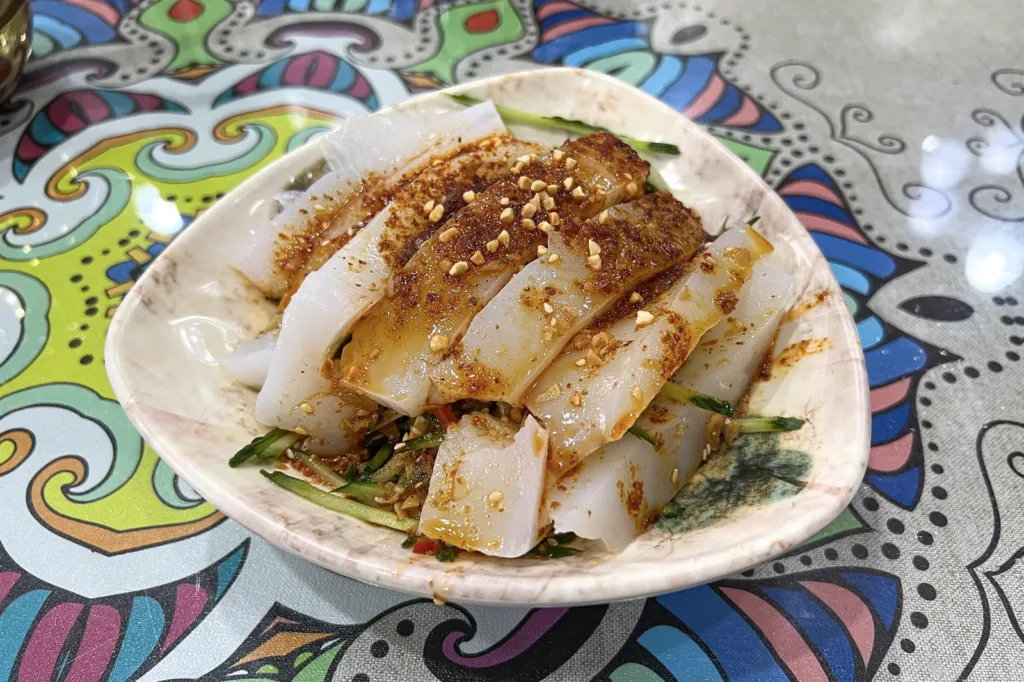
Scraped Mung-Bean Jelly Noodles 刮凉粉
Gua liangfen is a Hunan cold snack in which a set starch jelly is scraped into strands at serving time. In Changsha it belongs to hot-weather street eating, but the evidence supports a Hunan-wide identity rather than a recipe exclusive to the city.
Read dish guide →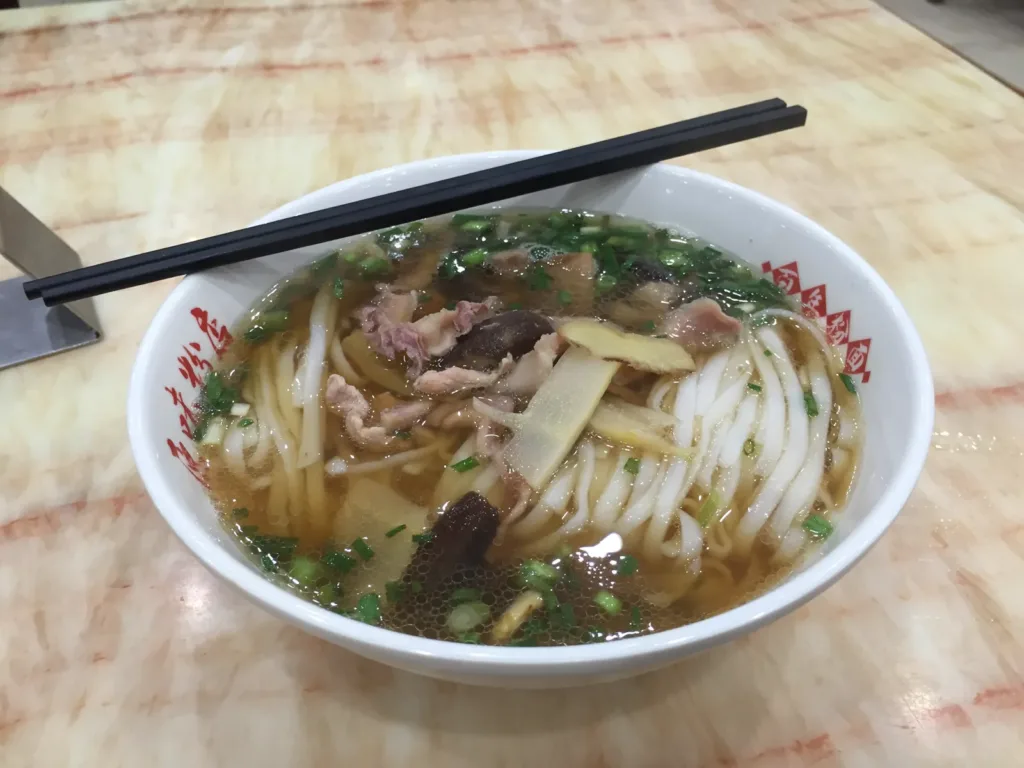
Rice Noodles 米粉
Hunan rice noodles are a broad family of rice-based bowls; in Changsha, the most recognisable local expression is often flat-cut noodles in bone broth with a choice of topping. Their appeal lies in the combination of noodle shape, broth, `码子` and table condiments rather than one fixed recipe.
Read dish guide →
Suoluo River Snails 嗦螺
Suoluo (嗦螺) is a Changsha-associated freshwater-snail dish built around a hot, seasoned cooking liquid—often with perilla—and the hands-on pleasure of sucking the meat from its shell. It belongs to a broader Hunan snail tradition, so recipes and signature aromatics change by place.
AI illustration · AI 示意图(仅供参考,非实拍)
Read dish guide →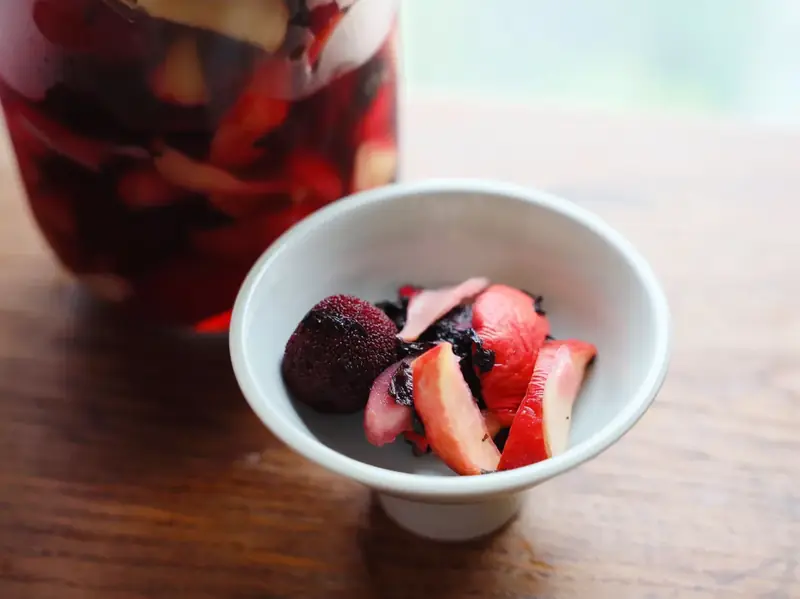
Perilla-Marinated Peaches and Ginger 紫苏桃子姜
A Changsha-associated summer snack of crisp peach, young ginger and perilla leaves in a sweet-sour dressing. Its appeal is the contrast between peach crunch, ginger warmth and the herb’s aromatic, purple-tinted juice—not a single fixed restaurant recipe.
Read dish guide →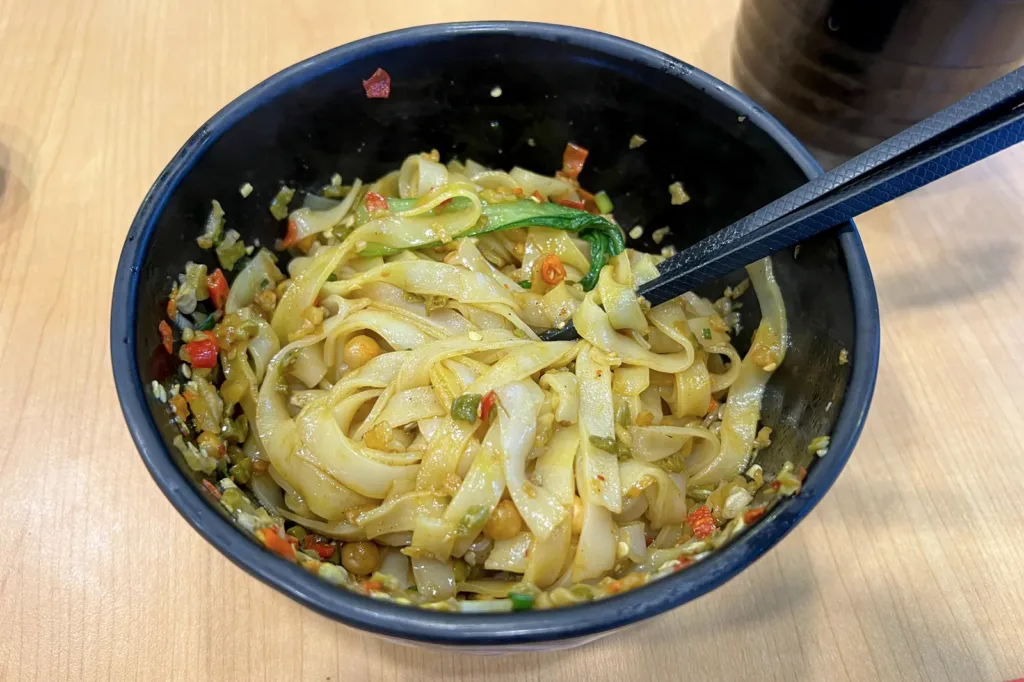
Lard-Tossed Rice Noodles 猪油拌粉
A Changsha-associated Hunan rice-noodle dish in which hot, usually wide rice noodles are tossed with rendered pork lard, soy sauce and scallions. Its appeal is direct: the warm fat coats supple noodles, while savoury seasoning and optional crunchy or aromatic toppings make a small bowl taste fuller than its short ingredient list suggests.
Read dish guide →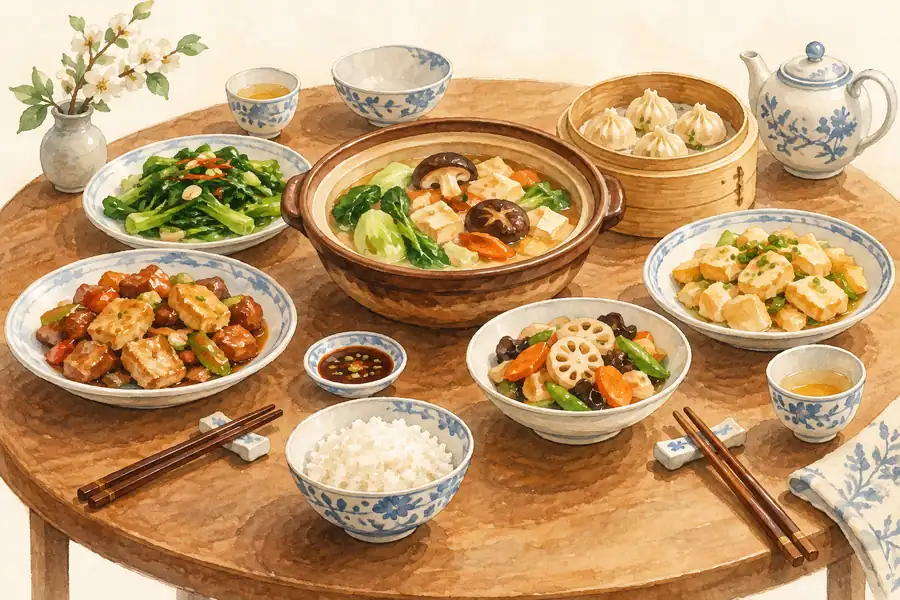
Kouwei Spicy Snake 口味蛇
Kouwei Spicy Snake is a Hunan snake-meat dish historically linked to Ningxiang and Dachengqiao, with chilli and a thick sauce; it is presented here as food history, not as a lawful current dish to seek in Changsha.
AI illustration · AI 示意图(仅供参考,非实拍)
Read dish guide →Hunan · Food stories

Food articles are in progress
Long-form food stories for this topic are being written. Until then, browse the dish guides above or see all Chinese food guides.