

Harbin local food
Local dishes, ingredients and the stories behind them.
← Harbin travel guideAll Heilongjiang food →Food from all of China →
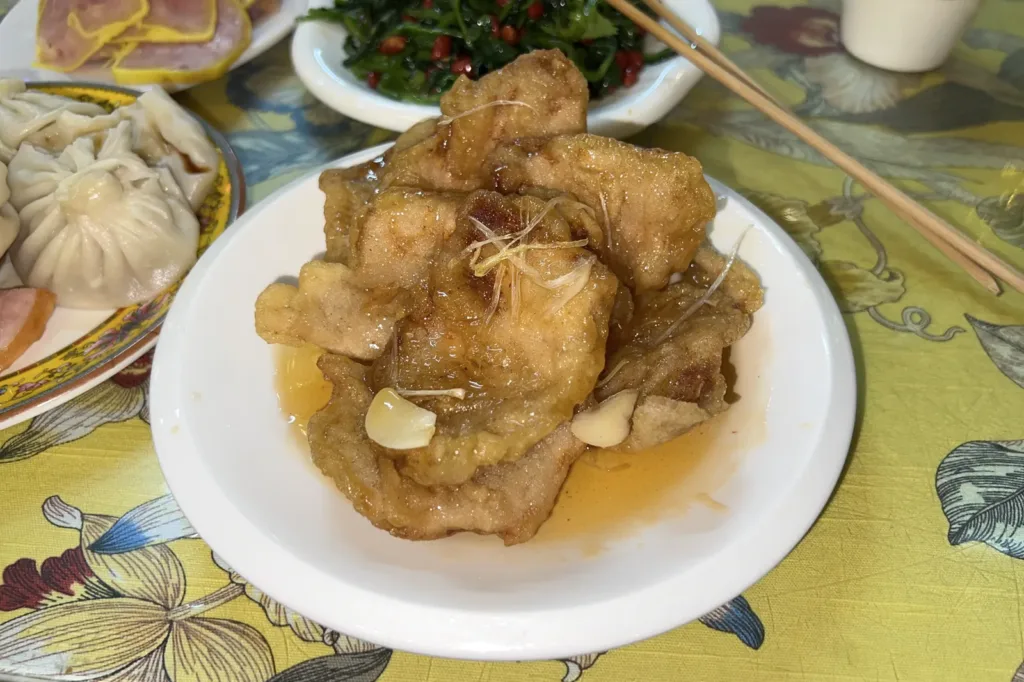
Guobaorou sweet-and-sour pork 锅包肉
Guobaorou (锅包肉) is a Harbin-associated northeastern Chinese pork dish: slices are coated in starch, fried until crisp, then quickly tossed with a sweet-and-sour sauce. It is best eaten hot, when the shell still crackles, and recipes vary between Harbin kitchens and elsewhere in Northeast China.
Read dish guide →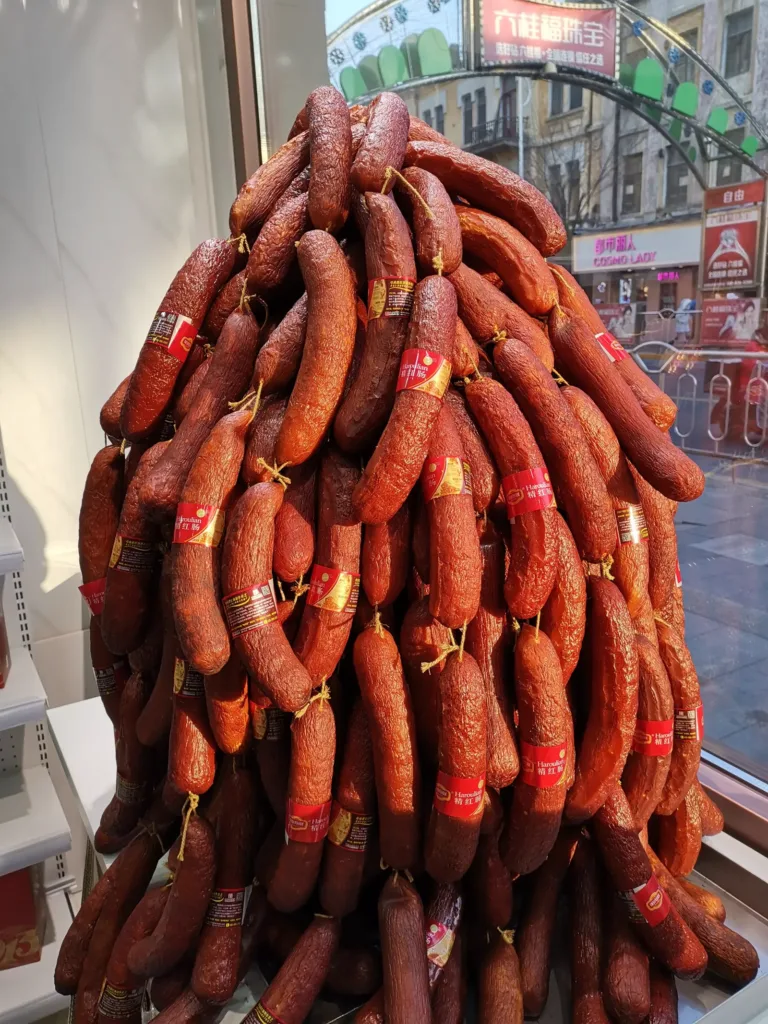
Smoked red sausage 哈尔滨红肠
Harbin red sausage (哈尔滨红肠, Ha'erbin hongchang) is a cooked, smoked meat sausage shaped by European food traditions that took root in the city, with a firm slice, dark red casing and maker-specific recipes.
Read dish guide →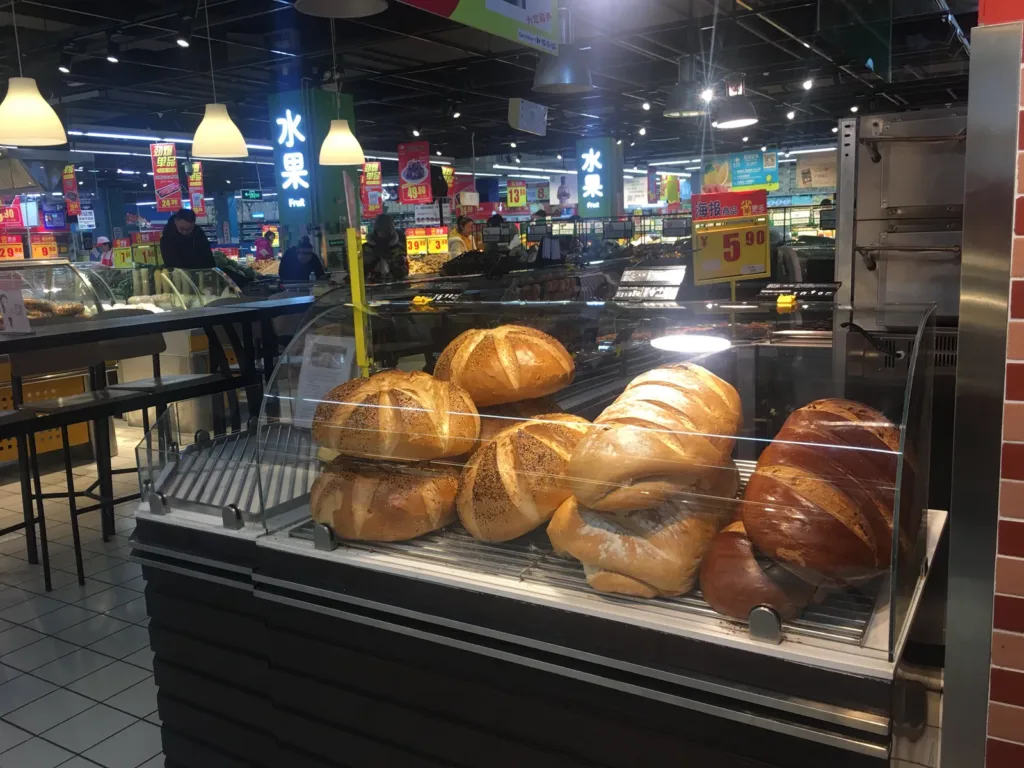
Russian-style large loaf 大列巴
Harbin’s 大列巴 (dàlièba, “big bread”) is a large round loaf shaped by Russian baking traditions that arrived with the city’s railway-era migration. A notable Qiulin version uses hop liquid yeast, three fermentations and a hard-wood bake, producing a lightly crisp crust and soft crumb; other bakeries make their own versions.
Read dish guide →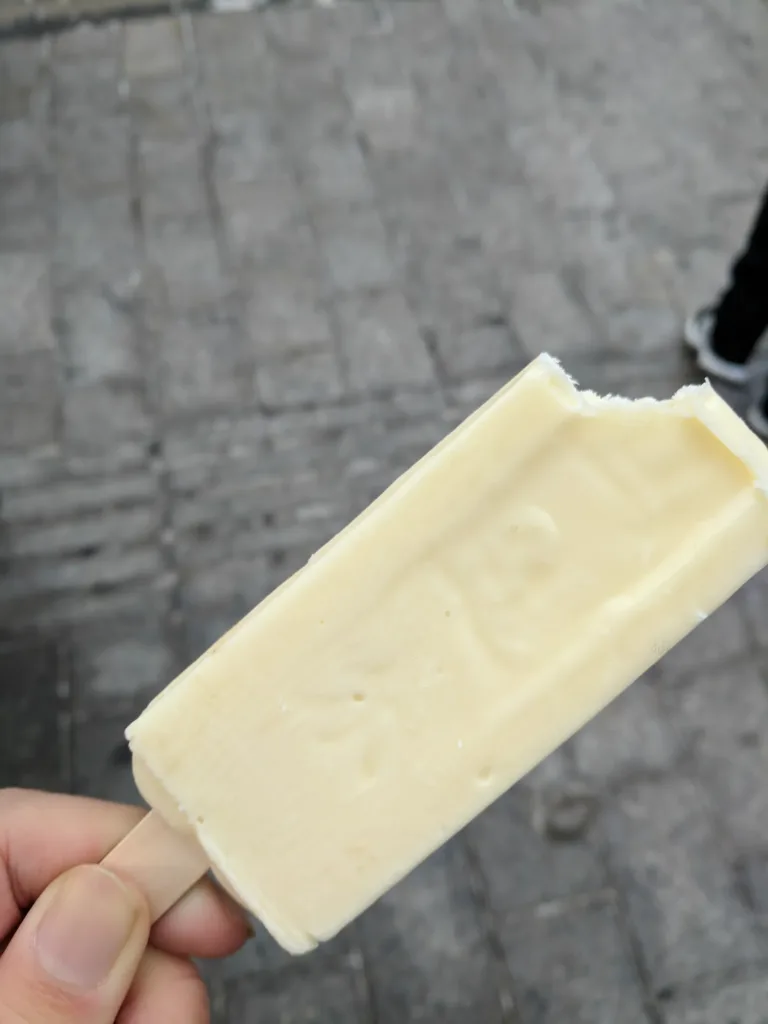
Madieer milk ice bar 马迭尔冰棍
Madieer (马迭尔冰棍) is Harbin’s branded frozen dairy bar, tied to the city’s 1906 Modern Hotel and still encountered around Central Street.
Read dish guide →
Kvass 格瓦斯
Harbin’s kvass is a local drink tradition shaped by Russian foodways; Qiulin’s 大列巴格瓦斯 uses its Russian-style large loaf as a brand-specific base, giving the drink a toasted-bread aroma rather than one universal taste.
Read dish guide →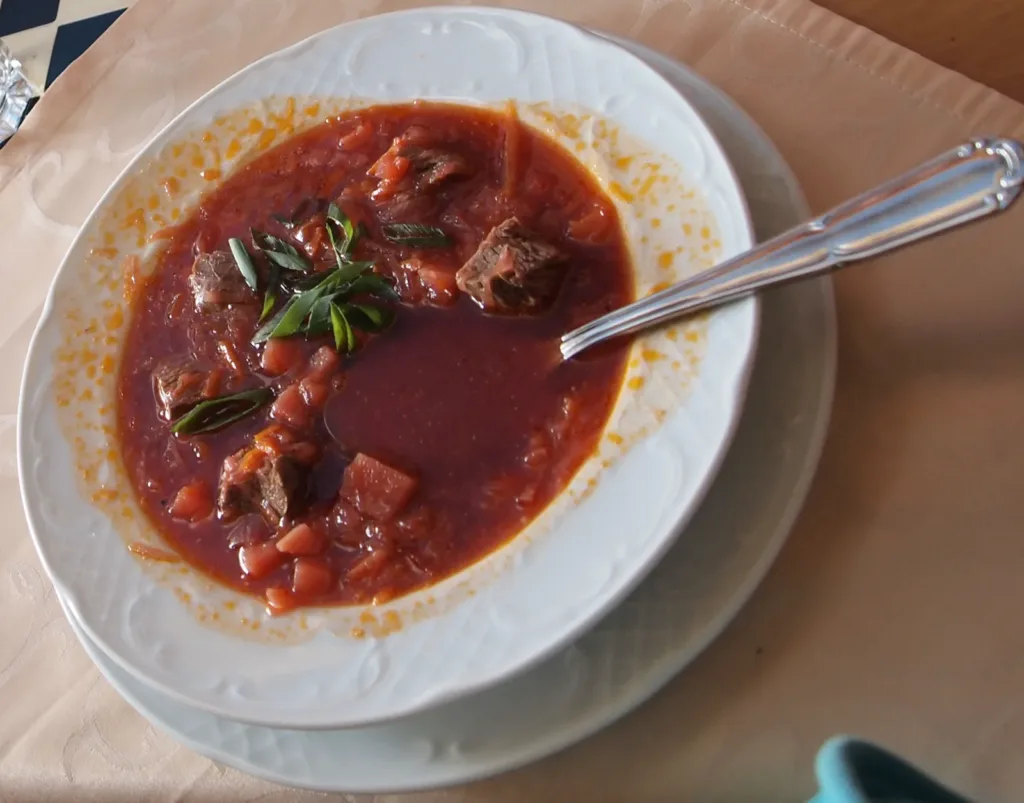
Russian-style beet soup 俄式红菜汤
Harbin’s Russian-style beet soup is a hot beet-and-beef soup linked to the city’s Russian-influenced restaurant tradition. A 2026 Heilongjiang standard describes one regional reference preparation, with earthy beet sweetness, tomato acidity, beef stock and tender vegetables; individual kitchens may still vary.
Read dish guide →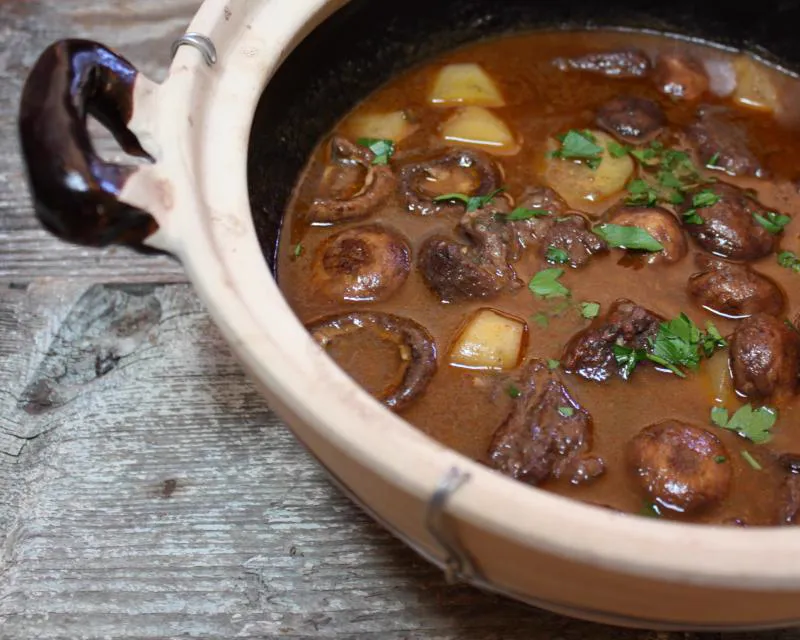
Beef baked in a covered pot 罐焖牛肉
Harbin-style 罐焖牛肉 (guàn mèn niúròu) is a Russian-influenced beef stew slow-cooked in a covered clay or earthenware pot, often with potatoes and carrots; its rich sauce and local variations make it a useful introduction to the city’s old Russian-style dining tradition.
Read dish guide →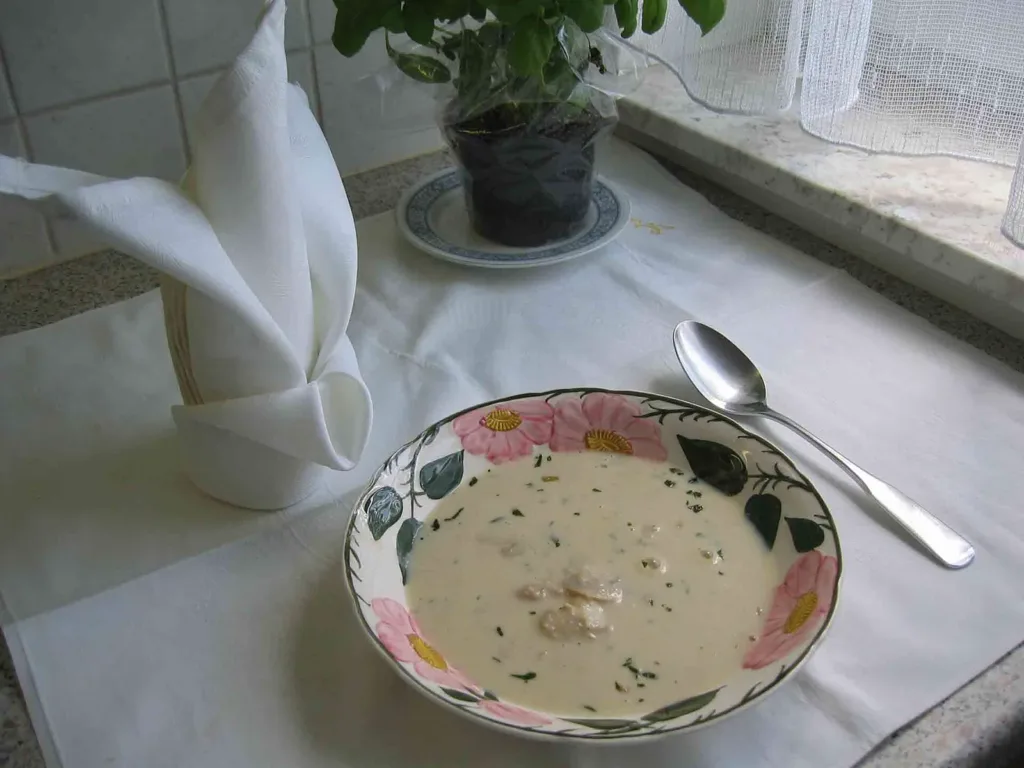
Creamy mushroom soup 奶油蘑菇汤
Creamy mushroom soup (奶油蘑菇汤) is a possible bowl in Harbin’s Russian-influenced Western dining: one reported serving was shallow, lightly creamy, mushroom-forward and faintly garlicky, while recipes and portions vary by kitchen.
Read dish guide →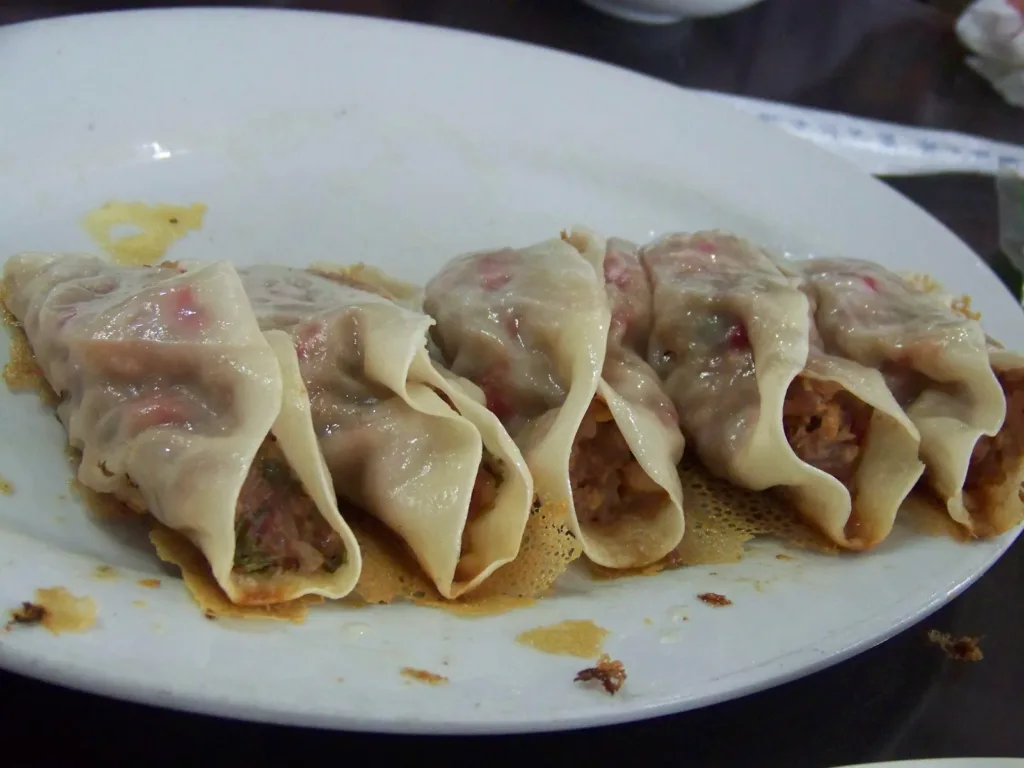
Guolao Pan-Fried Dumplings 锅烙
Guolao is a northeastern filled wheat dumpling associated with Harbin. Pan-frying followed by a little water creates a browned underside and a tender wrapper, while fillings vary enough that the Chinese name alone is not an ingredient list.
Read dish guide →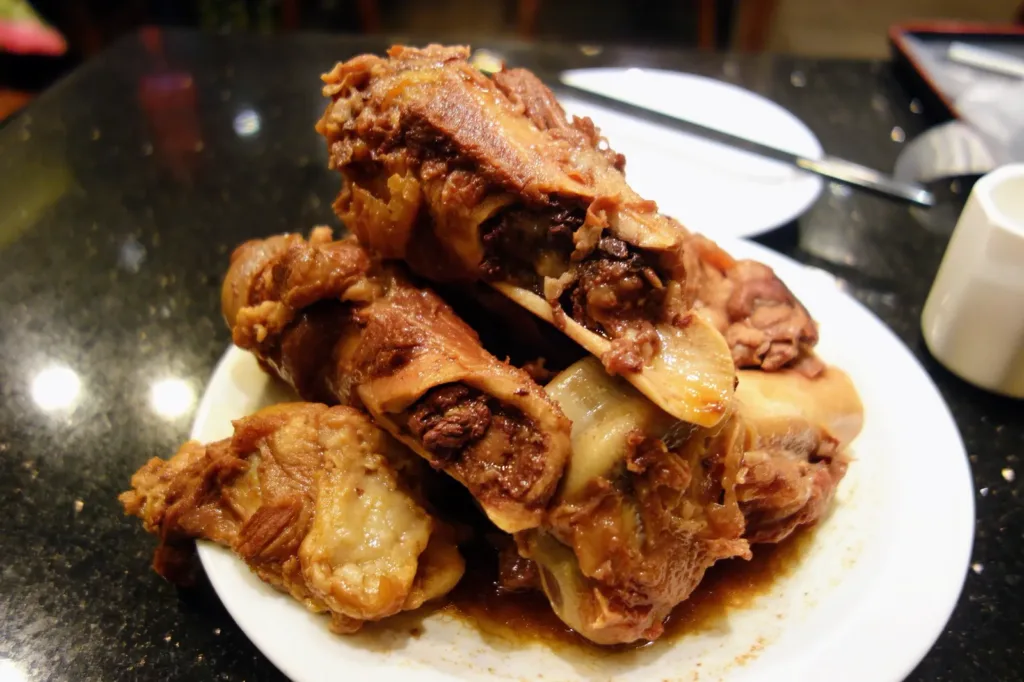
Soy-Braised Pork Spine 酱骨架
In Harbin, 酱骨架 is a northeastern Chinese bone-in pork braise—usually pork spine, with related versions using ribs or leg bones—slow-cooked until the meat loosens from the bone. Its Harbin interest lies in the local bone-braise tradition and the choice between meat-rich spine and marrow-rich leg bone, rather than in a recipe unique to the city.
Read dish guide →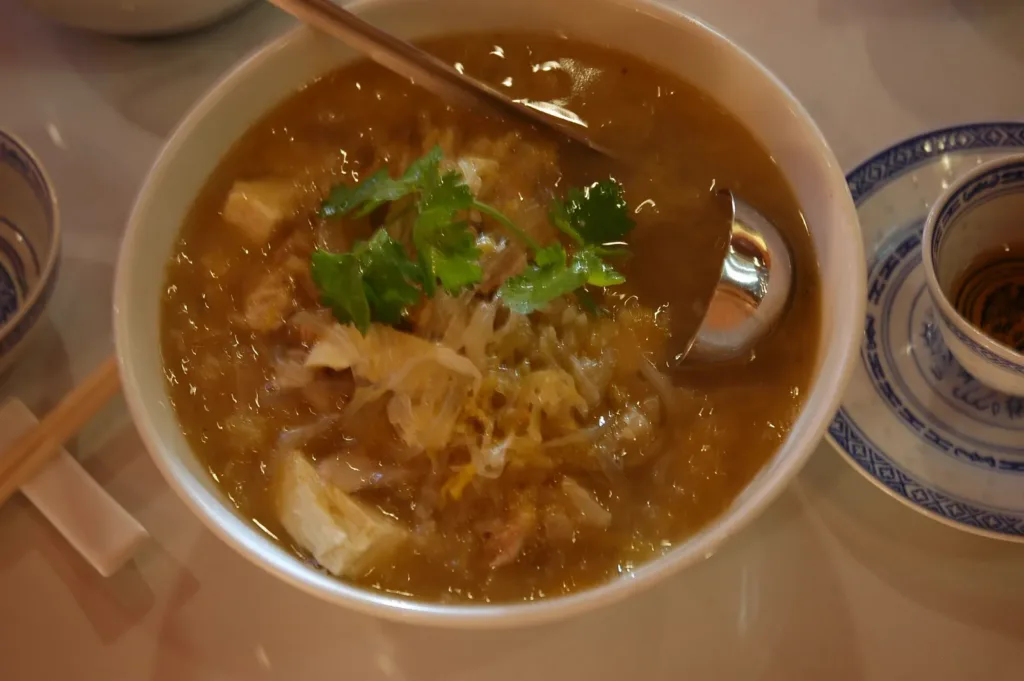
Pig-Slaughter Stew 杀猪菜
A northeastern Chinese family of pork dishes built around pickled cabbage and rich cuts of meat; Heilongjiang versions may be a simple stew with blood sausage or a much larger Manchu whole-pig banquet.
Read dish guide →
Laodingfeng Pastries 老鼎丰糕点
Laodingfeng (老鼎丰糕点) is a Harbin-rooted, time-honoured pastry brand rather than one fixed dish. Its traditional mooncakes—especially the hand-made Chuan-su line—sit alongside Chinese pastries, breads, Western-style cakes, red sausage and frozen sweets.
Read dish guide →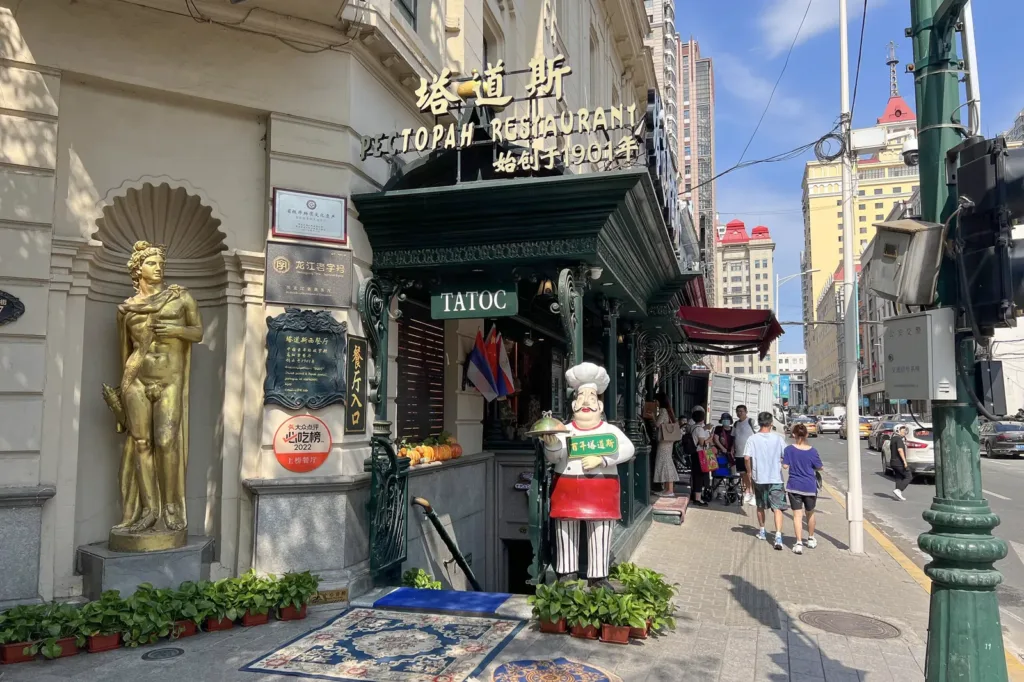
Russian-Style Western Cuisine 俄式西餐
Harbin’s Russian-style Western cuisine is a local dining tradition shaped by the city’s Russian connections, not a single fixed menu. Try a sour-sweet borscht-style soup, a pot-braised meat dish, and substantial rye-style bread, while checking each restaurant’s own recipe and ingredients.
Read dish guide →
Demoli fish stew 得莫利炖鱼
Demoli fish stew (得莫利炖鱼) is a Harbin-listed northeastern Chinese shared dish tied to Demoli Village in Fangzheng County: freshwater fish simmers with tofu and potato-starch vermicelli so the sides absorb the savoury broth. Fish species, vegetables, seasonings and pot size vary, so order by the Chinese name and confirm the current restaurant version.
AI illustration · AI 示意图
Read dish guide →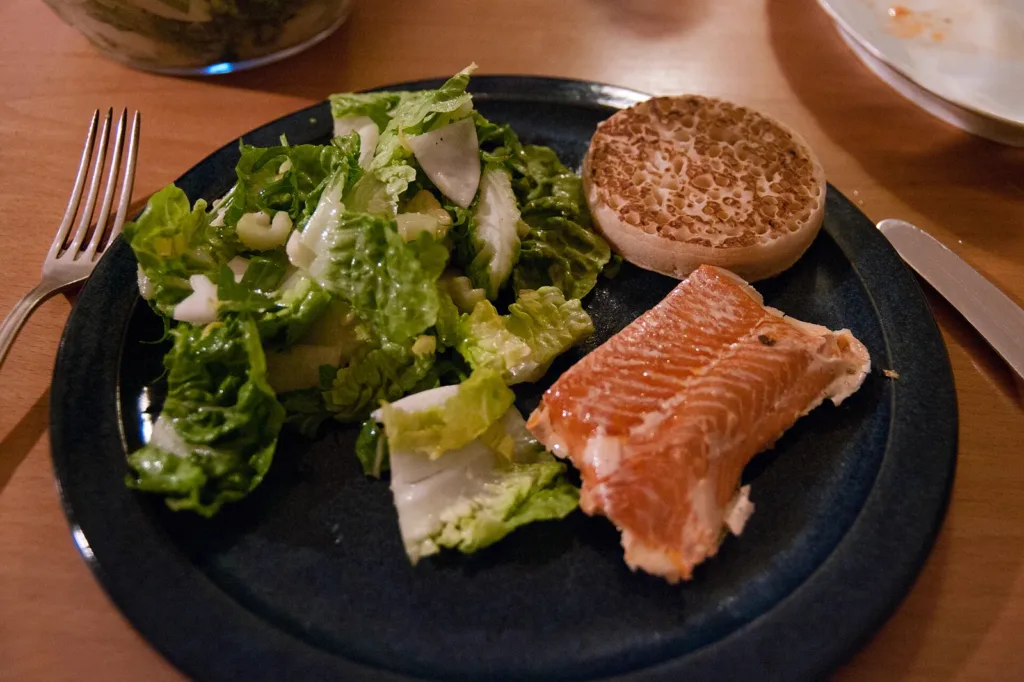
Smoked Five-Spice Chum Salmon 熏五香大马哈鱼
A Harbin-linked dish of chum salmon seasoned, steamed, then finished with sugar smoke. It is a cooked fish preparation with a browned surface and smoky aroma, not raw salmon.
Read dish guide →
Yagou sticky bean buns 亚沟粘豆包
Yagou sticky bean buns (亚沟粘豆包) are steamed buns associated with Acheng District, made with a sticky-grain wrapper and a bean filling. Their appeal is the warm, cohesive texture and the winter food tradition behind them, not a single restaurant or fixed recipe.
Read dish guide →Heilongjiang · Food stories

Food articles are in progress
Long-form food stories for this topic are being written. Until then, browse the dish guides above or see all Chinese food guides.