

Inner Mongolia local food
Local dishes, ingredients and the stories behind them.

Lamb shaomai 羊肉烧麦
Lamb brings richness and a distinctive aroma, balanced by scallion; the wrapper is delicate at the rim and slightly chewy below.
Read dish guide →
Lamb offal soup 羊杂碎汤
Each cut contributes a different chew, from soft to resilient, while the broth carries a pronounced lamb flavor. Chili and aromatics can make the bowl more assertive.
Read dish guide →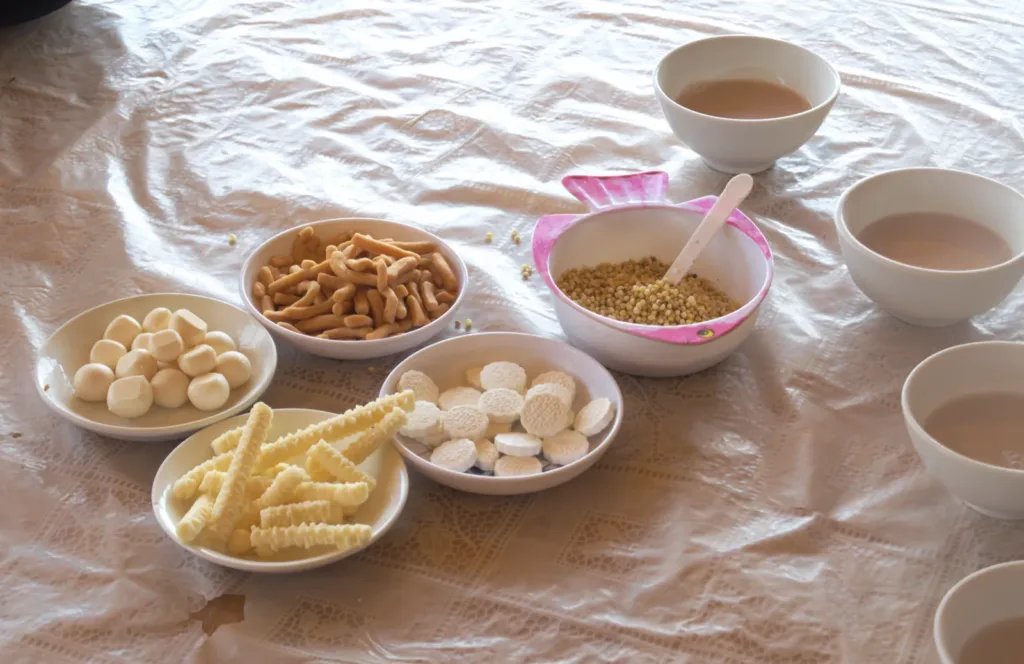
Salty Milk Tea 咸奶茶
Hulunbuir’s salty milk tea (奶茶) is a savory Mongolian tea of brick tea, milk and salt, often shared with toasted millet and other dairy or meat accompaniments; the recipe and serving style vary by household and kitchen.
Read dish guide →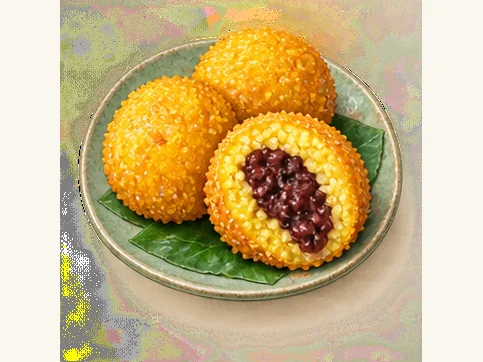
Yellow fried grain cakes 黄米炸糕
A crisp shell gives way to a dense, elastic middle with a mild grain sweetness. Filled versions add a softer, sweeter center.
AI dish illustration · AI 菜品示意图
Read dish guide →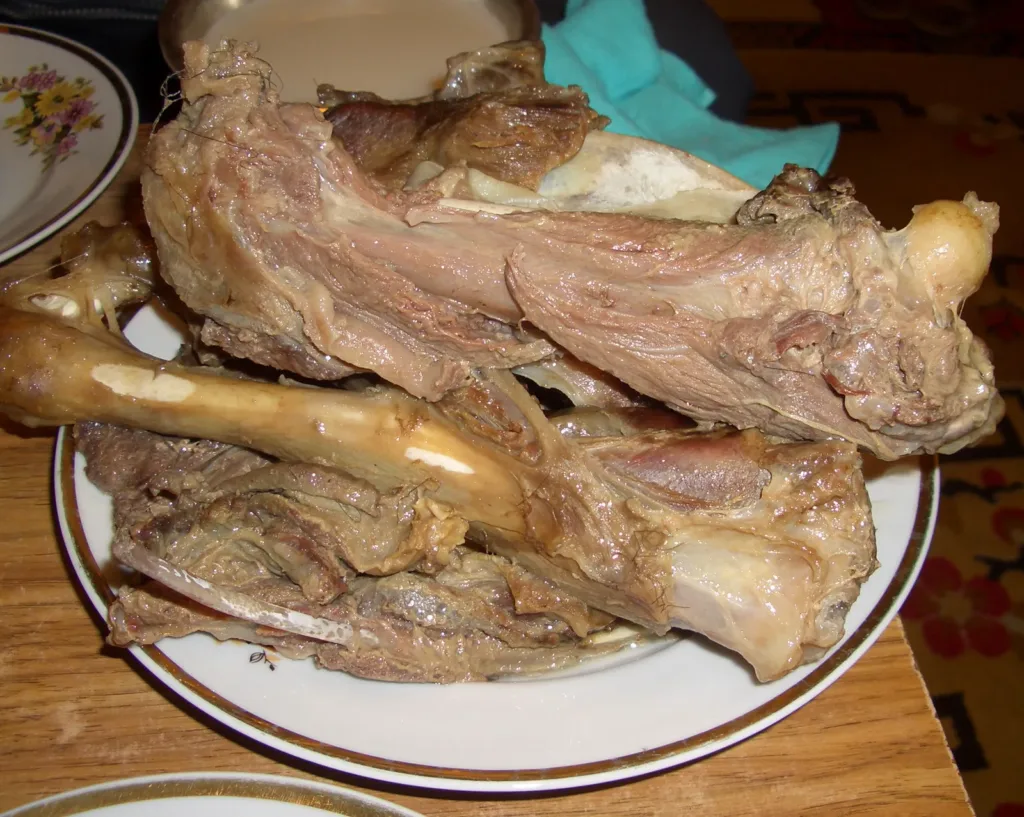
Shoubarou 手把肉
Shoubarou is Hulunbuir’s hand-held mutton: bone-in sheep meat simmered simply in water and eaten from the bone, with the meat itself kept at the centre of the meal. Local kitchens may serve a dipping condiment such as chive-flower paste.
Read dish guide →
Milk curd 奶豆腐
Fresh milk curd can be mildly sour and chewy, while drier pieces are more concentrated and firm. Sweetened preparations taste different from plain ones.
Read dish guide →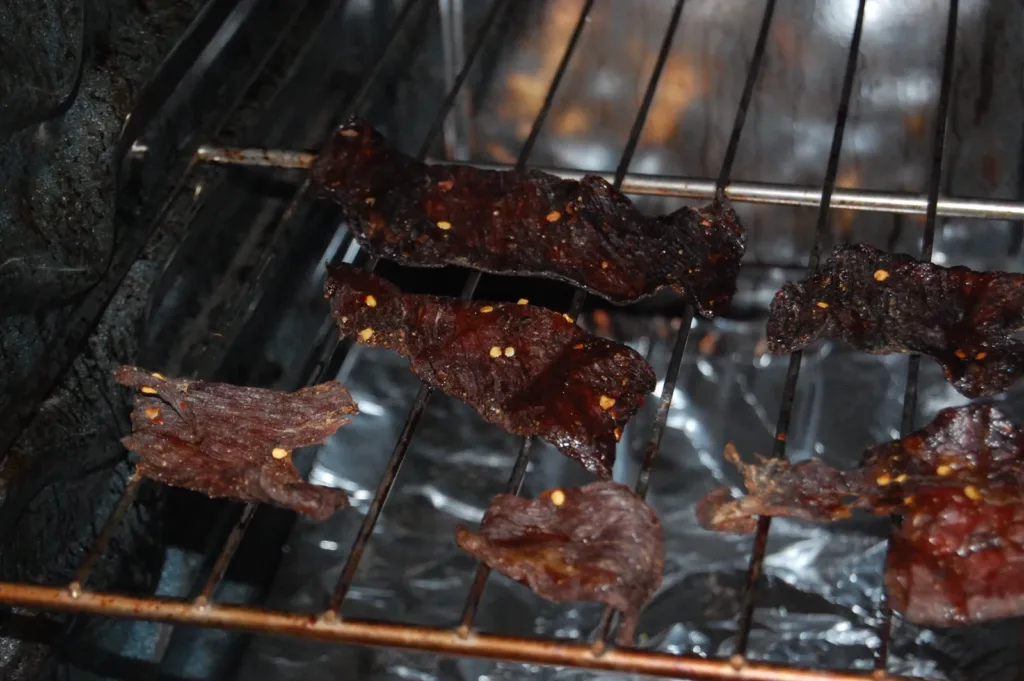
Air-dried beef 风干牛肉
In Hulunbuir, air-dried beef is best understood as a portable Inner Mongolian meat tradition: beef is cut into strips, seasoned, air-dried, and often finished by baking or frying, so the bite can range from firm and chewy to crisp and oily rather than following one fixed recipe.
Read dish guide →
Hohhot beizi flatbread 呼市焙子
A browned outer crust opens into a soft, layered center, with a fuller, more substantial bite than a delicate pastry. Freshness makes a noticeable difference to the flakiness.
AI illustration · AI 示意图
Read dish guide →
Tuoketuo stewed fish 托县炖鱼
The fish is tender, with a rich broth that can be spooned over bread or rice. Bone structure depends on the species and cannot be assumed away.
AI illustration · AI 示意图
Read dish guide →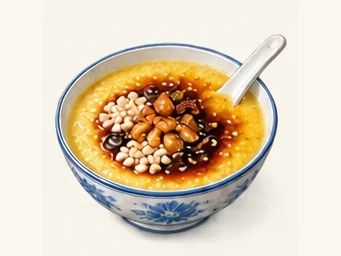
Baotou millet tea paste 包头老茶汤
The texture is thick and spoonable, with toasted-grain warmth and contrasting crunch from the toppings. It is more substantial than its name suggests.
AI illustration · AI 示意图
Read dish guide →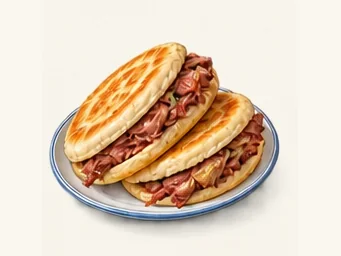
Chifeng duijia sandwich 赤峰对夹
The flaky shell contrasts with the meat's dense, savory chew and smoky aroma. Too much waiting softens the bread where it touches the filling.
AI illustration · AI 示意图
Read dish guide →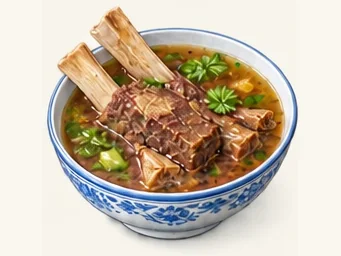
Nantun simmered beef ribs 水煮南屯牛排
A Hulunbuir rib dish associated with Nantun, the former name of Bayantuohai Town in Ewenki Autonomous Banner, cooked in water so the beef’s own flavour remains central. Expect bone-in rib cuts, variable accompaniments and no single restaurant or visitor entrance.
AI illustration · AI 示意图
Read dish guide →
Buryat steamed buns 布里亚特包子
A regional Buryat-Mongolian steamed bun associated with the Buryat community in Xinihe, Ewenki Autonomous Banner, Hulunbuir: thin hand-shaped wrappers hold chopped lamb, onion and cooking juices.
Read dish guide →
Russian-style leba bread 俄罗斯列巴
In Hulunbuir, Russian-style leba is a substantial bread tradition most clearly documented among the Russian communities of Ergun and Enhe: flour-based dough is fermented and baked, while local versions range from unsweetened, mildly sour black leba to sweeter loaves with fruit additions.
Read dish guide →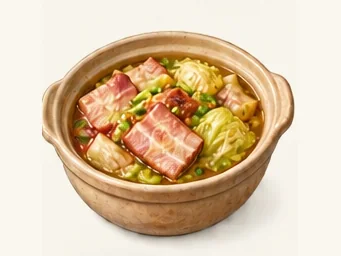
Ordos pork and cabbage stew 腌猪肉烩小白菜
Fatty, savory meat meets mild greens with a soft, broth-soaked texture. The result is comforting and substantial rather than crisp or delicately plated.
AI illustration · AI 示意图
Read dish guide →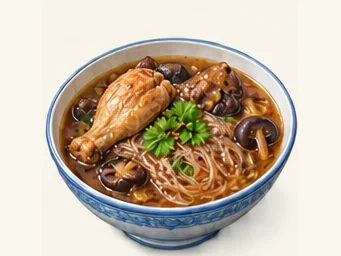
Arxan chicken with mushrooms and noodles 小鸡炖蘑菇粉
The chicken is tender, mushrooms are earthy and chewy, and translucent noodles carry much of the rich sauce.
AI illustration · AI 示意图
Read dish guide →
Horqin meat pies 科尔沁蒙古馅饼
The crust is tender with crisp browned patches, while the center releases savory meat juices. It is usually less bread-heavy than a thick baked bun.
AI illustration · AI 示意图
Read dish guide →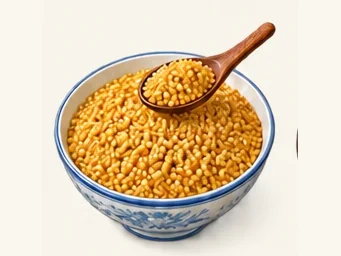
Mongolian roasted millet 炒米
Dry grains are crisp and nutty; soaked ones are mellow, chewy and milky. The same serving can therefore offer different textures over several minutes.
AI illustration · AI 示意图
Read dish guide →
Xilingol stone-cooked lamb 石头烤肉
The meat becomes moist and concentrated in flavor, with fatty juices coating the other ingredients. It is not the same texture as a thin grilled skewer.
AI illustration · AI 示意图
Read dish guide →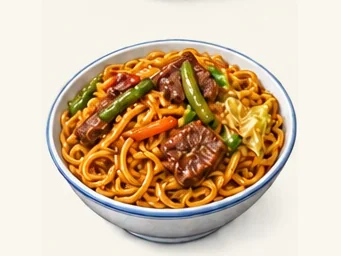
Hetao braised noodles 河套焖面
The noodles become glossy and deeply seasoned, with a firmer chew than noodles left in soup. Vegetables and meat add contrasting textures throughout.
AI illustration · AI 示意图
Read dish guide →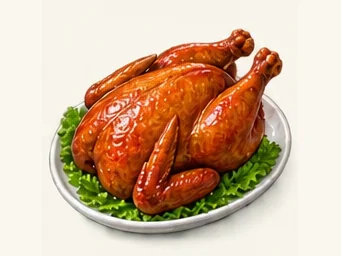
Zhuozishan smoked chicken 卓资山熏鸡
The skin has a concentrated smoky fragrance, while the meat beneath is tender and savory. Different parts offer leaner or richer bites.
AI illustration · AI 示意图
Read dish guide →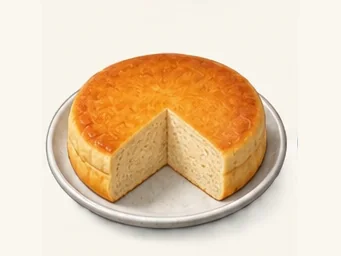
Fengzhen mooncake 丰镇月饼
The outside is firm and toasted, while the dense crumb carries a mellow sweetness and grain aroma.
AI illustration · AI 示意图
Read dish guide →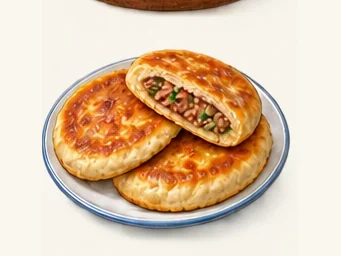
Alxa camel meat pie 驼肉馅饼
Expect a crisp-to-tender dough contrast and a substantial, savory meat center. The exact flavor depends on the cut and recipe, so avoid expecting every camel pie to taste identical.
AI illustration · AI 示意图
Read dish guide →
Alxa shami jelly 沙米凉粉
The jelly is smooth and slippery, with a mild base that carries the dressing. It should be distinguished from ordinary mung-bean jelly by its ingredient.
AI illustration · AI 示意图
Read dish guide →Inner Mongolia · Food stories

Food articles are in progress
Long-form food stories for this topic are being written. Until then, browse the dish guides above or see all Chinese food guides.