

Mongolian milk skin 蒙古奶皮子
Mongolian milk skin is featured among the local specialties of Inner Mongolia.
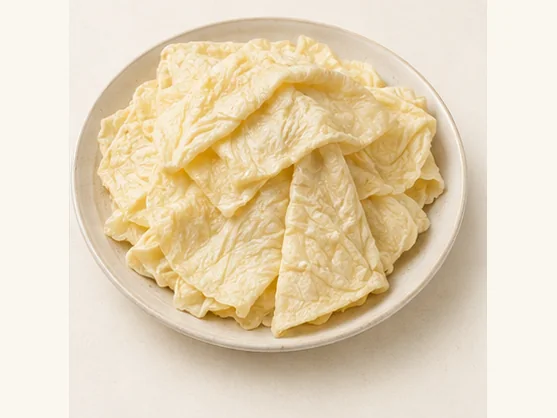
Milk skin is the concentrated layer lifted from heated milk after it has rested. Fresh pieces and drier folded sheets feel quite different, so it is worth checking which form is being sold.
How it is made
Milk is gently heated and worked, then left to cool so a thick layer collects at the surface. The layer is carefully lifted and drained. Further drying creates the folded, firmer form often seen among other dairy foods.
Flavour & texture
Fresh milk skin is rich and creamy, whereas a dried piece can be firmer and more concentrated in flavour. It softens in warm tea, changing the experience from chewing a sheet to drinking a fuller, milk-rich bowl.
Local roots & traditions
Milk foods are important in Mongolian pastoral food traditions. Milk skin can be eaten with tea or toasted grains, and should be distinguished from compressed milk curd and from the softer cream known as naijiaokou.
Ingredients & dietary needs
Milk is the core ingredient. Some modern products add sugar, other dairy ingredients or flavourings. Ask for the milk type and check the package if avoiding an ingredient; a traditional name does not make a processed snack identical to fresh milk skin.
How to order Mongolian milk skin
Ask whether the product is fresh or dried, sweetened or plain. Buy an appropriate portion and follow the seller's storage instructions, especially for fresh dairy. An unrefrigerated display does not by itself establish that every product can keep for a long journey.
How to eat it & plan a meal
Try a small piece first, then soften another in warm milk tea if offered. This lets you compare its texture without ordering a large dairy platter before you know which styles you enjoy.
Names & local variations
Milk skin is not a wafer made mainly from flour, even when it looks like a folded sheet. Modern milk-skin desserts may use it as a topping rather than serving the traditional dairy ingredient on its own.
More dishes to compare
Explore related local specialties and compare their names, preparation notes and ordering guidance.
Milk curd 奶豆腐 →
Milk is fermented or curdled, then heated, drained and pressed into a firm dairy product. Pieces may be eaten fresh, dried or softened in hot milk tea depending on their texture. Fresh milk curd can be mildly sour and chewy, while drier pieces are more concentrated and firm. Sweetened preparations taste different from plain ones.
Salty milk tea 咸奶茶 →
Tea is boiled and combined with milk and salt; some preparations are enriched with butter or accompanied by roasted grain and fried dough. Strength and saltiness vary between households and restaurants. The flavor is savory and milky, with tea tannin underneath. Added millet changes from crisp to soft as it soaks.
Questions before you order
What name should I show when ordering?
Show 蒙古奶皮子 for Mongolian milk skin.