


Get to know Huadu District
- Administrative area
- District · 市辖区
- Part of
- Guangzhou
- Chinese name
- 花都区
- Local areas
- District guide
Area & population
- Area
- 961.00 km²
- Population · 2020
- 1,642,360
Source: English Wikipedia, as of the dates shown.
Huadu lies north of Guangzhou’s core and is not a single walkable sightseeing zone. The district government describes a northern hill belt, a central area of low hills and terraces, and southern plains; the airport, rail links, townships and urban neighborhoods all sit within this wider district. Choose a destination first, then plan the onward leg rather than treating “Huadu” as one station or taxi drop-off.
Three different visits
For an easy urban-green stop, start at Huadu Lake National Wetland Park (花都湖国家湿地公园). It is in Huadu’s central urban area. The district government describes a broad network of paths, bridges and boardwalks, with rest stations; it is a place to walk beside wetland scenery, not a compact monument with a single prescribed circuit. If you want to see the park rather than just pass through, leave time for a walk and check local notices for any area closures.
For local history, visit the Former Residence of Hong Xiuquan (洪秀全故居) in Guanlubu, Dabu Village (大㘵村官禄㘵). This is a heritage-and-memorial visit, not a surviving intact Qing-era house: the government account says the residence was restored in 1959. Its points of interest include the study pavilion associated with Hong’s youth, a longan tree, and a memorial hall with historical exhibits. Keep the residence and memorial as one visit, but distinguish the reconstructed home from the museum displays.
For village architecture, set aside a separate trip to Langtou Ancient Village (塱头古村) in Tanbu Town (炭步镇). Look beyond the headline “old village” label: its lanes connect blue-brick ancestral halls and study buildings, with carved stone, brick and wood details and distinctive gables. The district government identifies the preserved core as a mix of Ming- and Qing-period buildings; Yu Lan Ancestral Hall (友兰公祠) and Guyi Study (谷诒书室) are named examples.
These are different kinds of stops—urban wetland, memorial site and historic village—not three attractions around one entrance. A practical itinerary is to choose one or two that fit your interests and verify the road leg between them before setting out. The northern hill country is a separate landscape from the central-city lake; do not assume a visit to one covers the other.
Getting around
Huadu has more than one arrival point. The district government identifies Guangzhou Baiyun International Airport as being in Huadu and lists Guangzhou Metro Line 9 and the Guangzhou–Qingyuan and Guangzhou East Ring intercity railways among its existing connections. These links help you reach the district, but they do not put every village or park at a station entrance.
For the Guangzhou North rail interchange, use the names carefully: Guangzhou North (广州北站) is the Line 9 metro stop, while Huadu Station (花都站) is the intercity-rail station at the west plaza. A Huadu transport guide describes a connection between the two and directs metro passengers from Guangzhou North’s C exit toward the west-plaza waiting area. The guide also reports east-plaza works, so check current station signage and operator information before travel rather than relying on that older access note unchanged.
For Hong Xiuquan’s Former Residence or Langtou, enter the specific Chinese destination name in your map or ride-hailing app. The sources checked here do not establish a current, dependable bus route or a single taxi drop-off point for each site, so no route number, exit or fixed fare is given. Allow for a separate road transfer from your arrival station and confirm the destination entrance locally. The district itself has no single visitor address.
Explore Huadu District
Core places to explore, with English and Chinese names.
Places to explore around Huadu District
 A historic grey-brick residence in Langtou Village, photographed in 2023. Photo: 古海岸遗址 · CC BY-SA 4.0
Langtou Old Village塱头古村
A living Huang-lineage village in Huadu, Langtou is known for its Qing-and-Ming grey-brick halls, study rooms and lanes shaped by a tradition of farming and learning. Its historic settlement sits beside Chunyangtai, a contemporary arts and cultural centre.
Read the place guide →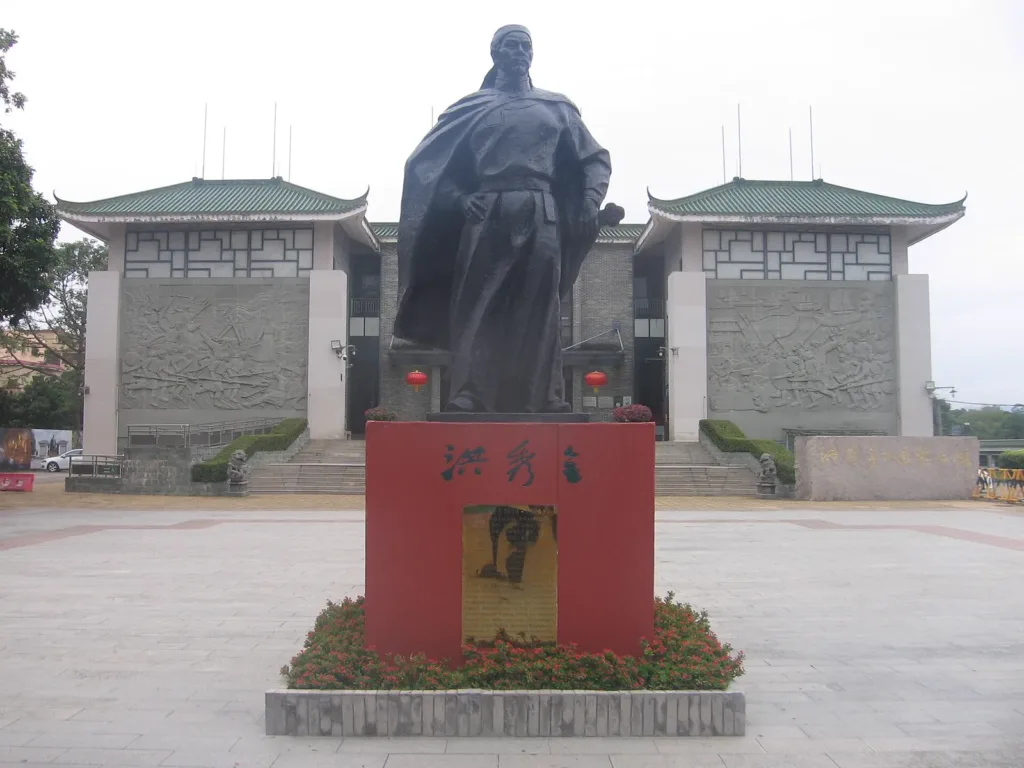 A statue of Hong Xiuquan stands in front of his former residence in Huadu, Guangzhou, photographed on 7 November 2025. Photo: Zhou Guanhuai · CC0 1.0
Hong Xiuquan Former Residence洪秀全故居
A reconstructed home and nearby study pavilion in Huadu recall Hong Xiuquan’s youth; a separate memorial hall adds exhibits on the Taiping movement.
Read the place guide →Plan your visit
Getting there
Huadu District is about 30 km (straight-line distance) from central Guangzhou. Search for 花都区 in a map app to find stations and your accommodation.
Where to stay →Build your route
Langtou Old Village and Hong Xiuquan Former Residence are both listed here. The linked place guides have entrance and visit details.
Continue with Guangzhou →More in Guangzhou
Sources & geographic information
Administrative names and parent areas: Official geographic directory (dmfw.mca.gov.cn) · Reference date 2026-09-06.
Background text adapted from Huadu, Guangzhou — Wikipedia contributors, under CC BY-SA 4.0. Text has been shortened and reorganized; source revision 1371071246.
Map data © OpenStreetMap contributors. Pins mark approximate centres, not entrances or boundaries.
Image credits & notes (1)
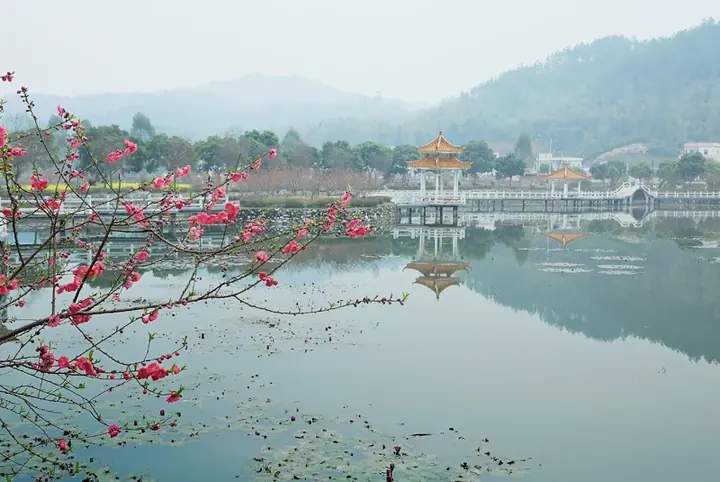
- The lake and village landscape at Hongshan Village in Huadu District, Guangzhou. Photo: Taken on 23 February 2011.Photo: jiang-wen-jie · CC BY-SA 3.0Resized for the web; the photo itself has not been edited. Thumbnails may show a cropped view.
