


Get to know Huangpu District
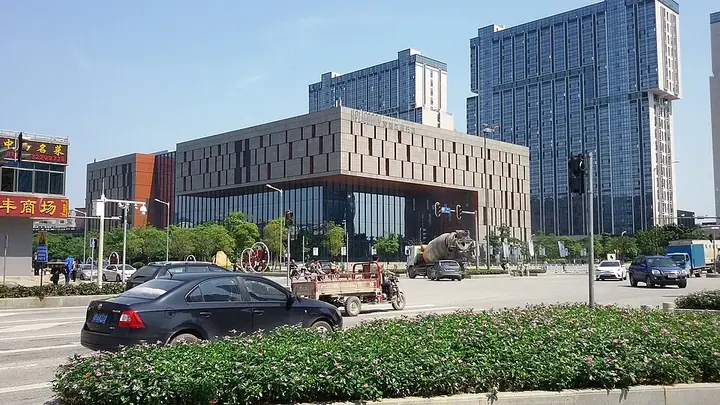
- Administrative area
- District · 市辖区
- Part of
- Guangzhou
- Chinese name
- 黄埔区
- Local areas
- District guide
Area & population
- Area
- 484.17 km²
- Population · 2020
- 1,264,447
Source: English Wikipedia, as of the dates shown.
Huangpu lies on the eastern side of Guangzhou and is better understood as several separate outings than as one walkable attraction zone. Its visitor-facing contrasts include Changzhou Island’s military-school heritage, the maritime temple and old port landscape around Miaotou, and the Luogang–Xiangxue area, where a seasonal plum garden meets newer urban districts. The science-and-industry corridor adds a contemporary side, but it is a different kind of stop from the island and temple sites.
Choose a cluster, not a single “Huangpu route”
For twentieth-century history, make Changzhou Island a dedicated visit. The former Whampoa Military Academy is the anchor, with other memorial sites spread across the island rather than gathered at one entrance. Metro Line 7 serves Changzhou Station. A Guangzhou bus-group report dated 7 October 2026 describes the M01 shuttle between Changzhou Station Exit C and the Huangpu Military Academy terminal; check current service information before relying on this last-mile connection.
For Guangzhou’s maritime past, head to the Temple of the South Sea God (南海神庙) in Miaotou. The temple’s principal buildings, stele collection and association with the maritime Silk Road make this a distinct visit from the academy island. Its published address is 22 Xuri Street, Miaotou, Huangpu District (广州市黄埔区庙头旭日街22号). The city’s visitor guide lists Metro Line 13 to Nanhai God Temple Station (南海神庙站), Exit C2; follow current local signs from the station rather than assuming a precise walk time.
If you are visiting for winter blossoms, go to Luogang Xiangxue Park (萝岗香雪公园) as a separate outing. Metro Line 6 connects at Xiangxue Station with Huangpu Tram Line 2; take the tram to Xiangxue Park stop. The park is known for plum blossom around the turn of the year, but flowering varies by season, so treat the bloom as weather-dependent rather than guaranteed.
Getting around
The district’s sights are not within walking distance of one another. Choose one main cluster, or pair two only after checking the current rail and road connections; do not plan to cross Huangpu on foot. Changzhou Island, Miaotou and Xiangxue have different access points, so “Huangpu District” alone is not a useful taxi destination. Use the site’s Chinese name and, where available, its published address. No single district-wide visitor entrance or drop-off point applies.
Opening, ticketing and reservation arrangements belong to individual venues and can change. Check each venue’s current official notice before setting out, especially if your visit depends on a particular exhibition, shuttle or seasonal bloom.
Explore Huangpu District
Core places to explore, with English and Chinese names.
Places to explore around Huangpu District
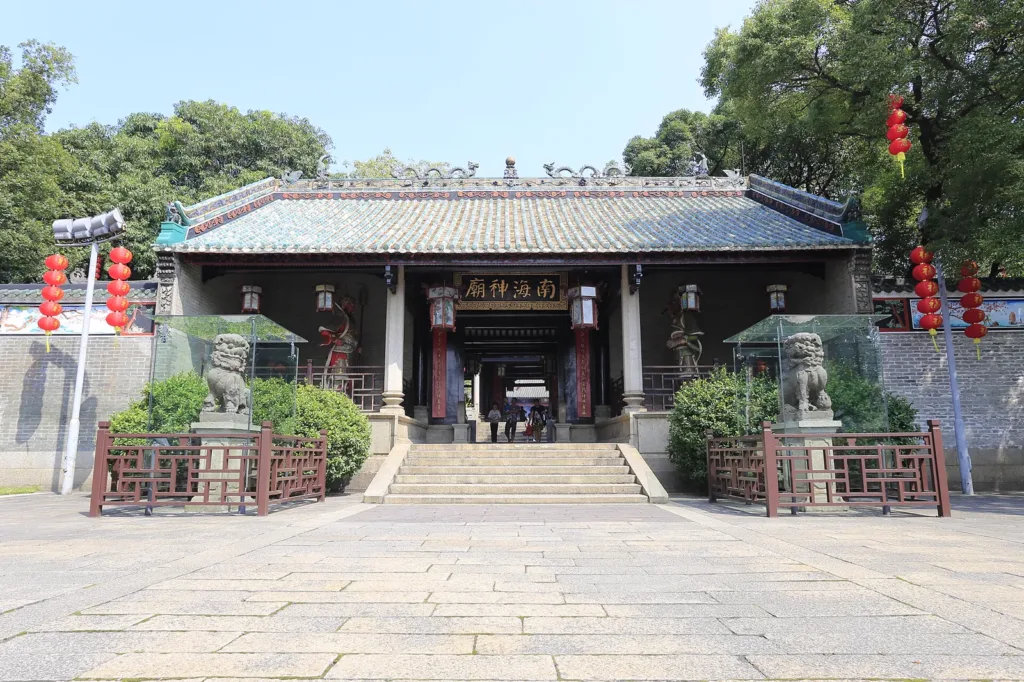 The first gate (Toumen) of the Temple of the South Sea God in Guangzhou, photographed on 1 October 2013. Photo: Zhangzhugang · CC BY-SA 4.0
Temple of the South Sea God南海神庙
A historic state shrine to the South Sea God in eastern Guangzhou, known for its south-to-north temple axis, centuries-old steles and the annual Boluo Festival.
Read the place guide → Exterior of the Whampoa Military Academy Memorial Hall on Changzhou Island, Guangzhou; photographed on 10 December 2023. Photo: Lt2818 · CC0 1.0
Whampoa Military Academy Memorial Hall黄埔军校旧址纪念馆
The original Changzhou Island campus of the Whampoa Military Academy, with a reconstructed headquarters, period-style rooms and a museum tracing the school’s early history.
Read the place guide →Plan your visit
Getting there
Huangpu District is about 20 km (straight-line distance) from central Guangzhou. Search for 黄埔区 in a map app to find stations and your accommodation.
Where to stay →Build your route
Temple of the South Sea God and Whampoa Military Academy Memorial Hall are about 7 km apart (straight-line distance). The linked place guides have entrance and visit details.
Continue with Guangzhou →More in Guangzhou
Sources & geographic information
Administrative names and parent areas: Official geographic directory (dmfw.mca.gov.cn) · Reference date 2026-09-06.
Background text adapted from Huangpu, Guangzhou — Wikipedia contributors, under CC BY-SA 4.0. Text has been shortened and reorganized; source revision 1370890738.
Map data © OpenStreetMap contributors. Pins mark approximate centres, not entrances or boundaries.
Image credits & notes (1)
- The Xiangxue branch of Huangpu District Library in Guangzhou. Photograph date recorded by the source: 2017-04-28 14:34:21.Photo: PQ77wd · CC BY-SA 4.0Resized for the web; the photo itself has not been edited. Thumbnails may show a cropped view.
