

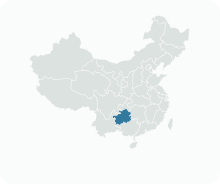
Get to know Baiyun District
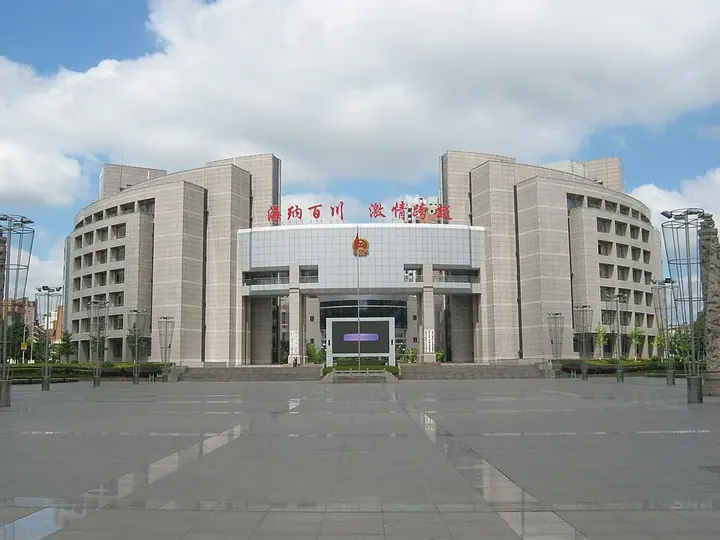
- Administrative area
- District · 市辖区
- Part of
- Guiyang City
- Chinese name
- 白云区
- Local areas
- District guide
Area & population
- Area
- 260.00 km²
- Population · 2010
- 264,543
Source: English Wikipedia, as of the dates shown.
Baiyun District is one of Guiyang’s six central urban districts, but it is not a compact sightseeing quarter. It occupies 272 square kilometres on the northern side of the city, bordering Xiuwen County, Wudang District, Yunyan District, Guanshanhu District and, at its north-western corner, Qingzhen. The district government describes it as Guiyang’s northern gateway and as lying at the geographic centre of both Guiyang and Guizhou. That combination of a central urban role and a broad, mixed landscape is the key to planning a visit: choose a specific park, cultural site or rural destination rather than treating “Baiyun District” as one walkable attraction.
An urban district with an industrial memory
Baiyun’s character comes from the meeting of an expanding city and an aluminium-producing base. The district’s official profile traces more than 60 years of aluminium-industry development and the craftsmanship culture that grew around it. This is useful context when you see the district’s newer roads, housing and industrial platforms alongside older communities. It is a way to read the place, not a promise that an industrial plant or worksite is open for casual visits; do not enter restricted premises.
The other half of the story is green and open. Official material describes a subtropical climate, an average annual temperature of 15.3°C and annual precipitation of roughly 1,147–1,191 mm. Forest, spring-fed landscapes, low hills and agricultural areas make the district feel different from Guiyang’s denser central streets. Rain can change the comfort of forest and countryside outings, so check the weather and the individual venue notice before setting out. These climate figures describe the district; they do not predict a particular future flower display, event or operating day.
How to read the map
The official administrative listing covers five sub-districts—Dashandong (大山洞), Quanhu (泉湖), Yuncheng (云城), Gongjiazhai (龚家寨) and Dulaying (都拉营)—alongside three towns, Yanshanhong (艳山红), Maijia (麦架) and Shawo (沙文), and two townships, Dula (都拉) and Niuchang (牛场). This scale explains why addresses and Chinese place names matter. The built-up northern Guiyang experience and the more rural edges are in the same district name but are not interchangeable stops.
For a first orientation, use the district’s public cultural and landscape anchors as separate choices. The district government lists Quanhu Park (泉湖公园) and Penglai Xianjie (蓬莱仙界) as national 4A scenic areas, and also highlights Changpoling National Forest Park (长坡岭国家森林公园), Xiputuo Temple (西普陀寺) and Guiyang Happy World (贵阳欢乐世界). It also identifies Niuchang Penglai dixi opera (牛场蓬莱地戏) as an intangible-cultural-heritage project. The list shows the range of Baiyun—from a spring park and leisure agriculture to forest, temple and local performance tradition—but it is not a single park complex or a guaranteed same-day programme. Check each site’s current entrance, opening hours, tickets and event notice separately.
Niuchang Penglai dixi is especially worth treating as a living tradition rather than a scheduled show by default. The official profile names it as a heritage project, but the pages read for this district do not publish a reliable future performance calendar. Do not plan around an unannounced seasonal performance. If you encounter a performance, watch from the visitor area and follow the community’s instructions about photography and participation.
Practical visit
Baiyun works best as a destination-based day or half-day plan. A spring park, a forest outing and a rural leisure area should not be joined by assuming short walks between them. Before leaving, search the exact Chinese name—such as 泉湖公园 Quán Hú Gōng Yuán, 蓬莱仙界 Pénglái Xiān Jiè, 长坡岭国家森林公园 Zhǎng Pō Lǐng Guójiā Sēn Lín Gōng Yuán or 西普陀寺 Xī Pǔ Tuó Sì—in Amap (高德地图), then check the currently displayed entrance, road conditions and return route. The district-wide search 白云区 Bái Yún Qū is useful for understanding the area, but it is not a visitor entrance.
There is no district-wide admission ticket, opening timetable or passport-specific reservation rule. Those questions belong to the individual park, temple, amusement venue or event. The official pages checked for this article do not establish one rule for all of Baiyun, so do not transfer a domestic-ID booking instruction from one venue to another or assume that a listed 4A status guarantees a particular service on your date. For a precise visit, check the venue’s current notice and ask staff if an entrance or performance is unclear.
Getting there
Guiyang Metro Line 2 starts at North Baiyun Road Station (白云北路站), runs through Baiyun, Guanshanhu, Yunyan and Nanming districts, and ends at Zhongxing Road Station (中兴路站). From central Guiyang, board Line 2 in the direction of North Baiyun Road; for the return, use the opposite direction toward Zhongxing Road. The correct station depends on the exact Baiyun destination, and a metro station is not automatically a park entrance, so confirm the last leg in Amap on the day. Do not add an exit number, walking time or fixed fare without a current source.
The district government also identifies Baiyun North Railway Station (白云北站) and Baiyun West Station (白云西站) as rail hubs. A Guiyang government explanation describes the city-region ring railway’s Baiyun North terminus and Baiyun West station, while a later report places both in the rail network serving Baiyun’s industrial and urban areas. Treat these as possible rail access points, not as a guarantee that every train stops there: search the exact station name in the official China Railway 12306 system for the date and verify the onward road connection to your chosen destination.
For a taxi or ride-hailing car, give the driver the exact Chinese venue name and confirm the drop-off entrance in Amap. “Baiyun District” covers too much ground to be a sufficient destination for a park or village visit. Keep the Chinese name for the return journey, and recheck both the route and the last connection before leaving a less central site.
Explore Baiyun District
Core places to explore, with English and Chinese names.
Baiyun District 白云区
Plan your visit
Getting there
Baiyun District is about 4 km (straight-line distance) from central Guiyang City. Search for 白云区 in a map app to find stations and your accommodation.
Where to stay →More in Guiyang City
Sources & geographic information
Administrative names and parent areas: Official geographic directory (dmfw.mca.gov.cn) · Reference date 2026-09-06.
Background text adapted from Baiyun District, Guiyang — Wikipedia contributors, under CC BY-SA 4.0. Text has been shortened and reorganized; source revision 1302145370.
Map data © OpenStreetMap contributors. Pins mark approximate centres, not entrances or boundaries.
