


Get to know Lixian
- Administrative area
- County · 县
- Part of
- Baoding
- Chinese name
- 蠡县
- Local areas
- County guide
Area & population
- Area in the source
- 649.80 km²
- Population · 2020 census
- 488,152
Source: cited geographic source, as of the dates shown.
Setting and landscape
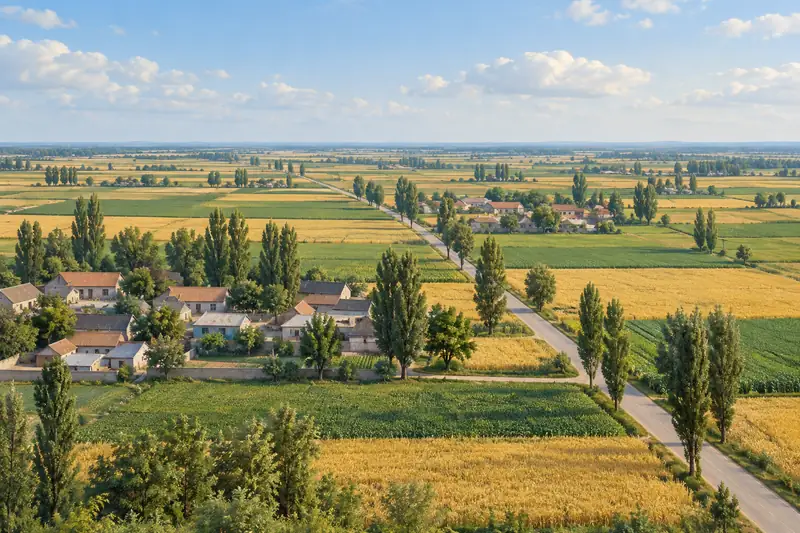
The county sits on the central Hebei depression of the Bohai Bay basin, a plain built of Quaternary flood and river deposits. It is slightly higher in the south-west than the north-east, averages 15.6 metres above sea level and has no noticeable relief. The climate is warm-temperate continental monsoon: dry, windy springs, hot rainy summers, clear autumns and cold, dry winters.
History
The Western Han set up Lucheng County (陆成县) here. After several changes of name the county was called Boye (博野县) in 500, when its seat moved to the present town. The Tang created Li Prefecture (蠡州) in 622; in 987 the Song set up Ningbian Army (宁边军) in the county, and in January 1375 the Ming reduced the prefecture to Lixian.
The county government counts among its people Bao Shuya (鲍叔牙), the Spring and Autumn minister, and Li Shugu (李恕谷), a founder of the early-Qing Yan-Li school (颜李学派), and says the statesman Fan Li (范蠡) traded here. The Gao-Li Uprising (高蠡暴动) broke out in the county, and the Lixian native Liang Bin (梁斌) set his novel "Keep the Red Flag Flying" (红旗谱) against it. The county was also the seat of the headquarters of the 120th Division and the Central Hebei Military Region, where He Long (贺龙) and Lü Zhengcao (吕正操) fought.
The Liang Bin and Huang Zhou Memorial Hall (梁斌黄胄纪念馆) was named one of Baoding's ten "new cultural landmarks" in 2018.
Food and local products
Lixian was named China's home of the Chinese yam in 2003, and the county government says the mashanyao has been grown here for more than 2,000 years. The tubers have short tips, white skin and an even shape, with tender, sweet, fairly dry flesh. The yam became a national geographical-indication product in 2005 and joined the China-EU "10+10" list of mutually protected indications in 2011. Besides fresh roots the county sells sliced and powdered yam, canned yam, yam drinks, yam beer and yam liquor.
The county also holds the titles "China's Fur Capital" (中国皮都) and "China's City of Woollen Cloth" (中国呢绒之城).
Getting oriented
Lixian lies in the triangle between Beijing, Tianjin and Shijiazhuang. The Tianjin-Shijiazhuang, Quyang-Huanghua (曲港), Daqing-Guangzhou and Baoding-Cangzhou expressways cross the county.
Highlights
- Lixian mashanyao yam 蠡县麻山药: White-skinned, sweet yam grown for over 2,000 years; national geographical-indication product since 2005.
- Liang Bin and Huang Zhou Memorial Hall 梁斌黄胄纪念馆: Named one of Baoding's ten new cultural landmarks in 2018.
Sources for this guide
蠡县概况 · Lixian People's Government
自然地理 · Lixian People's Government
历史沿革 · Lixian People's Government
蠡县梁斌黄胄纪念馆荣获“保定十佳文化印象新地标”称号 · Lixian People's Government
蠡县麻山药再获省优品牌 · Lixian People's Government
Original English written from the listed sources and checked sentence by sentence against quoted extracts by a separate reviewer. Updated 2026-09-24.
Explore Lixian
Core places to explore, with English and Chinese names.
Plan your visit
Getting there
Lixian is about 45 km in a straight line from central Baoding. Search for 蠡县 in a map app to find stations and your accommodation.
Where to stay →More in Baoding
Sources & geographic information
Administrative names and parent areas: Official geographic directory · Reference date 2026-09-06.
Map data © OpenStreetMap contributors. Pins mark approximate centres, not entrances or boundaries.