


Get to know Quyang County
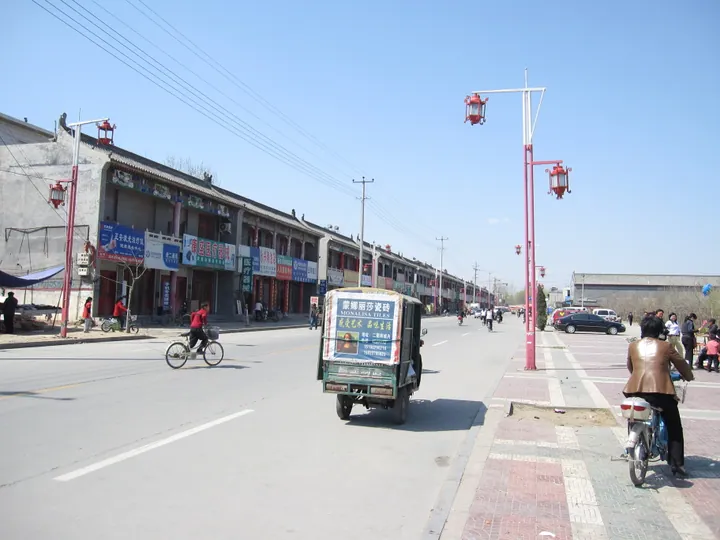
Photo adjustments
Full frame retained; proportionally resized and converted to WebP. No retouching or changes to the photographed subject. Card displays may crop the view.
- Administrative area
- County · 县
- Part of
- Baoding
- Chinese name
- 曲阳县
- Local areas
- County guide
Area & population
- Area in the source
- 1,083.70 km²
- Population · 2020 census
- 573,975
- Administrative seat
- Hengzhou Town
Source: cited geographic source, as of the dates shown.
Setting and landscape
The name means the sunny side of a bend, after its position beneath the ancient Northern Mount Heng (北岳恒山), now Damao Mountain (大茂山) in neighbouring Tang County. The land is described as six parts mountain, one part water and three parts fields; from northwest to southeast it runs from low mountains through hills and river flats to plain. Two large reservoirs, Wangkuai (王快) and Xidayang (西大洋), lie in the county, and Tang County adjoins it to the northeast.
History
The Qin set up Quyang County in 221 BC, making it one of Hebei's oldest counties. The Yuan raised it to Hengzhou (恒州) in 1216, governing five counties, and returned it to county status in 1239. It was merged into Ding County in 1958 and restored in May 1961. Ge Zhenlin (葛振林), one of the Five Heroes of Langya Mountain (狼牙山五壮士) of the war against Japan, came from Quyang.
What to see
The Beiyue Temple in the county town was first built under the Northern Wei as the place where emperors sacrificed to Northern Mount Heng. Its east, west and north walls carry a mural 8 metres high and 18 metres long attributed to the Tang painter Wu Daozi (吴道子), painted with raised gilded outlines, and the grounds hold more than 160 inscribed steles from the Northern Dynasties to the Republic. It is a 4A scenic area, as is the Hushan scenic area (虎山风景区).
The Ding kiln site (定窑遗址) stretches about 10 kilometres from east to west around Jianci (涧磁村) and East and West Yanchuan (东西燕川村) in Lingshan Town (灵山镇). The county's other national protected sites include the Xiude Temple Pagoda (修德寺塔), the tomb of Wang Chuzhi (王处直墓) and the Bahui Temple sutra carvings (八会寺刻经). The Julong Cave (聚龙洞) at Lingshan is a 3A scenic area.
Crafts and local products
Quyang stone carving entered the first national intangible heritage list in 2006; the county government traces it from the Han to a peak under the Yuan, when the carver Yang Qiong (杨琼) worked. Ding ware, named after old Dingzhou (定州), to which Quyang once belonged, was fired from the Tang, flourished in the Northern Song and declined in the Yuan; it is praised as "white as jade, thin as paper, ringing like a chime stone", and kilns were revived in the 1970s. The provincial heritage list includes the filling of Heiguinü dumplings (黑闺女饺子), and the county is one of the main producers of the Hebei Yali pear (河北鸭梨) for export.
Highlights
- Beiyue Temple 北岳庙: Northern Wei foundation where emperors sacrificed to Northern Mount Heng; large mural attributed to Wu Daozi and over 160 steles.
- Ding kiln site 定窑遗址: National protected site stretching about 10 km around Jianci in Lingshan Town.
- Quyang stone carving 曲阳石雕: On the first national intangible heritage list (2006).
- Ding ware 定瓷: Porcelain praised as "white as jade, thin as paper"; its kilns are counted among the five famous Song kilns and were revived in the 1970s.
Sources for this guide
曲阳概况 - 曲阳县人民政府 · Quyang County People's Government
历史沿革 - 曲阳县人民政府 · Quyang County People's Government
曲阳县情 - 曲阳县人民政府 · Quyang County People's Government
Original English written from the listed sources and checked sentence by sentence against quoted extracts by a separate reviewer. Updated 2026-09-24.
Explore Quyang County
Core places to explore, with English and Chinese names.
Places to explore around Quyang County
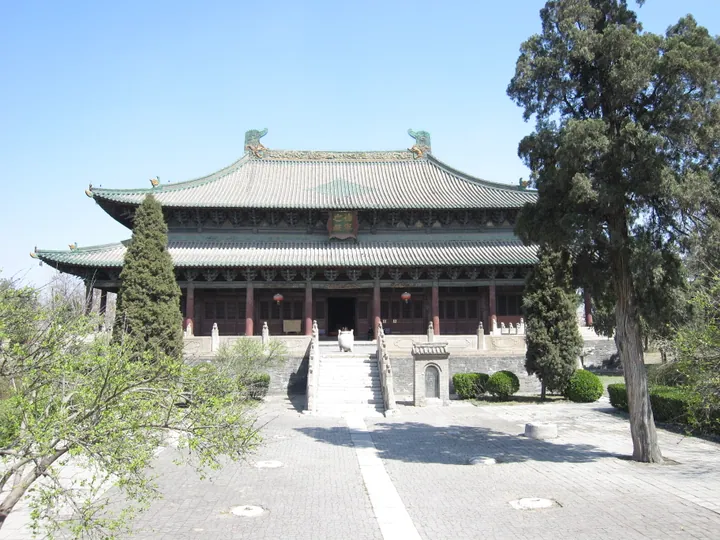 The main hall of Beiyue Temple in Quyang County, Hebei ·
 Plan your visit
Getting there
Quyang County is about 70 km in a straight line from central Baoding. Search for 曲阳县 in a map app to find stations and your accommodation.
Where to stay →Build your route
Start with Beiyue Temple. The linked place guides have entrance and visit details.
Continue with Baoding →More in Baoding
Sources & geographic information
Administrative names and parent areas: Official geographic directory · Reference date 2026-09-06.
Photo: Beiyue Temple · User:Zeus1234 · CC BY-SA 3.0. Full frame retained; proportionally resized and converted to WebP. No retouching or changes to the photographed subject. Card displays may crop the view.

Map data © OpenStreetMap contributors. Pins mark approximate centres, not entrances or boundaries.