


Get to know Rongcheng County
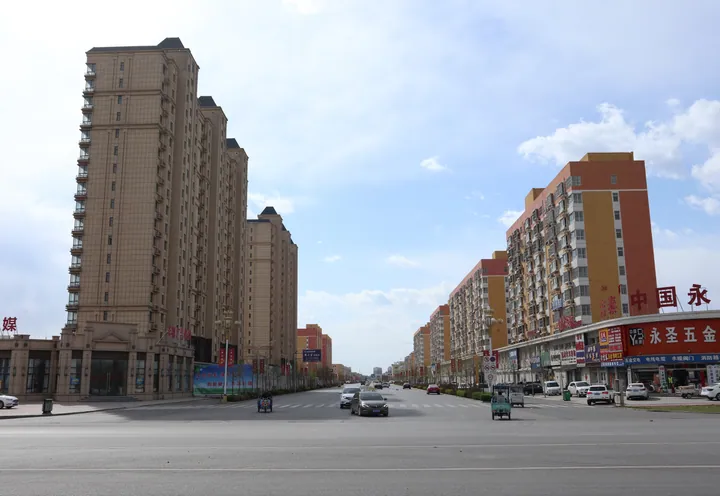
Photo adjustments
Full frame retained; proportionally resized and converted to WebP. No retouching or changes to the photographed subject. Card displays may crop the view.
- Administrative area
- County · 县
- Part of
- Baoding
- Chinese name
- 容城县
- Local areas
- County guide
Area & population
- Area in the source
- 311.00 km²
- Population · 2020 census
- 273,164
- Administrative seat
- Rongcheng Town (容城镇)
Source: cited geographic source, as of the dates shown.
History
According to the Xiong'an New Area government, Rongcheng became a county under the Qin, first called Sangqiu (桑丘) or Yijia (宜家), and in 147 BC the Han made it the Rongcheng marquisate; the provincial government lists it as a thousand-year-old county. Under the Tang it was renamed Quanzhong (全忠县), "wholly loyal", in 699 after holding out against a Khitan attack, and took the name Rongcheng in 742. In the Song–Liao period it lay on the frontier and was split between the two states until the Jin reunited it.
Three local figures are honoured as the "Three Worthies of Rongcheng" (容城三贤): the early Yuan scholar Liu Yin (刘因), the loyal Ming official Yang Jisheng (杨继盛) and the early Qing Confucian Sun Qifeng (孙奇逢). Rongcheng was also home to Hu Delin (胡德林) and Hu Fucai (胡福才), two of the Five Heroes of Langya Mountain (狼牙山五壮士).
What to see
At Nanyang village, excavations since 2017 have identified a large and a small Warring States walled town, with Yan culture from the Eastern Zhou to the Han, and Hebei Daily reports that it is the earliest walled town yet found in Xiong'an. Potsherds inscribed "Yi market" (易市) are, in Xinhua's report, an important clue in the search for the Yan city of Yi.
Two other sites were listed as provincial protected sites in 1982: Shangpo (上坡遗址), with Neolithic Cishan culture remains, and Liangmatai (晾马台遗址) from the Shang and Zhou. Survey work has traced a wider "Greater Nanyang" cluster of settlements around Nanyang and Liangmatai, with remains dating from the late Neolithic to the Song and Jin. The Ronghe Pagoda (容和塔) stands at the southeast corner of the county town.
Getting oriented
The county government sits in Rongcheng Town (容城镇). The Rongwu Expressway (荣乌高速) and National Highway 230 cross the county, and the Bazhou–Xushui railway (霸徐铁路) has a Baiyangdian (白洋淀) station.
Highlights
- Nanyang site 南阳遗址: Two Warring States walled towns of Yan culture; the largest national key protected site in Xiong'an by area.
- Liangmatai site 晾马台遗址: Shang and Zhou site, a provincial protected site since 1982.
- Ronghe Pagoda 容和塔: Pagoda at the southeast corner of the county town.
Sources for this guide
容城县 - 维基百科,自由的百科全书 · Chinese Wikipedia · CC BY-SA 4.0
雄安新区所辖三县历史沿革-中国雄安 · Xiong'an New Area official website (China Xiong'an)
“未来之城”守护历史文脉-新华网 · Xinhua News Agency
雄安新区确认发现八座古城遗址 · Hebei Provincial People's Government (report by Hebei Daily)
Original English written from the listed sources and checked sentence by sentence against quoted extracts by a separate reviewer. Updated 2026-09-24.
Explore Rongcheng County
Core places to explore, with English and Chinese names.
Rongcheng County 容城县
Plan your visit
Getting there
Rongcheng County is about 40 km in a straight line from central Baoding. Search for 容城县 in a map app to find stations and your accommodation.
Where to stay →More in Baoding
Sources & geographic information
Administrative names and parent areas: Official geographic directory · Reference date 2026-09-06.
Some facts checked against 容城县 — Wikipedia contributors, CC BY-SA 4.0.
Map data © OpenStreetMap contributors. Pins mark approximate centres, not entrances or boundaries.