


Get to know Aihui District
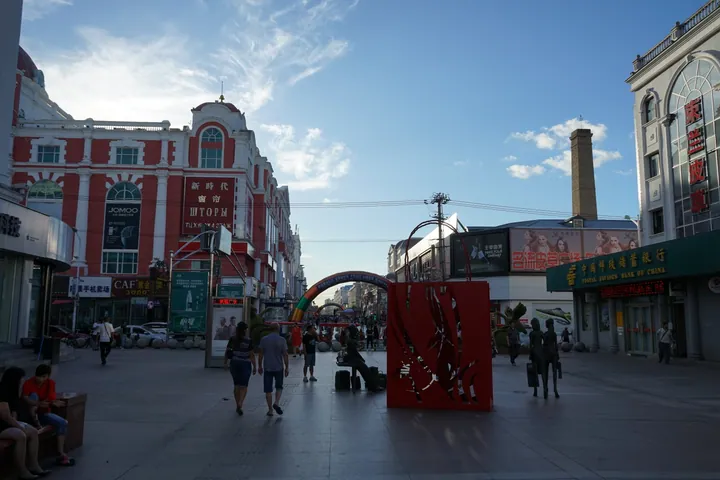
Photo adjustments
Full frame retained; proportionally resized and converted to WebP. No retouching or changes to the photographed subject. Card displays may crop the view.
- Administrative area
- District · 市辖区
- Part of
- Heihe
- Chinese name
- 爱辉区
- Local areas
- District guide
Area & population
- Area in the source
- 1,443.00 km²
- Population · 2020 census
- 223,832
- Administrative seat
- Huayuan Subdistrict
Source: cited geographic source, as of the dates shown.
History
The district government lists Aihui as the place where the Sino-Russian Treaty of Aigun (中俄瑷珲条约) was signed, the seat of the first Heilongjiang General (黑龙江将军) yamen, one of the places of origin of the Qing founders, and where the Daur (达斡尔族) crossed the river when they moved south. It calls Heihe and Blagoveshchensk the only pair of facing sister cities along the more than 4,300-kilometre China-Russia border, and it counts Heihe among China's first group of opened border cities.
The old name, written "瑷珲", was simplified to "爱辉" in 1956. Chinese Wikipedia says earlier forms of the name all came from the Zeya River (结雅河), which flows on the Russian side. In 2015 the town of Aihui took back the old characters as Aihui town (瑷珲镇).
What to see
The district has three AAAA scenic areas: the Aihui History Museum (瑷珲历史陈列馆), the China-Russia Ethnic Customs Park (中俄民族风情园) and the Xinsheng Oroqen folk-culture area (新生鄂伦春民俗旅游景区). Its AAA sites are the Memorial Hall of Overseas Chinese in Russia (旅俄华侨纪念馆), the Educated Youth Museum (知青博物馆), the China Aihui International Auto Camp (中国瑷珲国际汽车营地) and the Kunzhan village (坤站村) old post-station traditional-village scenic area.
Aihui town, on the Heilong River (黑龙江), or Amur, 32 kilometres from central Heihe, is listed as a Chinese historic and cultural town, and nine ethnic groups, among them Han, Manchu, Hui, Mongol and Daur, live there. It carries the old epithet "lock of the northern gate" (北门锁钥).
Getting oriented
The city and the district share one urban area. The district government names Aihui as the northern starting point of the Aihui-Tengchong Line (瑷珲-腾冲线). Residents belong to 27 ethnic groups, including Han, Manchu, Daur and Oroqen.
Highlights
- Aihui History Museum 瑷珲历史陈列馆: One of the district's three AAAA scenic areas.
- Aihui town 瑷珲镇: Chinese historic and cultural town 32 km from central Heihe, home to nine ethnic groups.
- Xinsheng Oroqen folk-culture area 新生鄂伦春民俗旅游景区: AAAA scenic area on Oroqen customs.
- Educated Youth Museum 知青博物馆: AAA-rated museum.
- Memorial Hall of Overseas Chinese in Russia 旅俄华侨纪念馆: AAA-rated memorial hall.
Sources for this guide
爱辉区旅游简介_旅游风光_爱辉区人民政府 · Aihui District People's Government, Heihe
中国历史文化名镇——瑷珲镇_旅游风光_爱辉区人民政府 · Aihui District People's Government, Heihe
爱辉区 - 维基百科 · Wikipedia (Chinese) · CC BY-SA 4.0
Original English written from the listed sources and checked sentence by sentence against quoted extracts by a separate reviewer. Updated 2026-09-24.
Explore Aihui District
Core places to explore, with English and Chinese names.
Places to explore around Aihui District
 The entrance of the main exhibition hall at Aihui History Museum, August 2017.
Aihui History Museum瑷珲历史陈列馆
Aihui History Museum uses the former fortified town's site to tell the history of the eastern China–Russia border. Its exhibition combines archaeological and ethnic material with documents, treaty-signing reconstructions and…
Read the place guide →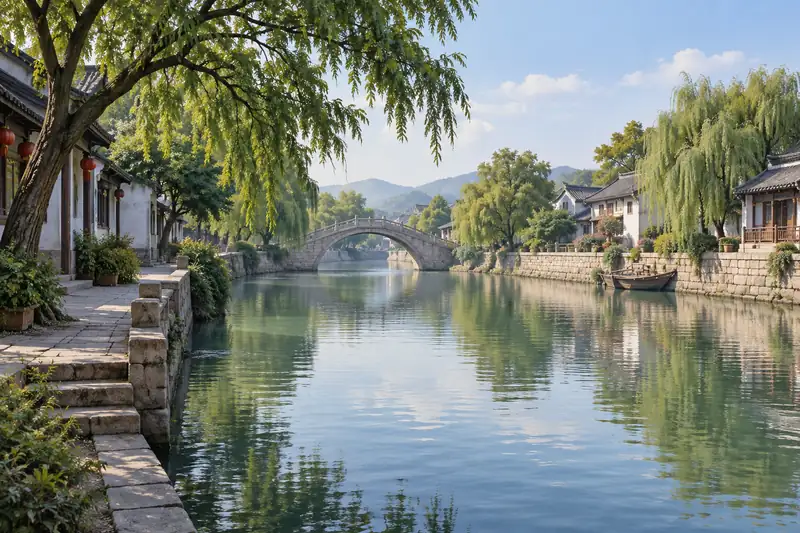 AI illustration · AI 示意图(仅供参考,非该地点实拍)
Heilongjiang Park Riverfront黑龙江公园江畔
Heilongjiang Park follows the river through Heihe’s Aihui District, linking public squares, sculptures and a memorial garden.
Read the place guide →Plan your visit
Getting there
Aihui District covers the centre of Heihe. Search for 爱辉区 in a map app to find stations and your accommodation.
Where to stay →Build your route
Aihui History Museum and Heilongjiang Park Riverfront are both listed here. The linked place guides have entrance and visit details.
Continue with Heihe →More in Heihe
Sources & geographic information
Administrative names and parent areas: Official geographic directory · Reference date 2026-09-06.
Some facts checked against 爱辉区 — Wikipedia contributors, CC BY-SA 4.0.
Photo: Aihui History Museum · Antolavoasio · CC BY-SA 4.0. Proportionally resized and converted to WebP without cropping, retouching or changing the photographed subject.

Map data © OpenStreetMap contributors. Pins mark approximate centres, not entrances or boundaries.