

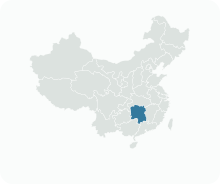
Get to know Taoyuan County
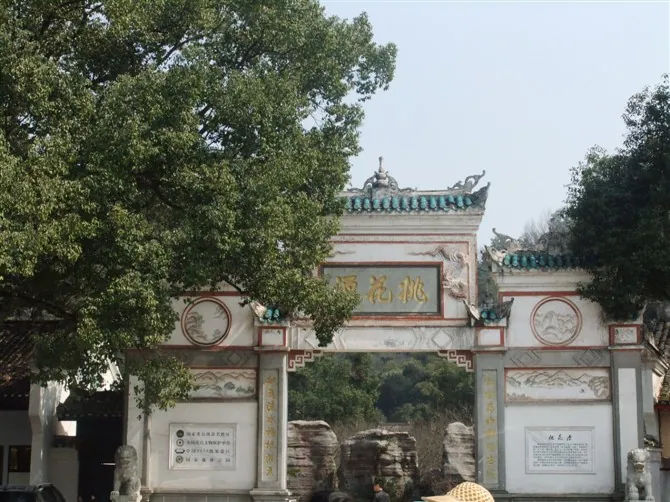
Photo adjustments
Full frame retained; proportionally resized and converted to WebP. No retouching or changes to the photographed subject. Card displays may crop the view.
- Administrative area
- County · 县
- Part of
- Changde
- Chinese name
- 桃源县
- Local areas
- County guide
Area & population
- Area in the source
- 4,441.00 km²
- Population · 2007
- 976,000
Source: cited geographic source, as of the dates shown.
Setting and landscape
The county government puts the land at about 40 percent hills, 36 percent mountains and 22 percent plain. The climate is humid subtropical monsoon, in the transition from the central to the northern subtropics, with four clear seasons and a marked wet and dry season. The county seat, Zhangjiang Subdistrict (漳江街道), sits on the north bank of the Yuan.
History
The area belonged to Chu in the Spring and Autumn and Warring States periods, and from AD 50 was divided between Yuannan (沅南县) and Linyuan (临沅县) counties. In 963, under the first Song emperor, it was split off from Wuling County (武陵县) and named Taoyuan after the Peach Blossom Spring within it. Early in the Hongwu reign of the Ming, Uyghur and Hui settlers made their home here; the county has two Uyghur-Hui ethnic townships, Fengshu (枫树) and Qinglin (青林). The Republican-era pioneer Song Jiaoren (宋教仁) and the historian Jian Bozan (翦伯赞) both came from Taoyuan. The late-Shang bronze vessel Min Fanglei (皿方罍), called the "king of fanglei", was unearthed in the county.
What to see
The Taohuayuan scenic area (桃花源) is a national key scenic area and national forest park. Temples and Daoist halls were built here from the Tang dynasty on; they burned at the end of the Yuan, were rebuilt in 1455, burned again in the late Ming, and the shrine to Tao Yuanming was rebuilt in 1892 with pavilions named after his writings. Daoists count it among the 36 grotto-heavens. "Evening glow over the fishing village" (渔村夕照), one of the Eight Views of Xiaoxiang (潇湘八景), is set below its Shuifu Pavilion (水府阁).
Taoyuan Nuo opera (傩戏) is called a "living fossil of drama", and Sanyanggang town (三阳港镇) is known as its home. Wuling opera (武陵戏) is a popular local opera form.
Food and local products
Taoyuan leicha (桃源擂茶), a pounded tea, appears on intangible-heritage lists alongside plank dragon lanterns (板龙灯), three-stick drumming (三棒鼓) and woodcarving. Taoyuan black tea, the Dazhong chicken (大种鸡) and local black pigs are national geographical-indication products, and Taoyuan embroidery is known as "the soul of Xiang embroidery".
Getting oriented
Taoyuan borders Yuanling (沅陵) in Huaihua (怀化), Cili (慈利) and Yongding (永定) in Zhangjiajie (张家界) to the west, Linli (临澧), Wuling (武陵) and Dingcheng (鼎城) to the east, Shimen (石门) to the north and Anhua (安化) in Yiyang (益阳) to the south. The Qianjiang-Zhangjiajie-Changde railway (黔张常铁路) runs 85.7 kilometres through the county, with stations at the county town and Niucheche (牛车河); the Changde-Zhangjiajie and Changde-Jishou expressways and National Highway 319 also cross it.
Highlights
- Taohuayuan scenic area 桃花源: Peach Blossom Spring, a national key scenic area and national forest park with a shrine to Tao Yuanming rebuilt in 1892.
- Taoyuan Nuo opera 桃源傩戏: Local Nuo drama, called a living fossil of drama; Sanyanggang town is known as its home.
- Taoyuan leicha 桃源擂茶: Pounded tea on the intangible-heritage lists.
- Min Fanglei 皿方罍: Late-Shang bronze vessel unearthed in the county, called the king of fanglei.
Sources for this guide
桃源概况_走进桃源_桃源县人民政府 · Taoyuan County People's Government
历史沿革_走进桃源_桃源县人民政府 · Taoyuan County People's Government
桃源县 - 维基百科,自由的百科全书 · Wikipedia (Chinese) · CC BY-SA 4.0
Original English written from the listed sources and checked sentence by sentence against quoted extracts by a separate reviewer. Updated 2026-09-24.
Explore Taoyuan County
Core places to explore, with English and Chinese names.
Places to explore around Taoyuan County
 Changde Taohuayuan (常德桃花源旅游区), Taoyuan County. Photograph: "The peach garden 1".
Changde Taohuayuan常德桃花源旅游区
Taohuayuan in Taoyuan County interprets the pastoral world associated with Tao Yuanming's Peach Blossom Spring.
Read the place guide →Peach Blossom Land (桃花源), Taoyuan County. Photograph: "The peach garden 1".Peach Blossom Land桃花源
Taohuayuan (桃花源) is a hillside complex of temples, pavilions, bridges and steles in Shuixi Town, Taoyuan County, Changde, on the lower reaches of the Yuan River. It is the place conventionally identified with the refuge described in Tao Yuanming's Record of the Peach Blossom Spring, and its buildings are protected as a national cultural relics protection unit.
Read the place guide →Plan your visit
Getting there
Taoyuan County is about 45 km in a straight line from central Changde. Search for 桃源县 in a map app to find stations and your accommodation.
Where to stay →Build your route
Changde Taohuayuan and Peach Blossom Land are both listed here. The linked place guides have entrance and visit details.
Continue with Changde →More in Changde
Sources & geographic information
Administrative names and parent areas: Official geographic directory · Reference date 2026-09-06.
Some facts checked against 桃源县 — Wikipedia contributors, CC BY-SA 4.0.
Photo: Changde Taohuayuan · Huangdan2060 · Public domain. Full frame retained; EXIF orientation normalized, proportionally resized to at most 800 pixels and converted to WebP. No generated pixels or subject changes. Cards may crop the display.

Photo: Peach Blossom Land · Huangdan2060 · Public domain. Full frame retained; EXIF orientation normalized, proportionally resized to at most 800 pixels and converted to WebP. No generated pixels or subject changes. Cards may crop the display.
Map data © OpenStreetMap contributors. Pins mark approximate centres, not entrances or boundaries.