


Get to know Changshu
- Administrative area
- County-level city · 县级市
- Part of
- Suzhou
- Chinese name
- 常熟市
- Local areas
- County-level city guide
Area & population
- Area
- 1,264.00 km²
- Population · 2020 census
- 1,677,050
Source: English Wikipedia, as of the dates shown.
Read the landscape as three different visits
Changshu is a county-level city under Suzhou, not one of Suzhou’s urban districts. Its current government directory lists three subdistricts and eight towns; development zones are described alongside those jurisdictions, not as extra county-level cities. The Changshu High-tech Industrial Development Zone and Southeast Subdistrict, for example, are managed as an integrated area. This broad jurisdiction includes a compact historic centre, a hill at its edge, lakes and wetland, and outlying townships.
A useful first day links the old centre with Yushan (虞山). The wooded ridge rises immediately northwest of town, and its scenic areas combine cultural remains with different ways up the hill: the city wall and its approaches, the Xingfu (兴福) area, Jianmen (剑门) and the southern Baoyan (宝岩) ecological garden. The operator divides the mountain into several touring areas rather than a single summit circuit. Choose one approach and leave time for the descent; do not assume that a ticket or entrance for one section automatically covers every other section.
In the old centre, Fangta Garden (方塔园) gives a compact architectural counterpoint to the hillside. Its centrepiece is the 67-metre Song-style brick-and-timber Square Pagoda, originally associated with Chongjiao Xingfu Temple. The garden also preserves an old well and ginkgo and includes a local stele museum and notable-person museum. Walk the garden paths to see how the tower anchors the newer Jiangnan-style garden, then continue through the surrounding historic streets at an unhurried pace.
Lake and wetland beyond the centre
South of Yushan, Shanghu (尚湖) is a freshwater wetland landscape of water, islands and planted shorelines, not simply a viewpoint on the mountain. Its operator describes six themed areas, including Taigong Island, Lotus Fragrance Isle, Fushui Villa and a water forest. The latter is planted with pond cypress and other wetland trees; boardwalks and waterways offer a closer view of the wetland habitat. Fushui Villa is a waterside garden associated with the late-Ming and early-Qing writer Qian Qianyi and poet Liu Rushi. Walk between gardens and wetland at ground level, and use marked paths rather than entering reed beds or disturbing birds.
Shajiabang (沙家浜), in the town of the same name beside Yangcheng Lake, is a separate southern outing. Its identity brings together reed marsh, wetland scenery and the local memory of wartime resistance that became widely known through the modern Peking opera of the same name. The scenic area interprets that history through a revolutionary-tradition zone, a waterside reed maze, a folk-culture village and a film-set street. Take time to distinguish the landscape from the staged exhibits: the reeds and water are a living habitat, while the constructed street and interpretive displays are visitor facilities.
For a second day, choose Shanghu for a quieter lake-and-garden visit, or Shajiabang for the contrast between marsh ecology and historical interpretation. Seasonal flower displays and special programs are not year-round guarantees; check the operator’s current notice before planning around an event. Boat rides are leisure activities within the lake attraction, not public transport between Changshu destinations.
Getting there
There is no operating metro line serving Changshu in the current sources checked. A reference to an S20 line in the city’s high-tech-zone material is explicitly a plan, not a current rail connection. For Yushan, the scenic operator lists the Yushan sightseeing routes 游1/118 and 游2/128, with stops including 虞山城墙景区(虞山门), 剑门景区 and 宝岩景区. These named stops are the practical starting points for the corresponding mountain sections; follow the on-site signs from the stop to the entrance. For Shanghu, the operator lists bus 116 to 尚湖景区; for Shajiabang it lists bus 5 to 沙家浜景区. Return from the named destination stop on the same line in the opposite direction, after confirming that day’s service and last departure. The published scenic-site route pages do not show a dated current timetable, so treat the route numbers as a planning lead and verify them locally before travel.
Changshu Railway Station (常熟站) is an operating passenger station. A city-government notice says its July 2026 timetable carried 134 passenger trains; train services and seasonal additions change, so check China Railway 12306 for the travel date and return journey. The notice does not establish a current direct train-station bus to each scenic entrance. If using a taxi or ride-hail, use the official Chinese destination name and address below, then enter or leave the vehicle only at a marked public drop-off or parking area. The sources checked do not identify one legally designated taxi drop-off for each separate scenic section, so do not assume a trail gate or pedestrian entrance is a vehicle drop-off.
For a mountain-side arrival, use 虞山风景区(虞山中路); the listed visitor service centre is on 虞山中路. For the lake, search 尚湖风景区 Shàng Hú Fēngjǐngqū; the operator publishes only “常熟城区西部” as its address, so use the signed main visitor entrance rather than an unverified shoreline pin. For the reed-marsh attraction, use 沙家浜风景区,常熟市沙家浜镇芦苇荡路188号. These are three distinct destinations, not interchangeable entrances. No exact taxi set-down bay or final walking distance was confirmed for all three.
Guide sources
- Changshu Municipal People’s Government, Administrative Divisions
- Suzhou Municipal People’s Government, Administrative Divisions and Natural Conditions
- Changshu Municipal People’s Government, Changshu High-tech Industrial Development Zone and Southeast Subdistrict
- Yushan Cultural Tourism Resort, Yushan Scenic Area
- Yushan Cultural Tourism Resort, Fangta Garden
- Yushan Cultural Tourism Resort, Shanghu Scenic Area
- Changshu Yicheng Shanshui Scenic-Area Operator, Shajiabang Scenic Area
- Changshu Municipal People’s Government, Changshu Station’s July 2026 Railway Timetable
Explore Changshu
Core places to explore, with English and Chinese names.
Places to explore around Changshu
 AI illustration · AI 示意图(仅供参考,非该地点实拍)
Changshu Yushan常熟虞山
A wooded ridge running into Changshu’s old city, Yushan combines exposed southern-slope rock scenery, wooded ravines, temple landscapes and historic sites. Treat its separate gateways and visitor zones as distinct walks rather than assuming one entrance covers the whole mountain.
Read the place guide → Changshu Shanghu Lake · 常熟尚湖
Changshu Shanghu Lake常熟尚湖
A lake-and-wetland landscape west of central Changshu, where island gardens, seasonal flowers, bird habitat and boat-level views sit beneath the wooded ridge of Yushan.
Read the place guide →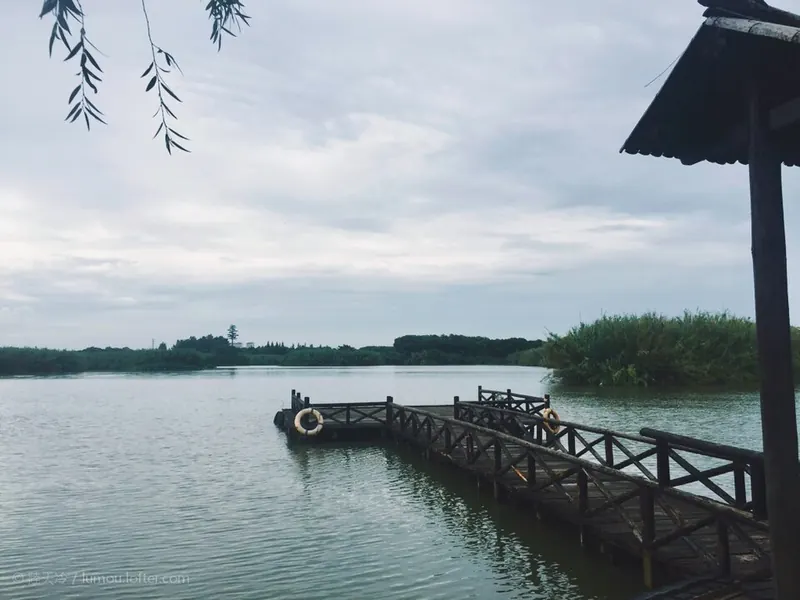 Lake and reed beds at Shajiabang, Changshu · 沙家浜 Photograph date recorded by the source: 8 July 2017, 14:53:35.
Shajiabang沙家浜
Explore the reed-lined waterways of Shajiabang in Changshu, where a working wetland landscape is interpreted alongside the resistance history made famous by the modern Peking opera Shajiabang.
Read the place guide → AI illustration · AI 示意图(仅供参考,非该地点实拍)
Yushan and Shanghu Scenic Area虞山尚湖
In western Changshu, Yushan’s wooded ridges and historic sites meet the island-dotted wetlands of Shanghu Lake. Treat them as two nearby but distinct visits, with different entrances and ways to explore.
Read the place guide →Plan your visit
Getting there
Changshu is about 40 km (straight-line distance) from central Suzhou. Search for 常熟市 in a map app to find stations and your accommodation.
Where to stay →Build your route
Changshu Yushan and Changshu Shanghu Lake are about 2 km apart (straight-line distance). The linked place guides have entrance and visit details.
Continue with Suzhou →More in Suzhou
Sources & geographic information
Administrative names and parent areas: Official geographic directory (dmfw.mca.gov.cn) · Reference date 2026-09-06.
Background text adapted from Changshu — Wikipedia contributors, under CC BY-SA 4.0. Text has been shortened and reorganized; source revision 1370639841.
Photo: Changshu Shanghu Lake · gs.ctrip.com. Resized for the web; the photo itself has not been edited.
Photo: Shajiabang · 陸天冷 · CC BY 2.5. Resized for the web; the photo itself has not been edited. Thumbnails may show a cropped view.

Map data © OpenStreetMap contributors. Pins mark approximate centres, not entrances or boundaries.
Image credits & notes (1)
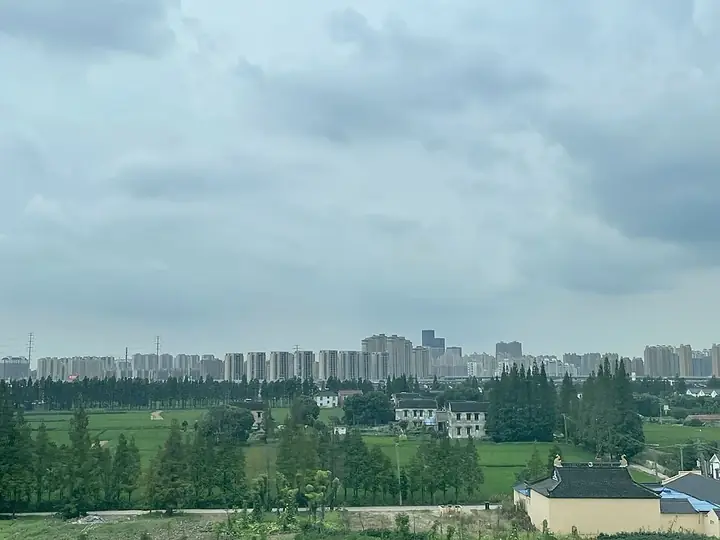
- The city-centre skyline, fields and neighbourhoods of Changshu, Jiangsu. Photo: 2023-08-28 10:57:48.Photo: MNXANL · CC BY-SA 4.0Resized for the web; the photo itself has not been edited. Thumbnails may show a cropped view.
