


Get to know Gusu District
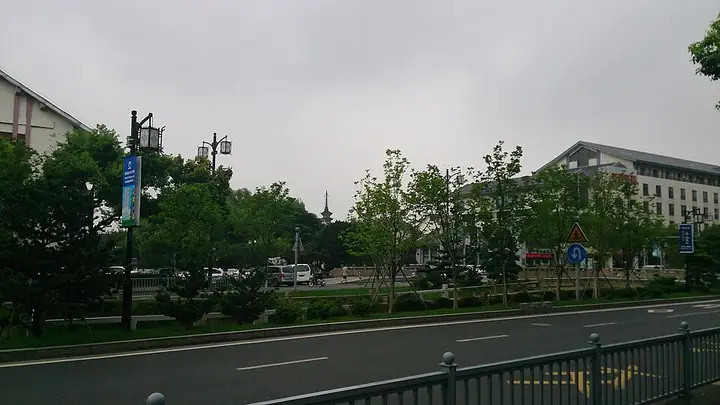
- Administrative area
- District · 市辖区
- Part of
- Suzhou
- Chinese name
- 姑苏区
- Local areas
- District guide
Area & population
- Area
- 85.10 km²
- Population · 2020
- 958,000
Source: English Wikipedia, as of the dates shown.
Read the old city through its water and lanes
Gusu is a current urban district of Suzhou, established in 2012 by combining the former Pingjiang, Canglang and Jinchang districts. The district government describes an area of 83.4 km² that includes the entire 14.2 km² historic city; the old city is only one part of the larger district. Suzhou Industrial Park and Suzhou New District are separate development areas, not extra county-level districts or neighbourhoods within Gusu.
The old city’s defining pattern is a close pairing of waterways and streets. Rather than treating Gusu as a checklist of famous sights, explore it in three contrasting walks: the garden-and-museum cluster around Northeast Street, the intimate lanes of Pingjiang, and the more commercial canal frontage of Shantang. A longer circuit along the old moat links gates, gardens and neighbourhoods, but the full 15.5-kilometre route is better treated as a substantial walk, not a quick transfer between attractions.
A garden, a museum and the Pingjiang lanes
Begin at Suzhou Museum’s main site, at 204 Northeast Street (东北街204号). Its white walls, dark rooflines and courtyards make a modern architectural interpretation of local forms; inside, look for the museum’s collections and exhibitions rather than rushing through only the building. The museum currently lists Tuesday–Sunday opening, 09:00–17:00 with last entry at 16:00, and Monday closure except on statutory holidays. Individual visits use timed, real-name reservations, available up to seven days ahead; check the official booking page before setting out because temporary closures and special opening notices can change a visit.
From the museum, continue on foot to one garden that interests you—Humble Administrator’s Garden (拙政园) for water, pavilions and islands, or Lion Grove Garden (狮子林) for its labyrinth of Taihu rocks—rather than trying to see every garden in one rushed circuit. These sites are close to the museum, but each has its own entrance, ticketing and visit rules. Afterward, walk south into Pingjiang Historic Quarter (平江历史文化街区). Follow the canal-side main street, then turn into side lanes such as Xiaojia Lane (肖家巷), Daru Lane (大儒巷) and Xuanqiao Lane (悬桥巷). The smaller lanes show how homes, narrow streets and waterways sit close together; pause at bridges and lane junctions to notice the changing view rather than treating the quarter as a single shopping street.
For a slice of contemporary neighbourhood life, browse the Double Pagoda Market (双塔市集) and nearby independent shops or tea stops as part of the same walk. It is a working food-and-retail space as well as a visitor stop, not a staged cultural show. Keep doorways clear, ask before photographing people, and do not photograph residents or personal belongings at close range. Performances and public events vary; do not plan around an unverified daily schedule.
Shantang, Changmen and the wider old-city circuit
Shantang Street (山塘街) offers a different canal experience from Pingjiang. Here the route follows the Shantang River toward Changmen (阊门), with a more visibly commercial waterfront and a long sequence of bridges and waterside buildings. The district government describes the historic street as part of a longer route extending toward Tiger Hill (虎丘); choose a short stretch for an evening walk or allow more time if you intend to cover the full historic corridor. Tiger Hill is a separate managed scenic area at the route’s western end, not simply another section of the street.
For a southern alternative, visit Canglang Pavilion (沧浪亭) or Panmen (盘门) on a separate half-day. Panmen’s paired land and water gates make the old city’s defensive relationship with canals legible; do not confuse it with the many other gates and canal landings around the district. The moat-side footpath can connect these landmarks with other historic sites, but it is a long urban route and some stretches are ordinary city paths rather than ticketed attractions.
Getting around
For the museum, Humble Administrator’s Garden and Lion Grove cluster, take Suzhou Metro Line 6 to Zhuozhengyuan Suzhou Museum (拙政园苏博) Station and use Exit 1; follow station and street signs to the museum’s main visitor entrance at 204 Northeast Street. The city’s 2026 railway-station guide confirms this exit and the Line 6 connection for the museum and nearby gardens.
For Shantang Street, take Metro Line 2 to Shantangjie (山塘街) Station, Exit 1, then follow the street signs into the historic street. From Suzhou Railway Station, the municipal guide lists this as one stop on Line 2 toward Sangtian Island. For Pingjiang Road, the same guide routes visitors from the railway station on Line 4 to Leqiao, transfers to Line 1 toward Zhongnan Street, and exits at Xiangmen (相门) Exit 3.
A practical taxi destination for the central cluster is 苏州博物馆本馆,苏州市姑苏区东北街204号. The museum’s main gate is the visitor entrance. Ask the driver to use a legal designated stopping place near that entrance; do not assume a vehicle may stop directly at the gate. Gusu is a district, not a single attraction or drop-off point, so use the Chinese name and address of the specific venue for other destinations. No bus route is needed for the compact central walking itinerary above; if using a bus for another part of the district, verify the current route and stop for that exact destination.
The museum’s official guide says to check temporary notices and book ahead. Other gardens and attractions have separate operators, calendars and ticket policies, so confirm their current entry instructions independently. The metro exit details above are the exits named in the municipal visitor guide; follow live station signage if temporary works alter pedestrian routing.
Guide sources
- Gusu District Government — District overview
- Gusu District Government — The old city moves toward a world-class tourism destination
- Suzhou Museum — Main museum visitor guide
- Suzhou Municipal Government — Spring 2026 travel guide for Suzhou Railway Station
- Suzhou Municipal Government — Administrative-code FAQ
Explore Gusu District
Core places to explore, with English and Chinese names.
Places to explore around Gusu District
 AI illustration; an interpretive view, not a photograph. AI 示意图,非景点实拍。
Pingjiang Road平江路
Walk Suzhou’s canal-side historic street, where stone bridges, narrow lanes, old houses and an active residential neighborhood reveal the city’s waterside pattern.
Read the place guide → Pond, rockwork, pavilion and trees in the Humble Administrator’s Garden. Photo: King of Hearts · CC BY-SA 4.0
Humble Administrator's Garden拙政园
This classical Suzhou garden turns water, islands, rockwork, pavilions and framed views into a walkable landscape in the historic Gusu district. Its eastern, central and western sections reward a slow visit that compares distinct garden scenes rather than rushing from landmark to landmark.
Read the place guide → Surging Wave Pavilion garden seen from above, Suzhou · 苏州沧浪亭园林俯瞰 Photograph date recorded by the source: 30 June 2019, 14:25:36.
The Surging Wave Pavilion沧浪亭
Suzhou’s earliest surviving classical garden pairs a wooded earthen hill with water borrowed from beyond its boundary. Follow the covered corridor’s patterned windows, then explore the hilltop pavilion, halls and the portrait-filled Five Hundred Worthies Shrine.
Read the place guide →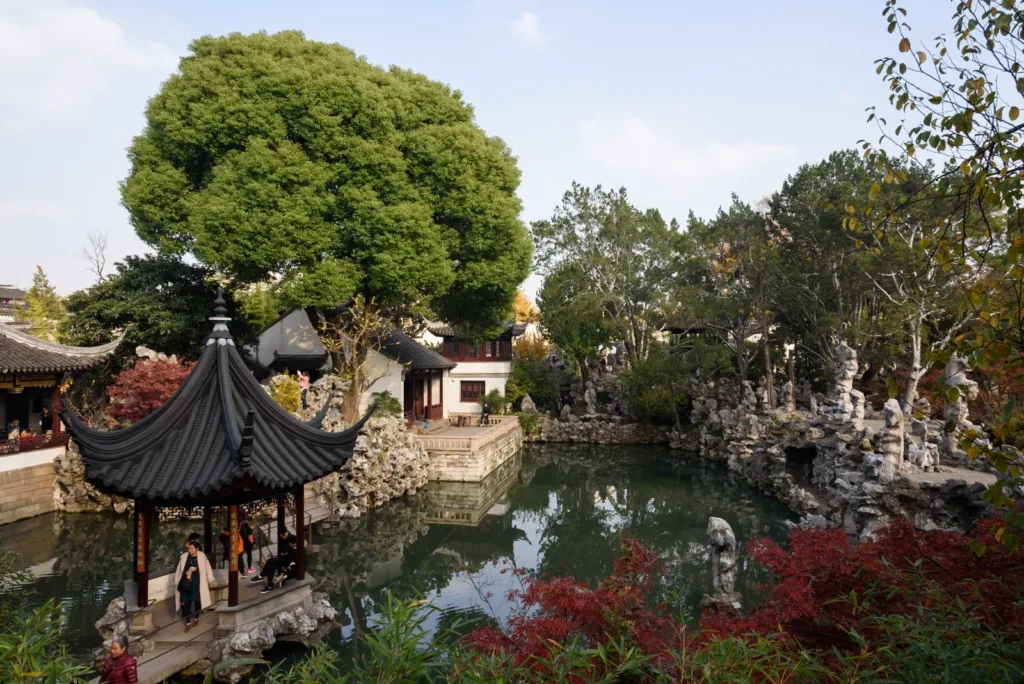 The pond, pavilions and Taihu-stone rockery at Lion Grove Garden. Photo: King of Hearts · CC BY-SA 4.0
Lion Grove Garden狮子林
A Yuan-dynasty garden in Suzhou’s Gusu District, best known for the layered Taihu-stone grotto that turns a walk around a pond into a sequence of framed views, tight passages and changing levels.
Read the place guide →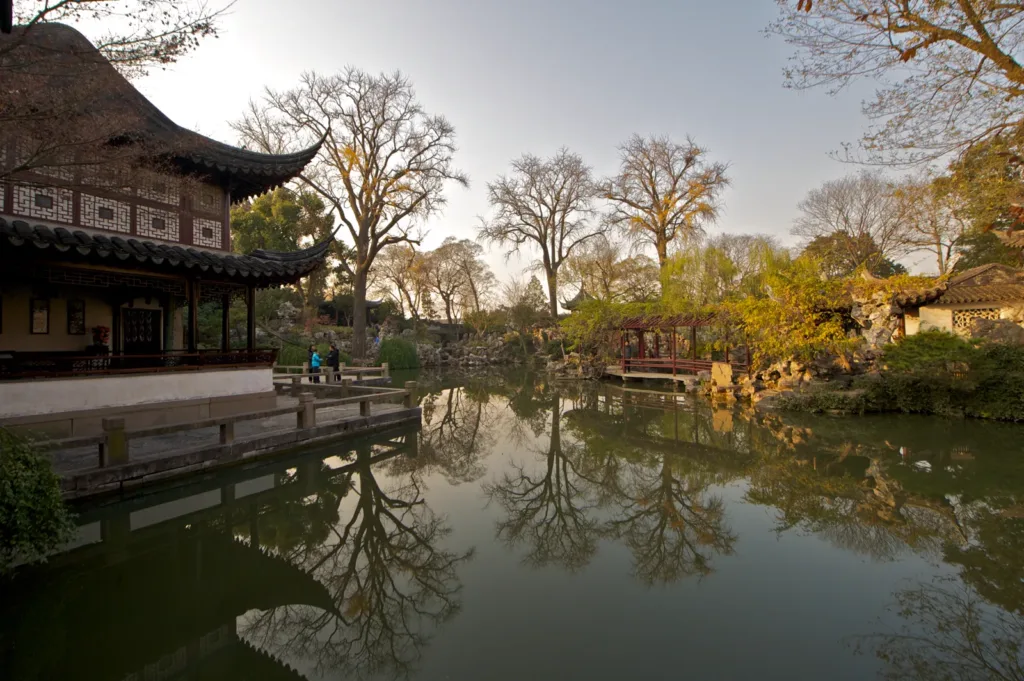 The central water garden, with halls and rockwork reflected in the pond. Photo: Kevin A. McGill (Commons: kevinmcgill from Den Bosch, Netherlands) · CC BY-SA 2.0
Lingering Garden留园
A Qing-era scholar’s garden arranged as a miniature landscape, where a pond, rockwork, halls and long covered corridors reveal different moods as you move between four distinct sections.
Read the place guide →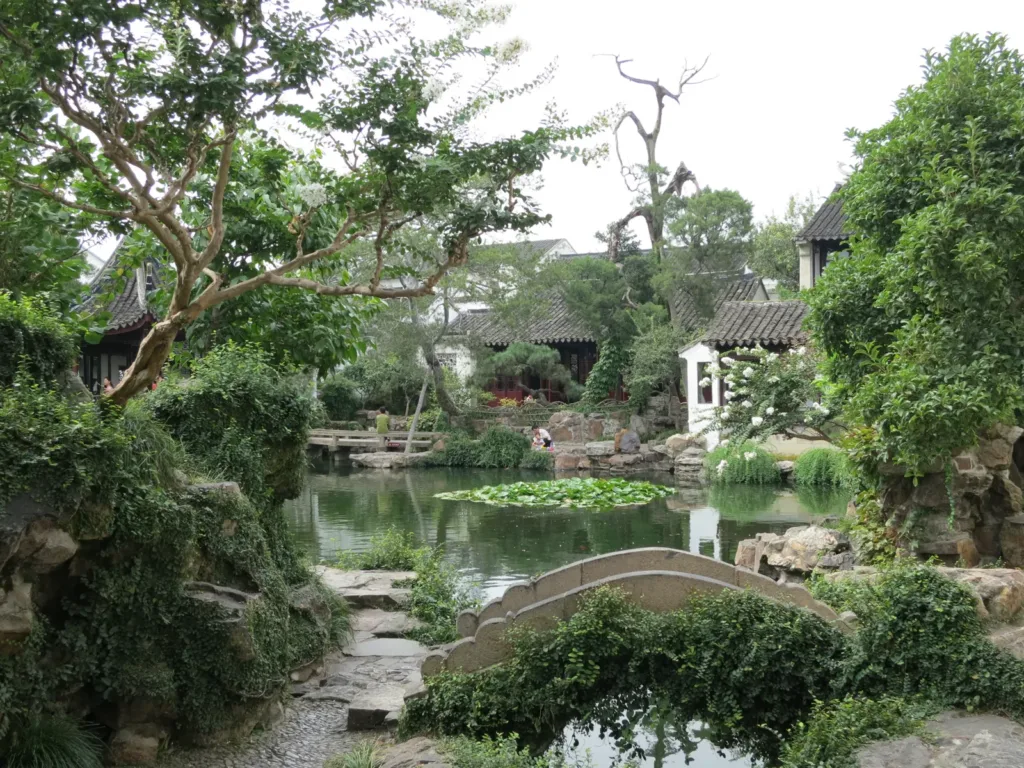 Main pond at the Master of the Nets Garden, Suzhou. Photo: Christian Gänshirt · CC BY-SA 4.0
Master of the Nets Garden网师园
A compact Suzhou residence-and-garden where a small pond, carefully placed halls, rockwork and framed views create a richly layered miniature landscape.
Read the place guide →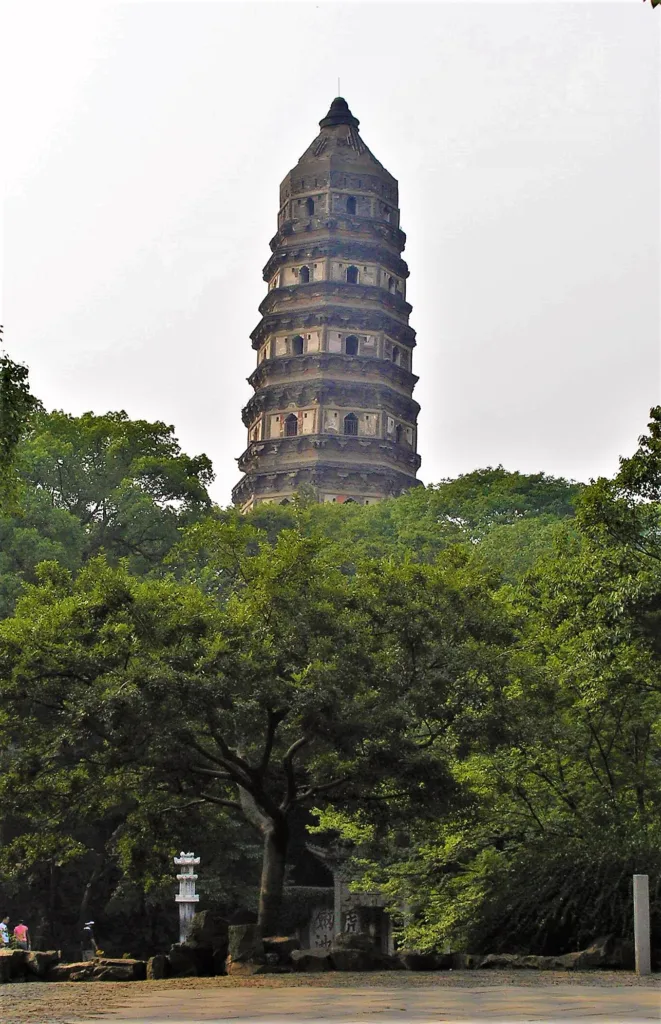 Yunyan Temple Pagoda (云岩寺塔), the leaning brick pagoda at Tiger Hill, viewed from below among trees. Photo: Miguel A. Monjas (Commons attribution: Mr. Tickle) · CC BY-SA 3.0
Tiger Hill虎丘
A low wooded hill in Gusu where a famously leaning tenth-century pagoda, a dramatic rock cleft called Sword Pool, and temple-ground monuments reward a slow, observant walk.
Read the place guide →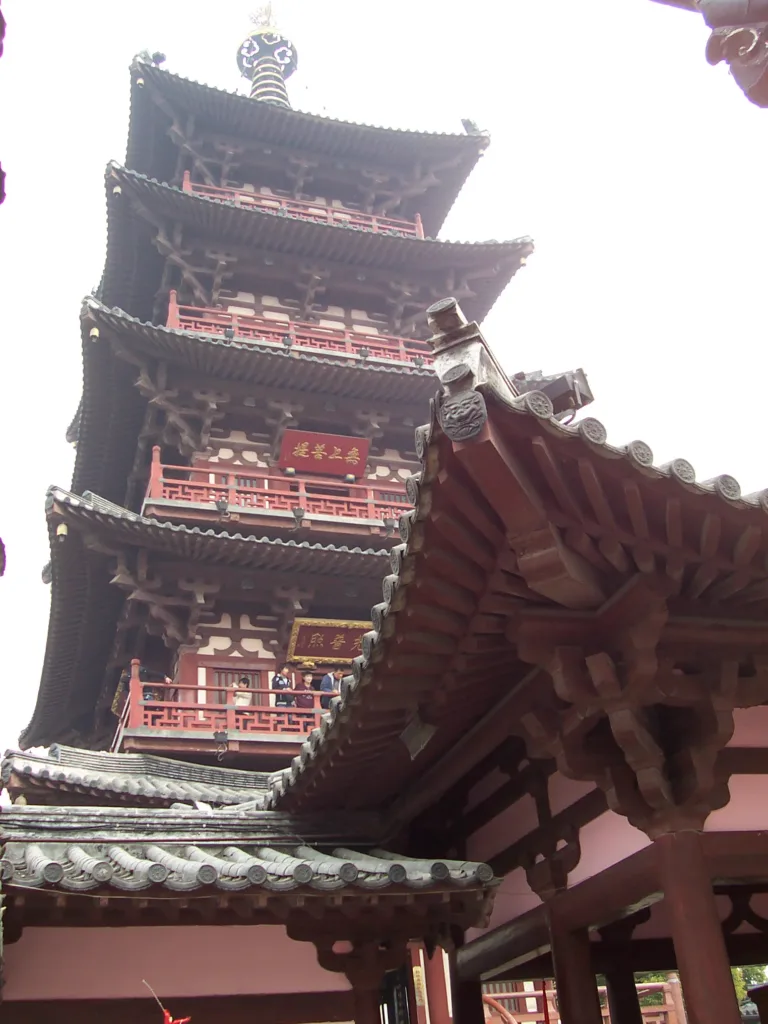 The pagoda and layered eaves of Hanshan Temple. Photo: 螺钉 · CC BY-SA 3.0
Hanshan Temple寒山寺
A working Buddhist temple in Suzhou’s Gusu District, remembered through Zhang Ji’s poem A Night Mooring by Maple Bridge. Visit the temple’s halls, bell spaces and inscription gallery, then take in the distinct Fengqiao bridge-and-canal setting nearby.
Read the place guide →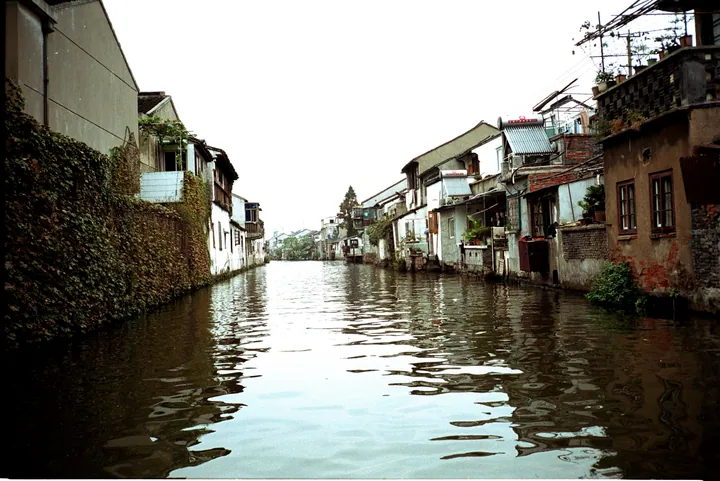 The Shantang River canal lined with old houses in Suzhou · 苏州山塘河两岸老宅 Source-recorded photograph date: 2005.
Shantang Street山塘街
Follow a canal-side historic street from Suzhou’s old commercial quarter toward Tiger Hill, reading its bridges, waterside houses and changing street life as one long urban landscape.
Read the place guide →Plan your visit
Getting there
Gusu District is about 3 km (straight-line distance) from central Suzhou. Search for 姑苏区 in a map app to find stations and your accommodation.
Where to stay →Build your route
Pingjiang Road and Humble Administrator's Garden are about 1 km apart (straight-line distance). The linked place guides have entrance and visit details.
Continue with Suzhou →More in Suzhou
Sources & geographic information
Administrative names and parent areas: Official geographic directory (dmfw.mca.gov.cn) · Reference date 2026-09-06.
Background text adapted from Gusu, Suzhou — Wikipedia contributors, under CC BY-SA 4.0. Text has been shortened and reorganized; source revision 1353058627.
Photo: The Surging Wave Pavilion · Legolas1024 · Legolas1024 — 沧浪亭·苏州·全景.jpg — CC BY-SA 4.0 · CC BY-SA 4.0. Resized for the web; the photo itself has not been edited. Thumbnails may show a cropped view.

Photo: Shantang Street · Gisling · CC BY 2.5. Resized for the web; the photo itself has not been edited. Thumbnails may show a cropped view.

Map data © OpenStreetMap contributors. Pins mark approximate centres, not entrances or boundaries.
Image credits & notes (1)
- A tree-lined urban avenue and surrounding buildings in Gusu District, Suzhou. Photo: Taken on 5 July 2014.Photo: stone wu · CC BY-SA 3.0Resized for the web; the photo itself has not been edited. Thumbnails may show a cropped view.
