

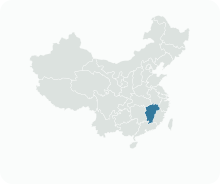
Get to know Guangchang County
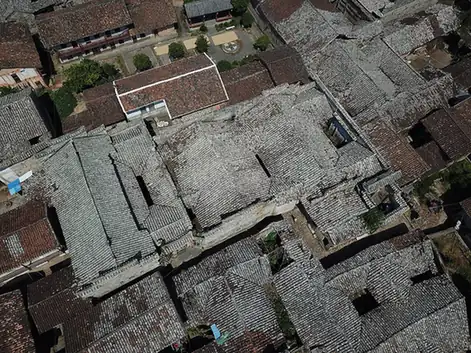
Photo adjustments
EXIF orientation normalized; resized without changing aspect ratio; converted to WebP. No subject edits.
- Administrative area
- County · 县
- Part of
- Fuzhou
- Chinese name
- 广昌县
- Local areas
- County guide
Area & population
- Area in the source
- 1,612.00 km²
- Population · 2018
- 250,000
Source: cited geographic source, as of the dates shown.
Setting and history
Mountains rise on the eastern and western sides of the county, with the Fu River valley running through the middle. The climate is subtropical monsoon. The county seat is Xujiang (旴江镇).
Guangchang was split from the southern part of Nanfeng (南丰) in 1138, under the Southern Song. Its name is explained by the old phrase "道通闽广,郡属建昌" ("its roads reach Fujian and Guangdong, and it belongs to Jianchang"). It was part of Ganzhou prefecture from 1954 and returned to Fuzhou prefecture in 1983.
What to see
Chinese Wikipedia lists the Longfeng Cliffs (龙凤岩), a Danxia landform, Ming and Qing buildings in Yiqian town (驿前镇), Dingxin Temple (定心寺) in Chishui town (赤水镇), the Gaohunao (高虎脑) battlefield of the fifth counter-encirclement campaign, and the source area of the Fu River. People's Daily Jiangxi names the "hundred-li lotus belt" (百里莲花带) and rafting at the Fu River source among the county's attractions, and lists the China Lotus scenic area (中国莲花景区) and the Guangchang section of the Long March National Cultural Park among its rural tourism sites.
Lotus and opera
At a 1995 naming conference in Beijing, Guangchang was named China's home of the "tongxin" white lotus (通芯白莲). People's Daily Jiangxi reported around 110,000 mu of white lotus in bloom in summer 2024; the county describes a yearly cycle of selling lotus roots in spring, lotus-field views in summer and white lotus seeds in autumn. Guangchang white lotus holds a national geographical-indication mark.
Guangchang Meng opera (广昌孟戏) retells the story of Lady Meng Jiang weeping at the Great Wall. It has been performed for more than five hundred years, is sung in a high-pitched style traced to the Ming-era Haiyan tune, and is staged only once a year, in the first lunar month. Two lineages survive, the Zeng family of Chixi (赤溪) and the Liu family of Dalubei (大路背). It entered the first national intangible-heritage list in 2006.
Highlights
- Guangchang white lotus 广昌白莲: The county was named its home in 1995 and it holds a national geographical-indication mark.
- Guangchang Meng opera 广昌孟戏: Meng Jiang opera staged once a year in the first lunar month; national intangible heritage since 2006.
- Longfeng Cliffs 龙凤岩: Danxia landform listed among the county's sights.
- Fu River source 抚河源: Source of Jiangxi's second-largest river.
Sources for this guide
广昌县 - 维基百科,自由的百科全书 · Wikipedia (Chinese) · CC BY-SA 4.0
江西广昌:生态莲乡 绿色画卷 · People's Daily Online (Jiangxi channel)
广昌孟戏 - 中国非物质文化遗产网·中国非物质文化遗产数字博物馆 · China Intangible Cultural Heritage Network (China National Intangible Cultural Heritage Protection Center)
Original English written from the listed sources and checked sentence by sentence against quoted extracts by a separate reviewer. Updated 2026-09-25.
Explore Guangchang County
Core places to explore, with English and Chinese names.
Guangchang County 广昌县
Plan your visit
Getting there
Guangchang County is about 130 km in a straight line from central Fuzhou. Search for 广昌县 in a map app to find stations and your accommodation.
Where to stay →More in Fuzhou
Sources & geographic information
Administrative names and parent areas: Official geographic directory · Reference date 2026-09-06.
Some facts checked against 广昌县 — Wikipedia contributors, CC BY-SA 4.0.
Map data © OpenStreetMap contributors. Pins mark approximate centres, not entrances or boundaries.