

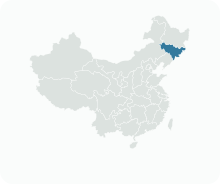
Get to know Jiangyuan District
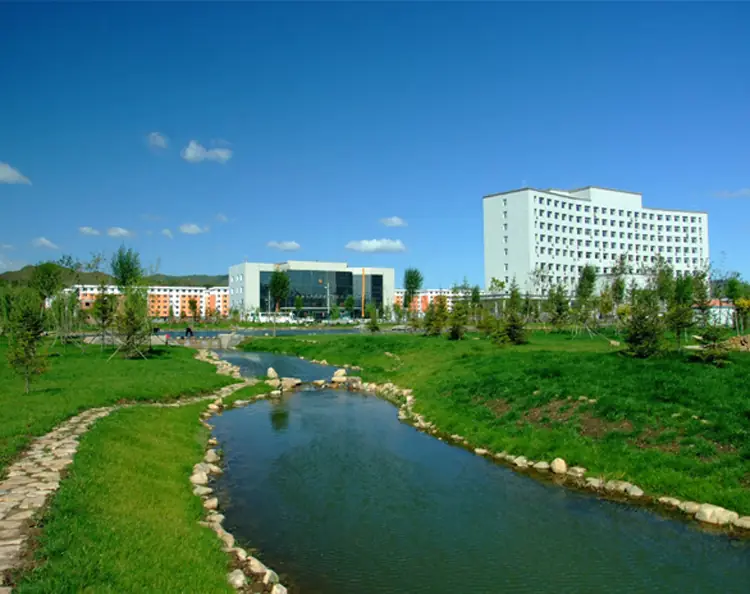
Photo adjustments
EXIF orientation normalized; resized without changing aspect ratio; converted to WebP. No subject edits.
- Administrative area
- District · 市辖区
- Part of
- Baishan
- Chinese name
- 江源区
- Local areas
- District guide
What to see
Ganfanpen (干饭盆) is a national forest park and 3A scenic area of about 15 by 7.5 kilometres, where rings of forested ridges enclose basin after basin; local lore speaks of 'eighty-one basins'. The district government calls it the 'Bermuda of Changbai Mountain' and lists among its unexplained puzzles why people get lost in the basins and why compasses fail. During the war against Japan, the anti-Japanese forces led by Yang Jingyu (杨靖宇) and Wang Detai (王德泰) camped and stored supplies in the basins.
Xianrengu (仙人谷), about 50 kilometres from the city on the Linjiang border, has two parts: a stone forest of large boulders at 1,320 metres and the Lijiadian meadow (李家店草坪), a highland grassland at 1,100 metres on the watershed, known for maple colours in October. It was one of the filming locations of the CCTV drama A Lifelong Journey (人世间).
The Changbai Mountain Stone Culture City (长白山奇石文化城), built from 2009, groups a stone village, a stone square and a museum of Songhua stone (松花石), and is on the provincial government's first list of cultural-industry demonstration parks.
History
Shiren Xueleishan (石人血泪山), 'Blood and Tears Hill' in Dashiren town (大石人镇), recalls the coal mine that the Japanese seized in 1937, where the bodies of countless miners who died from abuse were thrown on the hill; the miners gave it its present name. It has been a Jilin provincial protected heritage site since 1983.
In 1945 the area was Sunjiabaozi town (孙家堡子镇) in Linjiang County (临江县), and the town of Sanchazi (三岔子镇) was set up here in 1956. Sanchazi became a district of Hunjiang city in 1985, was turned into Jiangyuan County in 1995, and became Jiangyuan District of Baishan on 5 June 2006.
Highlights
- Ganfanpen 干饭盆: National forest park and 3A scenic area of ring-shaped forested basins, a wartime camp of the anti-Japanese forces.
- Shiren Xueleishan 石人血泪山: Hill where the bodies of miners from the Japanese-run coal mine were dumped; provincial protected site since 1983.
- Xianrengu 仙人谷: Stone forest and highland meadow on the Linjiang border, a filming location of A Lifelong Journey.
Sources for this guide
石人血泪山概况 · Jiangyuan District People's Government, Baishan
国家3A级景区干饭盆景区 · Jiangyuan District People's Government, Baishan
长白山奇石文化城简介 · Jiangyuan District People's Government, Baishan
白山市江源区仙人谷风光区简介 · Jiangyuan District People's Government, Baishan
江源区 - 维基百科,自由的百科全书 · Wikipedia (Chinese) · CC BY-SA 4.0
Original English written from the listed sources and checked sentence by sentence against quoted extracts by a separate reviewer. Updated 2026-09-25.
Explore Jiangyuan District
Core places to explore, with English and Chinese names.
Jiangyuan District 江源区
Plan your visit
Getting there
Jiangyuan District is about 20 km in a straight line from central Baishan. Search for 江源区 in a map app to find stations and your accommodation.
Where to stay →More in Baishan
Sources & geographic information
Administrative names and parent areas: Official geographic directory · Reference date 2026-09-06.
Some facts checked against 江源区 — Wikipedia contributors, CC BY-SA 4.0.
Map data © OpenStreetMap contributors. Pins mark approximate centres, not entrances or boundaries.